Tacna Cathedral: Architecture, Faith, and Civic Memory
Tacna Cathedral unites nineteenth-century engineering, local stone, religious art, and the resilient civic history of Peru's southernmost major city.
- Tacna Cathedral
- Peruvian architecture
- religious heritage
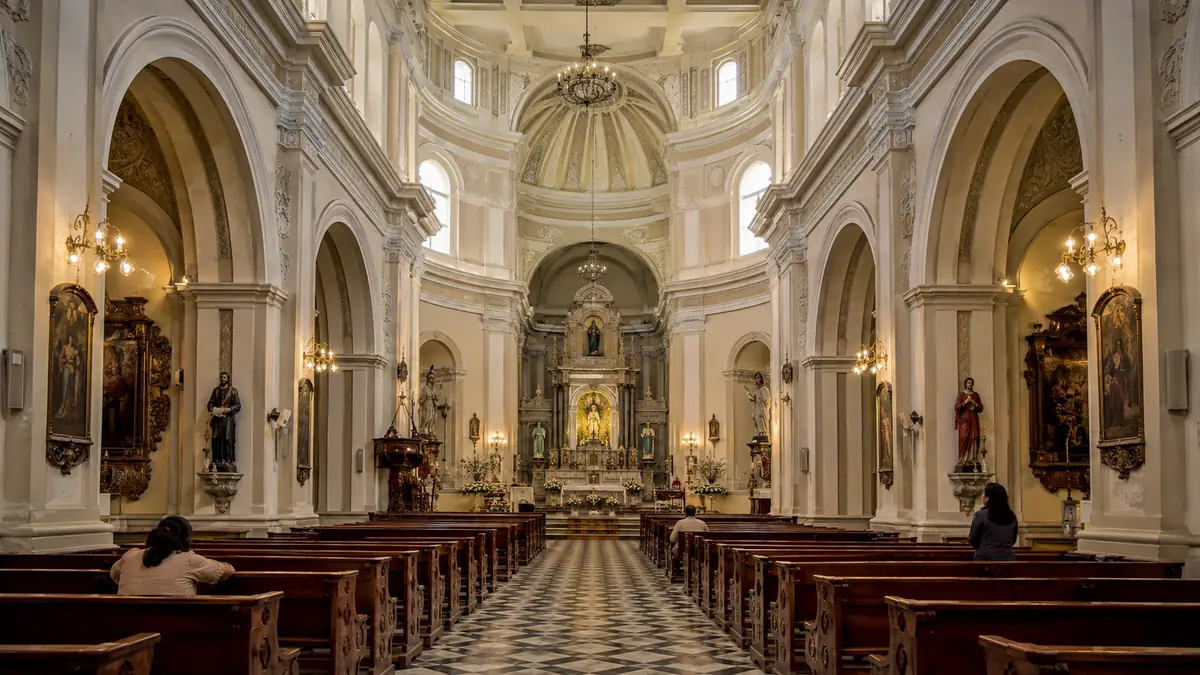
Tacna Cathedral, formally the Cathedral of Our Lady of the Rosary, stands at the center of the southern Peruvian city as both a place of worship and a monument to civic endurance. Its long construction history binds architecture to the political upheavals that transformed Tacna during the late nineteenth and early twentieth centuries.
A nineteenth-century project
Construction began in 1875 under a French firm associated in local memory with the engineering circle of Gustave Eiffel. The design adopted a Neo-Renaissance language: a symmetrical façade, paired towers, arches, and an interior organized for ceremony and clear sightlines. Pinkish stone quarried near the city gives the building warmth and a distinctly regional presence.
Interrupted construction
Financial difficulties halted construction in 1878, before the War of the Pacific began in 1879. The conflict and its aftermath prolonged the interruption. Tacna subsequently endured decades under Chilean administration, and the unfinished church became a visible reminder of suspended civic life. After the city returned to Peru in 1929, completing the cathedral acquired meaning beyond construction: it represented continuity, recovery, and public belonging.
Video: A visual tour of the cathedral
This Spanish-language tour offers close views of the exterior, nave, altars, and devotional spaces. Even without narration, its images reveal how stone, proportion, and religious objects shape the visitor’s experience.
Completion and inauguration
Work resumed in the twentieth century, and the cathedral was inaugurated on August 28, 1954, the anniversary of Tacna’s return to Peru. That date explains why the building participates simultaneously in the sacred calendar and the city’s civic rituals.
Art within a living temple
The cathedral should not be read as a static museum. Sculptures, paintings, liturgical furnishings, stained glass, and processional images acquire meaning through use. Light changes the stone throughout the day, while ceremonies continually renew the relationship between architecture and community.
Video: Faith, history, and resistance
This Spanish documentary places the building within Tacna’s collective memory. It is especially valuable for understanding why the cathedral is regarded not only as an architectural landmark but also as a symbol of historical perseverance.
The cathedral’s significance
Tacna Cathedral embodies the ability of a community to complete a cultural project across generations. Its importance lies in the convergence of imported design, local material, religious devotion, and national history. To visit it is to encounter a building whose unfinished decades became part of its deepest meaning.