Mario Vargas Llosa and the Discourse on Culture
Mario Vargas Llosa examined whether entertainment and unlimited definitions of culture can weaken education, criticism, memory, and intellectual depth.
- Mario Vargas Llosa
- culture
- literary criticism
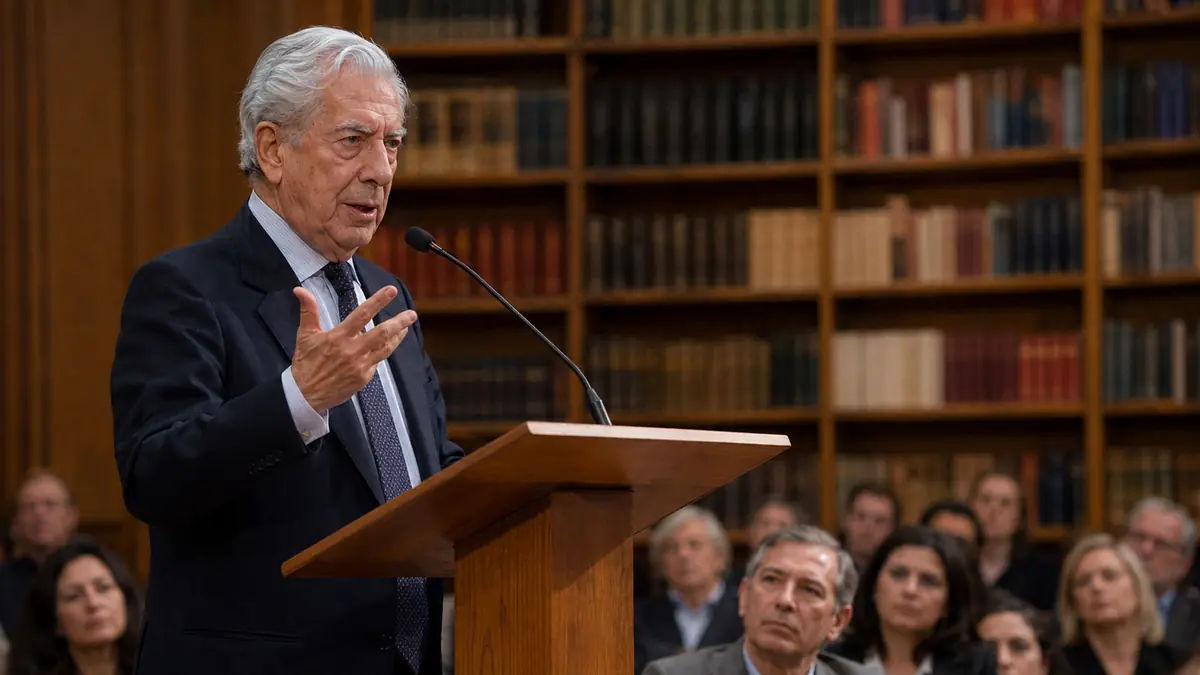
In his Discourse on Culture, Mario Vargas Llosa asks how a word once linked to intellectual formation, art, and judgment changed as its meaning expanded. If everything is called culture, he argues, it becomes harder to identify experiences that demand learning and transform inward life.
A writer in public debate
Jorge Mario Pedro Vargas Llosa was born in Arequipa on March 28, 1936, and died in Lima on April 13, 2025. Novelist, essayist, journalist, and playwright, he became central to the Latin American Boom and received the 2010 Nobel Prize in Literature.
Video: The complete argument
This Spanish conference preserves his wording and emphasis. He does not reject popular entertainment itself; he questions what happens when spectacle becomes the dominant measure of education, journalism, politics, and art.
Formation, difficulty, and hierarchy
For Vargas Llosa, culture supplies tools for interpreting the world and contesting values. Complex work may entertain, but it may also disturb and revise certainty. His defense of hierarchy raises a legitimate challenge: who decides what deserves preservation, and how can reasoned judgment avoid exclusion?
From speech to book
These concerns became The Civilization of the Spectacle in 2012. Admirers share his alarm over superficiality; critics argue that he idealizes the past and undervalues new popular forms. The dispute is more productive than automatic agreement.
Video: Extending the debate
This Spanish interview connects the book’s thesis to media, politics, and intellectual life, showing the continuity of his concern.
Fiction as transformation
The Time of the Hero, The Green House, Conversation in the Cathedral, and The War of the End of the World demand active readers through shifting voices and time. Fiction creates distance from reality and demonstrates that life might be organized otherwise.
The significance of the discourse
The speech remains useful because its question is unresolved: how can democratic access to images and information coexist with depth, memory, and critical judgment? A worthy response does not exclude audiences; it strengthens education so more people can choose with knowledge.