Joan Miró: Drawings, Prints, and Creative Freedom
Joan Miró built a poetic alphabet of stars, birds, women, and lines across painting, drawing, printmaking, ceramics, and sculpture.
- Joan Miró
- Surrealism
- printmaking
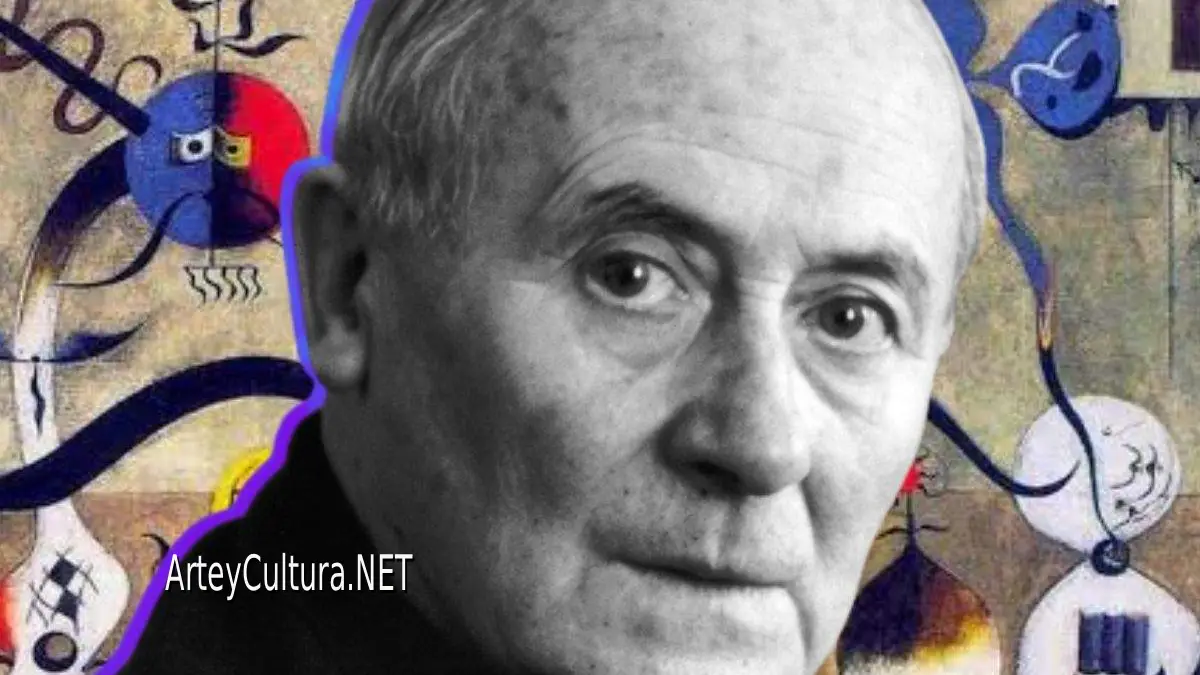
Joan Miró i Ferrà was born in Barcelona on April 20, 1893, and died in Palma de Mallorca on December 25, 1983. Painter, draftsman, printmaker, ceramicist, and sculptor, he created an adaptable alphabet of stars, moons, birds, women, and wandering signs.
Barcelona, Mont-roig, and Paris
Family pressure first led Miró toward commercial studies and office work. Illness took him to Mont-roig, whose fields and rural objects remained lifelong sources. In Paris he met avant-garde poets and artists and entered a dialogue with Surrealism without submitting fully to a single movement.
Simplicity built through rigor
A line may become horizon, body, or constellation. Primary colors, black marks, and open ground generate rhythm and depth. Miró admired children’s spontaneity and popular art, but his images are not naive: apparent freedom rests on drawing skill, technical knowledge, and repeated refinement.
Video: The ladder of escape
This substantial English documentary from the National Gallery of Art follows Miró’s life, Catalan identity, political era, and transformations across media.
Drawing, printmaking, and books
Drawing remained a laboratory where scraps, notes, and finished sheets could preserve immediate energy. Lithography, etching, and other graphic processes enabled layers, textures, and sequences. Artist’s books placed poetry and image together without making either subordinate.
Video: The Birth of the World
This English MoMA presentation examines a pivotal painting and exhibition, revealing how stains, empty space, and deliberate signs coexist.
Ceramics and public scale
With Josep Llorens Artigas, Miró produced major ceramic works and murals. His sculpture transformed found objects through unexpected combinations. Public commissions enlarged his vocabulary while preserving its wit and lightness.
The legacy of Joan Miró
Miró widened the territory between painting, poetry, and object. The foundation he helped establish in Barcelona preserves his work and supports new creation. His legacy invites viewers to approach a humble material, stain, or night sky as something still capable of becoming an entire world.