Wassily Kandinsky and the Emergence of Abstraction
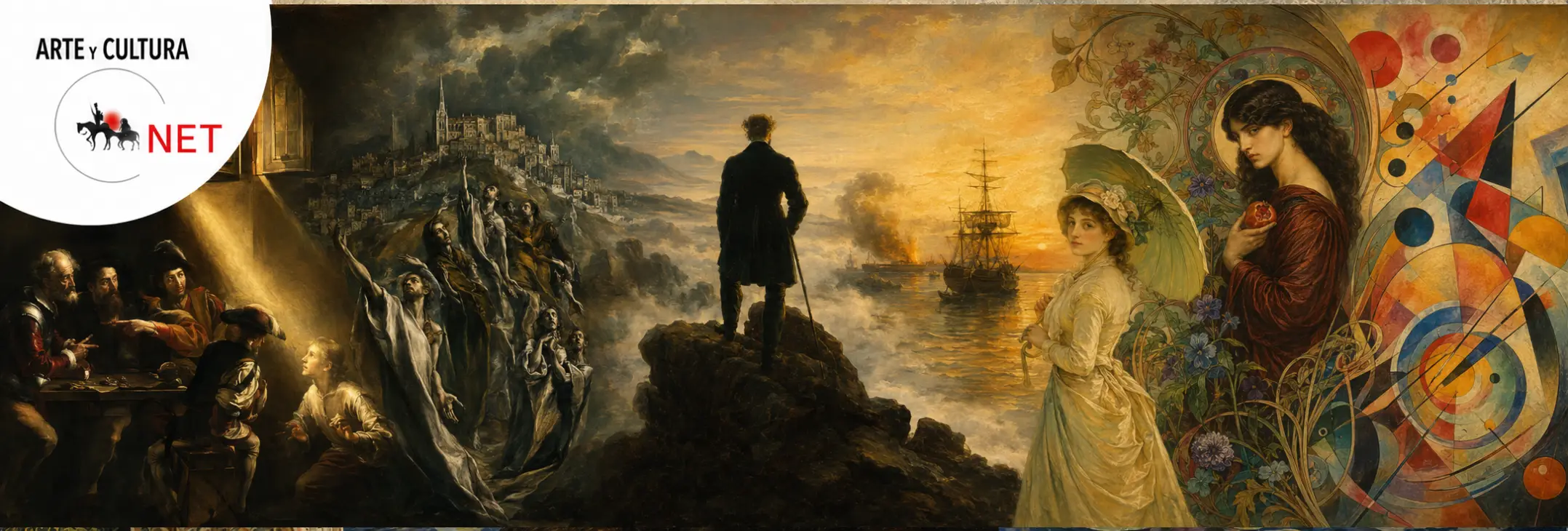
Wassily Kandinsky joined painting, music, theory, and teaching to argue that color and form could carry meaning without representing objects.
- Wassily Kandinsky
- abstract art
- Bauhaus
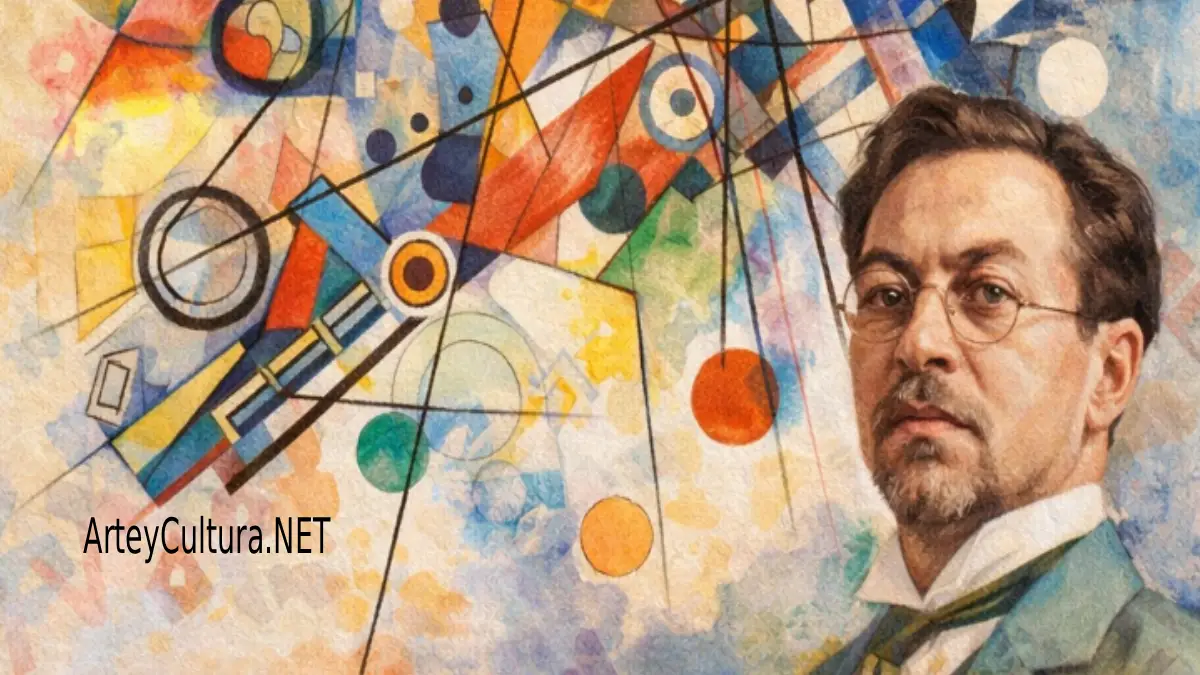
Wassily Wassilyevich Kandinsky was born in Moscow on December 16, 1866, and died in Neuilly-sur-Seine on December 13, 1944. Painter, teacher, and theorist, he helped establish abstraction as a language capable of emotional and spiritual force without recognizable objects.
From law to painting
Kandinsky studied law and economics and began an academic career before leaving it near age thirty to train in Munich. Encounters with Monet, Wagner, and Russian folk art encouraged him to imagine color as an active force rather than a coating applied to depicted things.
Color, music, and inner necessity
He associated colors with temperature, motion, and resonance. These ideas were not a fixed universal code; they formed a compositional inquiry guided by what he called “inner necessity.” Titles such as Impression, Improvisation, and Composition reveal the analogy with music.
Video: Kandinsky at MoMA
In this English museum presentation, Helen Mirren introduces Kandinsky’s visual language and the historical ambition behind his move toward abstraction.
Blue Rider and Bauhaus
Kandinsky and Franz Marc created the Blue Rider project in 1911, bringing different cultures, periods, and arts into conversation. After World War I and time in Russia, he joined the Bauhaus in 1922. Circles, triangles, lines, and analytical exercises became more prominent in his teaching and work.
Video: Painting through experiment
This English Tate workshop uses Kandinsky’s methods to demonstrate how sound, gesture, color, and shape can generate a composition without imitation.
How to look at abstraction
Direction, visual weight, repetition, contrast, and areas of rest replace narrative clues. A diagonal can accelerate the eye, a circle can stabilize it, and an intense color may seem to advance. Absence of a depicted subject does not mean absence of content.
The legacy of Wassily Kandinsky
Kandinsky’s achievement was not a disputed claim to one “first” abstract painting. It was the systematic union of practice, theory, and education. His work still influences painting, design, architecture, and the understanding that viewing can resemble listening: every element enters, responds, and alters the whole.