Opera in Passing: La Traviata in a Public Market
A Philadelphia performance of the drinking song from La Traviata transformed a market into a stage and invited accidental listeners into opera.
- La Traviata
- Giuseppe Verdi
- public performance
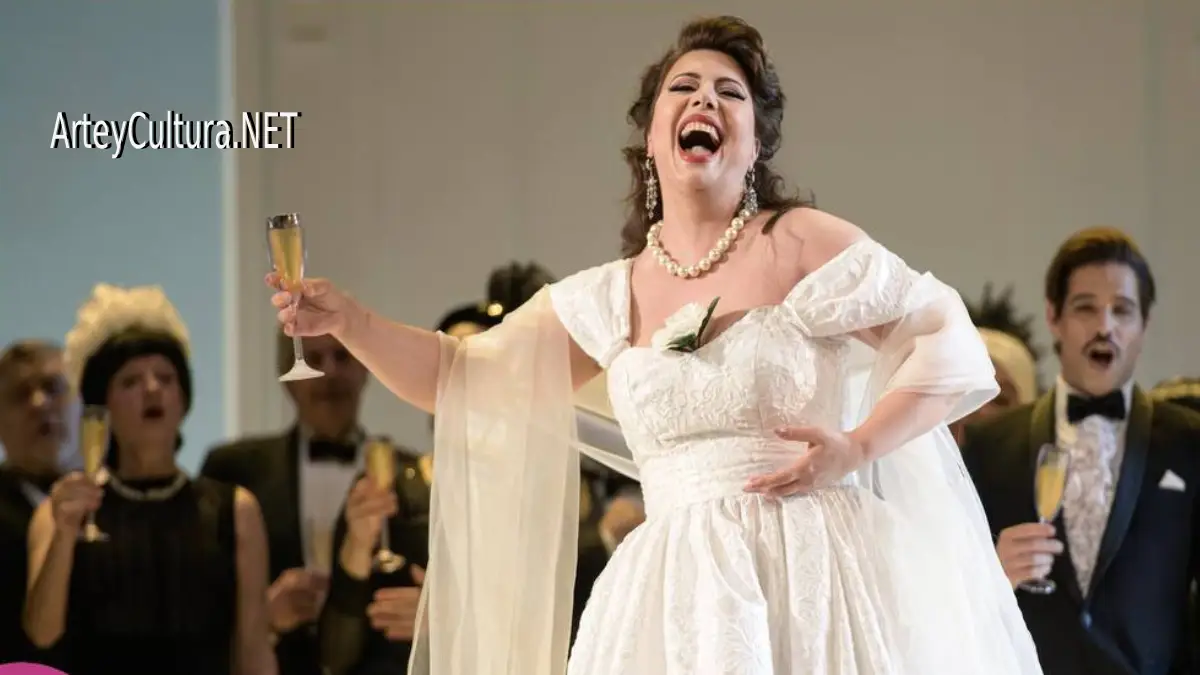
In April 2010, members of the Opera Company of Philadelphia surprised traders and visitors at Reading Terminal Market with the drinking song from La Traviata. For several minutes, an everyday marketplace became a stage for people who had not set out to attend opera.
Verdi and the story of Violetta
Giuseppe Verdi composed La Traviata to a libretto by Francesco Maria Piave, based on Alexandre Dumas fils’s The Lady of the Camellias. Premiered at La Fenice in Venice on March 6, 1853, it follows Parisian courtesan Violetta Valéry, her love for Alfredo Germont, and the social pressure that demands her sacrifice.
The dramatic work of the toast
“Libiamo ne’ lieti calici” appears during a first-act party. Waltz rhythm, alternating soloists, and an expanding chorus create contagious pleasure. The celebration already contains dramatic irony because Violetta’s illness and exclusion will soon expose the fragility beneath it.
Video: Philadelphia, 2010
The official performance record captures apparently scattered voices forming an ensemble. Audience reactions show how music changes a space when stage and stalls disappear.
What a flash performance can do
Such an intervention depends on surprise, coordination, and music strong enough to survive noise and movement. It cannot replace the full opera; it serves as a threshold, awakening curiosity about plot, orchestra, voice, and theatrical production.
Video: Another unexpected “Brindisi”
This second public performance offers a comparison. The setting changes, but gradual participation again turns observers into a temporary community.
Music as dramatic thought
Verdi does not merely decorate a story. Violetta moves from brilliant virtuosity in “Sempre libera” toward extraordinary intimacy. Alfredo’s youthful impulse and Giorgio Germont’s authority acquire distinct musical forms.
The significance of opera in public
Placing Verdi in a market contests the assumption that opera belongs only to specialists. Excellence and accessibility are not opposites. The Philadelphia event remains memorable because it offered immediate beauty while leaving the door open to discover a complete and morally complex work.