José Saramago: Literature and Critical Conscience
José Saramago used imaginative parables, a distinctive narrative voice, and moral inquiry to examine power, solidarity, and human responsibility.
- José Saramago
- Portuguese literature
- Nobel Prize
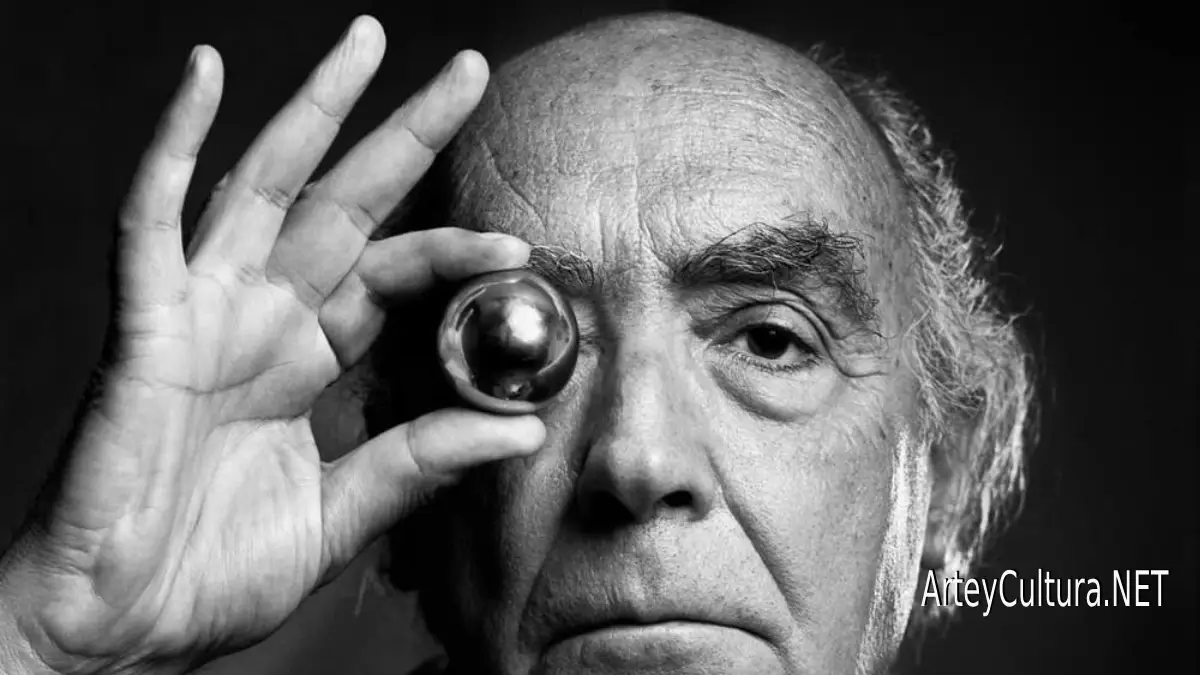
José de Sousa Saramago was born in Azinhaga, Portugal, on November 16, 1922, and died in Tías, Lanzarote, on June 18, 2010. Novelist, poet, playwright, journalist, and essayist, he received the 1998 Nobel Prize in Literature for fiction that turns imaginative premises into questions about responsibility and power.
An autodidact from a rural family
His family moved to Lisbon during childhood. Economic hardship prevented a conventional academic career, and he trained as a mechanic before working in publishing, journalism, translation, and administration. Libraries and sustained reading supplied the education institutions could not.
A late literary maturity
Saramago published an early novel in 1947, but his characteristic voice emerged decades later. Raised from the Ground, Baltasar and Blimunda, and The Year of the Death of Ricardo Reis joined history, invention, irony, and political attention.
Video: Saramago in conversation
This Spanish interview preserves his deliberate reasoning and dry humor, showing how literature and citizenship remained connected in his thought.
A voice that thinks on the page
Long sentences, sparse full stops, and dialogue folded into paragraphs create the rhythm of oral narration. The narrator comments, doubts, and corrects himself, moving from comedy to compassion without leaving the flow of thought.
Video: Power and democracy
This Spanish presentation gathers Saramago’s reflections on economic power and civic responsibility, themes also dramatized by his novels.
Essential thought experiments
Blindness exposes institutional fragility and solidarity during an epidemic. All the Names follows desire through a bureaucratic archive; The Cave confronts craft with mass consumption; Death with Interruptions imagines a country where nobody dies. The Gospel According to Jesus Christ and Cain controversially reread sacred narratives from a human perspective.
The legacy of José Saramago
As the first Portuguese-language Nobel laureate in literature, Saramago amplified the global visibility of his language. His legacy joins formal invention with ethical unease: instead of delivering simple lessons, he makes readers decide what it means to see, obey, care, and act within a community.