Frida Kahlo: Painting, Body, and Identity
Frida Kahlo transformed bodily experience, political conviction, desire, and Mexican identity into a rigorous language of self-portraiture.
- Frida Kahlo
- Mexican painting
- self-portraiture
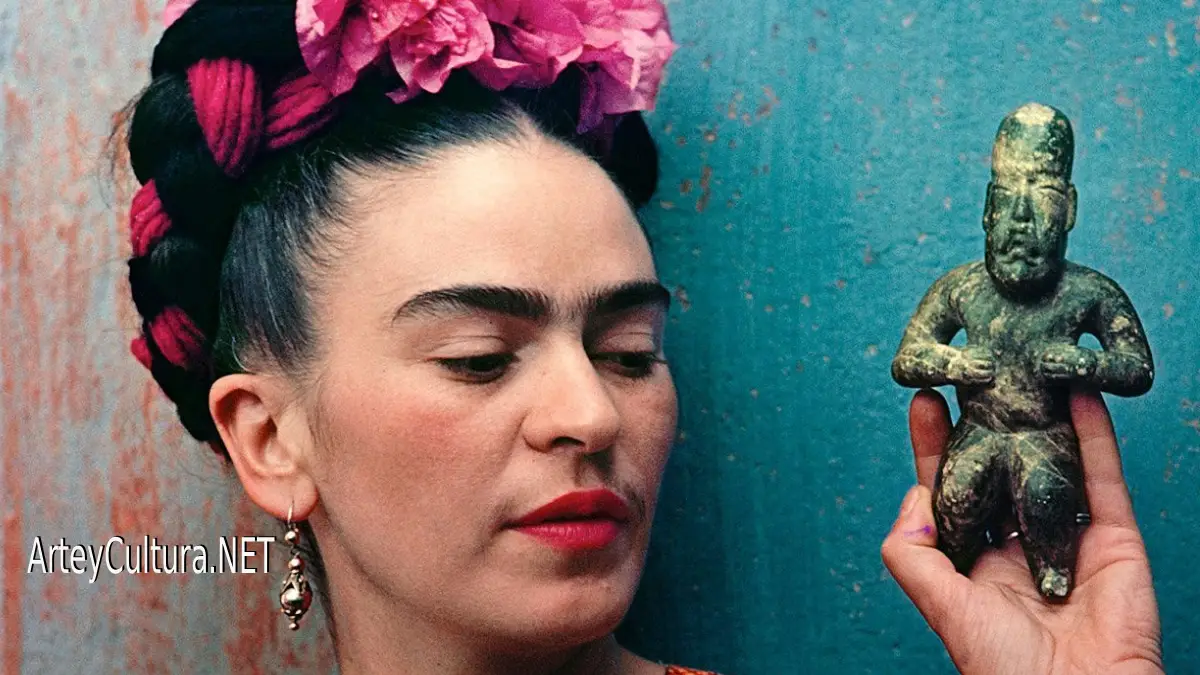
Magdalena Carmen Frida Kahlo Calderón was born in Coyoacán on July 6, 1907, and died there on July 13, 1954. Her precisely constructed paintings transformed bodily experience, desire, political identity, and intimate relationships into an unmistakable visual language.
Illness, accident, and painting
Childhood polio affected one leg. In 1925, a bus accident caused multiple fractures and led to repeated operations. During recovery she painted with an adapted easel and mirror. Pain shaped her relation to body and time, but it should not be romanticized as the source of talent that also required study and discipline.
Self-portrait as investigation
Roughly a third of her approximately 150 paintings are self-portraits. They are not simple repetitions. Dress, plants, animals, hair, blood, roots, medical objects, and landscape change from image to image, asking how identity can be assembled when the body and private life resist stability.
Video: A full English documentary
This widely viewed English documentary examines Kahlo’s life and paintings in depth, connecting experience to imagery without treating every canvas as a literal diary entry.
Diego Rivera, politics, and Mexico
Kahlo married muralist Diego Rivera in 1929, divorced him in 1939, and remarried him in 1940. Admiration, collaboration, betrayal, and conflict all marked their relationship. Her Tehuana clothing, popular objects, and pre-Hispanic references also fashioned a public Mexican identity with aesthetic and political force.
Video: Searching beyond the icon
This second English documentary considers how biography, place, disability, and later fame shaped interpretations of Kahlo while returning attention to the paintings themselves.
Major works and artistic independence
The Two Fridas, The Broken Column, Henry Ford Hospital, Self-Portrait with Thorn Necklace and Hummingbird, and The Wounded Deer join close observation with impossible symbolic situations. Although André Breton associated her with Surrealism, Kahlo insisted that she painted her reality, not dreams.
The legacy of Frida Kahlo
Kahlo exhibited in New York, Paris, and Mexico, but her global stature grew dramatically after death. Feminist, disability, queer, and postcolonial readings expanded her significance. Commercial reproduction can flatten that complexity; the paintings restore a rigorous, ironic artist who made private experience culturally resonant.