David Jon Kassan: Portraiture, Material, and Memory
David Jon Kassan combines patient observation, exacting technique, and ethical attention to create contemporary portraits of lasting presence.
- David Jon Kassan
- contemporary portraiture
- realism
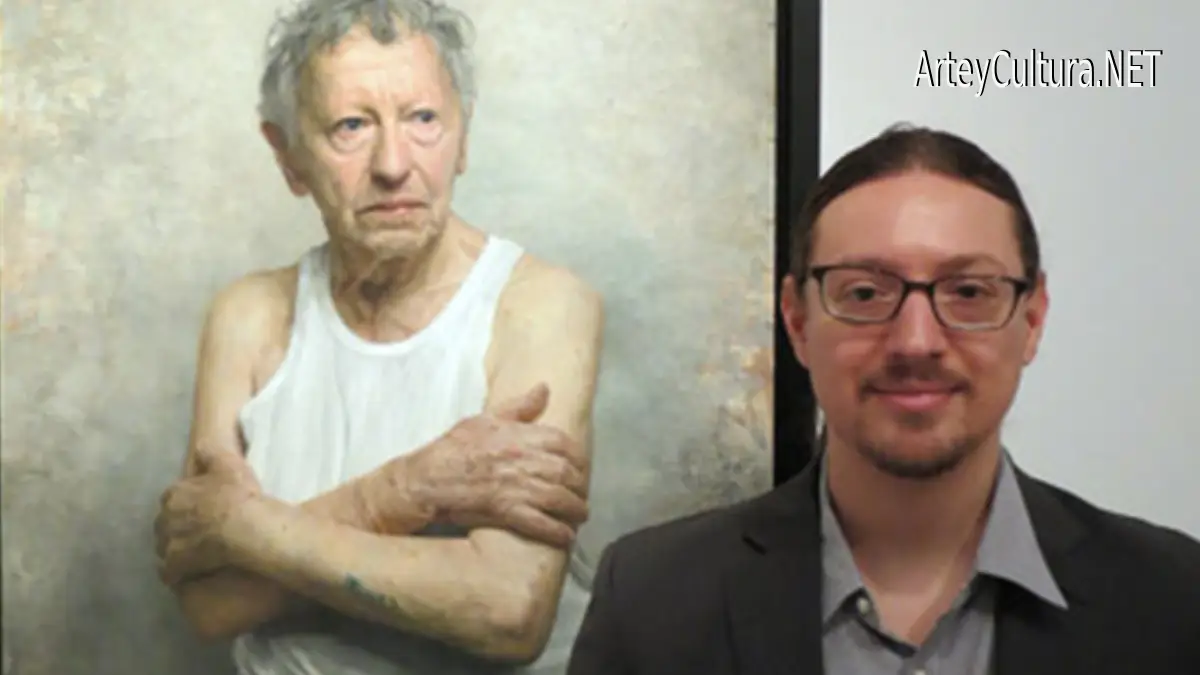
David Jon Kassan, born in Little Rock, Arkansas, on February 25, 1977, is an American painter known for life-size figurative portraits. Observation, layered material, and sustained contact with each sitter allow his work to move beyond photographic resemblance.
Training and commitment to craft
Kassan developed his practice through art study, close analysis of historical painters, and continual experimentation in the studio. He defended realism not as nostalgia, but as a living way to investigate how another person occupies space and meets the viewer’s gaze.
Portraiture beyond copying
Likeness is only a beginning. Proportion, posture, edges, light, skin, clothing, and background must form a coherent encounter. Kassan often places highly observed figures before abstract or worn surfaces, creating tension between physical presence and accumulated memory.
Video: A preview of Kassan’s drawing course
Published by Kassan to introduce his 2010 drawing DVD, this trailer offers a preview of his charcoal portraiture, not the complete lesson. It provides a visual introduction to the process rather than a step-by-step explanation of each decision.
Material and patience
His paintings use layered adjustments and translucent passages to describe skin, hair, fabric, and time. Detail is concentrated where it directs attention; other passages remain open. A large work may require months because every change affects the relation between sitter, surface, and viewing distance.
Video: An alla prima portrait
This extended English studio session compresses an alla prima painting into a visible sequence. It shows that convincing detail depends first on large shapes, values, and color relationships.
Facing Survival
For this project, Kassan listened to and portrayed Holocaust survivors. The images acknowledge trauma without reducing sitters to what they endured; age, resistance, individuality, and later life remain equally present.
A developing legacy
Kassan has exhibited internationally and shared his methods through teaching. His work argues that technical precision gains ethical meaning when it sustains attention to another human being. Portraiture becomes a form of listening conducted through time, pigment, and gaze.