Violeta Parra: Folk Memory and Radical Creation in Chile
Violeta Parra collected endangered songs and transformed Chilean folk knowledge through composition, performance, textiles, painting and cultural activism.
- Violeta Parra
- Chilean music
- Latin American folk music
- Nueva Cancion
- Gracias a la Vida
- textile art
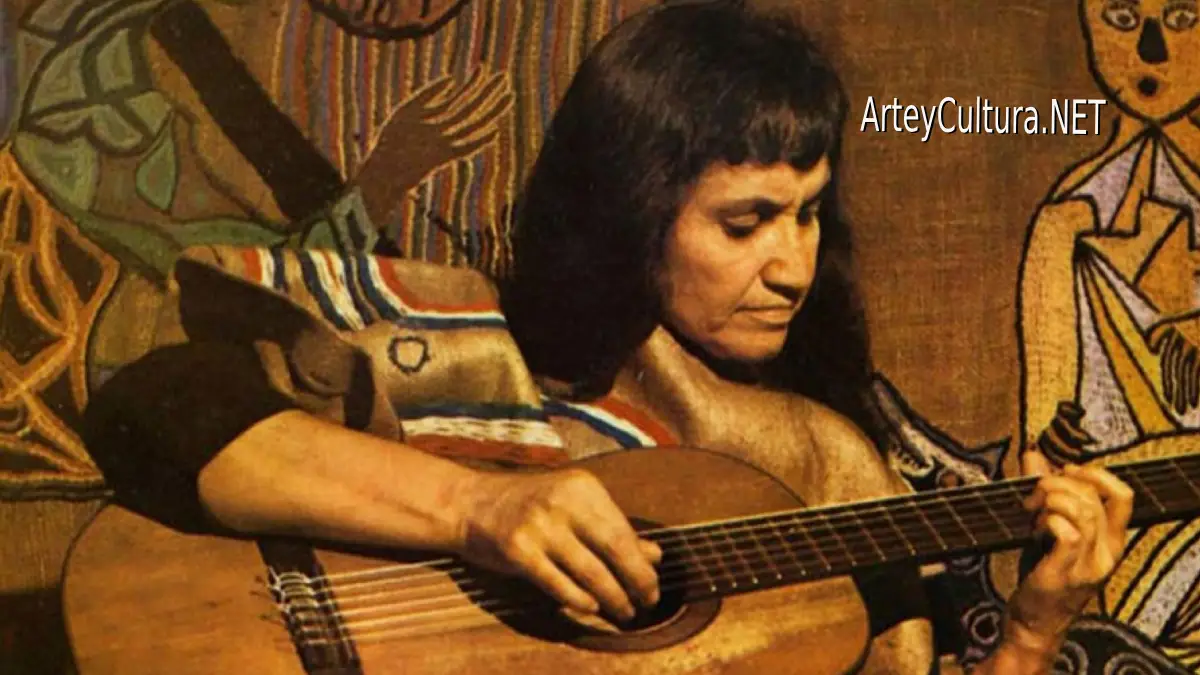
Violeta del Carmen Parra Sandoval was born in Chile’s Nuble region on October 4, 1917, and died in Santiago on February 5, 1967. Singer, composer, collector, textile artist and cultural organiser, she transformed tradition by listening to it deeply and making it speak to the conflicts of her present.
Music within family and everyday life
Parra grew up in a large family where music was part of work, celebration and survival. She performed with siblings and initially knew both rural and urban popular repertoires.
Her later achievement did not come from simply preserving childhood songs. She deliberately travelled, recorded and learned from bearers of traditions that cultural institutions often ignored.
Travelling through Chile to listen
With notebooks and recording equipment, Parra interviewed singers, poets and musicians across different regions. She collected cuecas, tonadas, decimas, religious songs and ceremonial forms at risk of disappearing from public memory.
She recognised her informants as knowledgeable creators, not picturesque material. Their structures, tunings and narrative methods also nourished her own original compositions.
Viola Chilensis: a documentary portrait
This full Spanish-language documentary combines archival records, testimony and songs. It demonstrates that Parra was not only a performer but also a researcher and builder of cultural spaces whose work crossed national borders.
Social song and intimate experience
Songs such as La carta, Arauco tiene una pena and Que dira el Santo Padre address repression, colonial injustice and political violence. Volver a los diecisiete and Run Run se fue pa’l norte explore love and absence with equally precise images.
The political and intimate are not separate territories. A personal wound can expose a social condition, while a collective denunciation retains the concrete voice of the singer.
Gracias a la Vida
This Spanish performance of Gracias a la Vida preserves Parra’s own language and musical phrasing. The inventory of senses and experiences carries gratitude, pain and paradox; reducing it to uncomplicated optimism diminishes the song.
Arpilleras and visual recognition
Parra made embroidered arpilleras, paintings, ceramics and sculpture from modest materials. In 1964, her work was exhibited at the Musee des Arts Decoratifs in the Louvre complex, a remarkable international platform for a Latin American artist working with popular forms.
Her visual art shares narrative directness and intense colour with the songs. Textile practice is not a minor craft category but a rigorous form of visual knowledge.
The legacy of Violeta Parra
Parra preserved traditional repertoires, renewed Chilean song and inspired Nueva Cancion across Latin America. Her death by suicide should be acknowledged without making suffering the explanation for her creativity. Her enduring legacy is active: every new performance must negotiate memory, authorship and the power of tradition to change.