Mario Vargas Llosa: Novels, Power and the 2010 Nobel Prize
Mario Vargas Llosa reshaped the Latin American novel through complex structures, competing voices and sustained investigations of authority, freedom and desire.
- Mario Vargas Llosa
- Peruvian literature
- Nobel Prize in Literature
- Latin American Boom
- The Time of the Hero
- Conversation in the Cathedral
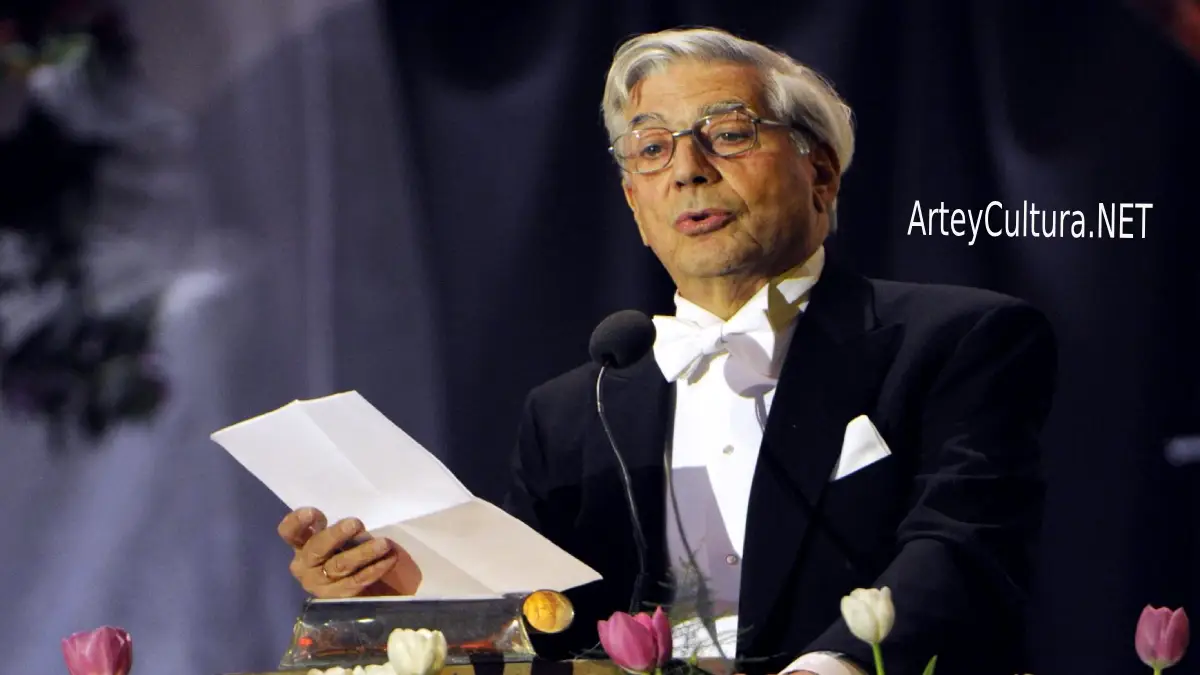
Jorge Mario Pedro Vargas Llosa was born in Arequipa, Peru, on March 28, 1936, and died in Lima on April 13, 2025. Novelist, playwright, essayist and public intellectual, he was a central figure of the Latin American Boom and received the 2010 Nobel Prize in Literature.
Childhood and literary vocation
Vargas Llosa spent parts of his childhood in Bolivia and different Peruvian cities. His experience at the Leoncio Prado Military Academy helped shape his first major novel, but journalism, university study and voracious reading were equally important.
He treated writing as disciplined work rather than occasional inspiration. Life in Europe connected him with publishers and a generation that brought Latin American fiction to a wider international public.
Novels that map power
The Time of the Hero examines violence and complicity inside a military institution. The Green House interweaves coastal and Amazonian settings, while Conversation in the Cathedral asks how authoritarian power enters private life.
Shifting chronology, multiple narrators and superimposed dialogue are not decorative difficulty. They allow different versions of reality to coexist and expose the limits of any single witness.
Places that produced the writer
In this English Nobel Prize interview, Vargas Llosa reflects on Peru and the countries where he lived. His answer shows how geographical displacement became a source of comparison, memory and fictional transformation.
Humour, history and formal range
Captain Pantoja and the Special Service and Aunt Julia and the Scriptwriter use comedy and parody. The War of the End of the World reconstructs Canudos in Brazil, and The Feast of the Goat confronts Rafael Trujillo’s Dominican dictatorship.
He also wrote criticism, memoir, theatre and essays on authors including Flaubert, Victor Hugo, Arguedas and Garcia Marquez. These studies reveal a practitioner analysing how fiction is built.
Power and the Nobel recognition
This English interview from the Nobel organisation addresses the Academy’s emphasis on structures of power and individual resistance. Vargas Llosa identifies a concern that connects formally and geographically varied novels.
Politics and controversy
His politics shifted from sympathy with revolutionary socialism to liberalism. He ran for Peru’s presidency in 1990 and remained active in debates across Latin America and Spain.
His positions generated strong agreement and opposition. Serious evaluation distinguishes the novelist’s formal achievements, the essayist’s arguments and the political actor’s decisions without pretending they are completely unrelated.
The legacy of Mario Vargas Llosa
Beyond the Nobel Prize, Vargas Llosa received the Cervantes Prize and many international distinctions. His novels expanded the technical possibilities of Spanish-language fiction and made institutions of power narratively visible. His most durable legacy remains on the page, where clashing voices prevent reality from collapsing into one authoritative account.