



Oscar Niemeyer: Curves, Concrete and the Modern City
Oscar Niemeyer used reinforced concrete to create sweeping curves and monumental civic spaces that gave Brazilian modernism an unmistakable global identity.
- Oscar Niemeyer
- Brazilian architecture
- Brasilia
- modern architecture
- reinforced concrete
- Pampulha
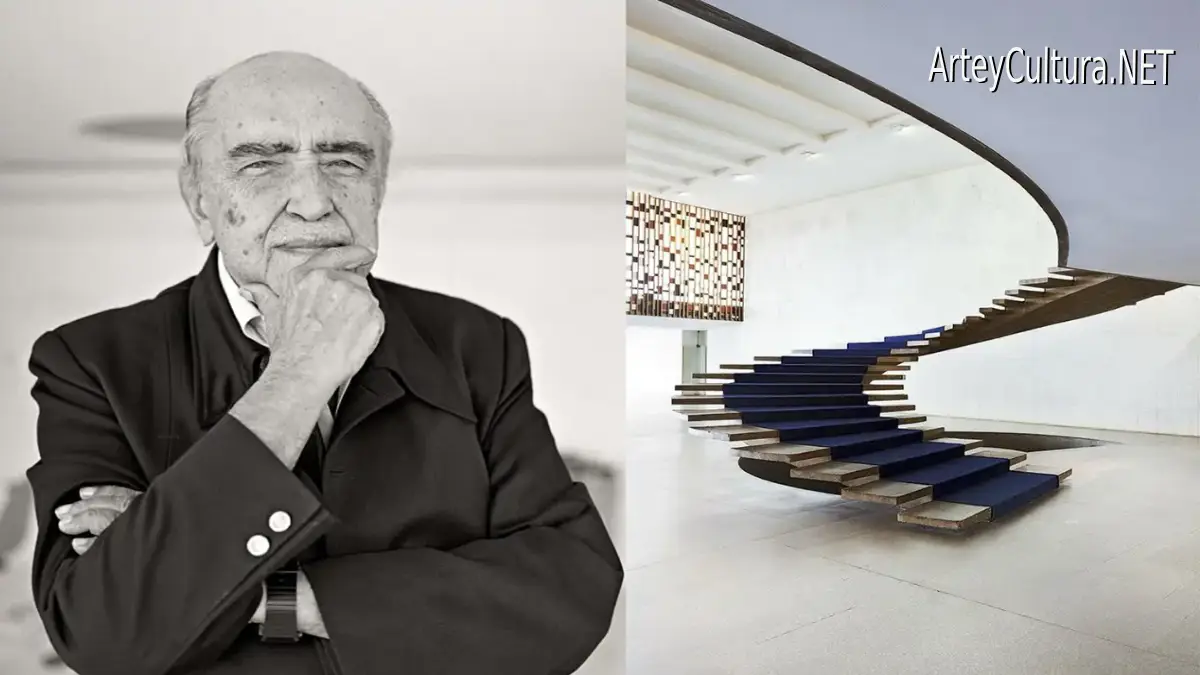
Oscar Ribeiro de Almeida Niemeyer Soares Filho was born in Rio de Janeiro on December 15, 1907, and died there on December 5, 2012, shortly before his 105th birthday. His architecture gave reinforced concrete a sweeping, sculptural freedom that became synonymous with Brazilian modernism.
Formation and early collaborations
Niemeyer graduated from the National School of Fine Arts and worked with Lucio Costa. The Ministry of Education and Health project in Rio brought Brazilian architects into collaboration with Le Corbusier while developing responses to climate through sun screens, gardens and open ground levels.
At Pampulha in Belo Horizonte, commissioned in the early 1940s, Niemeyer combined buildings, landscape and art. The church of Saint Francis of Assisi used curved shells and tile panels to challenge conventional religious architecture.
The freedom of the curve
Niemeyer valued engineering but rejected a modernism limited to boxes and efficiency. Concrete allowed columns, domes, ramps and roofs to become continuous gestures. The curve was not applied ornament: it shaped structure, circulation and the experience of space.
His rapid freehand sketches communicate an overall spatial idea. Engineers then translated those gestures into buildable systems, making collaboration central to the apparent spontaneity.
Oscar Niemeyer and modern architecture
This English-language introduction explains Niemeyer’s use of curves and his place within modern architecture. It provides a concise visual vocabulary for comparing his civic, cultural and residential projects.
Brasilia: monument and contradiction
For Brazil’s new capital, inaugurated in 1960, Lucio Costa designed the urban plan and Niemeyer created principal government buildings. The National Congress, Cathedral, presidential palace and ministries establish powerful relationships among volume, horizon and ceremonial space.
Brasilia is both an extraordinary artistic ensemble and a contested city. Monumental distances, dependence on vehicles and social separation reveal the limits of designing national modernity from above. The workers who built the capital often lived far from its celebrated centre.
The last modern architect
This English documentary surveys Niemeyer’s long career and visual philosophy. It encourages viewers to assess the beauty of individual buildings alongside the political and urban systems in which they operate.
Exile and later work
Niemeyer’s membership in the Brazilian Communist Party complicated his position after the 1964 military coup. He worked abroad, designing projects such as the headquarters of the French Communist Party in Paris.
Later landmarks include the Niteroi Contemporary Art Museum, whose elevated form and curving ramp frame the surrounding bay. He remained professionally active into extreme old age.
The legacy of Oscar Niemeyer
Niemeyer received the Pritzker Architecture Prize in 1988, shared with Gordon Bunshaft. His work demonstrated the expressive possibilities of concrete and made Brazilian architecture globally influential. Its legacy is strongest when formal invention and civic critique are held together: beautiful public space must also be accessible, humane and socially connected.