Francisco Goya: Reason, Violence and Pictorial Freedom
Francisco Goya moved from tapestry designs and court portraits to radical prints and haunting late paintings that exposed superstition, war and human fragility.
- Francisco Goya
- Spanish art
- Romanticism
- The Disasters of War
- Black Paintings
- printmaking
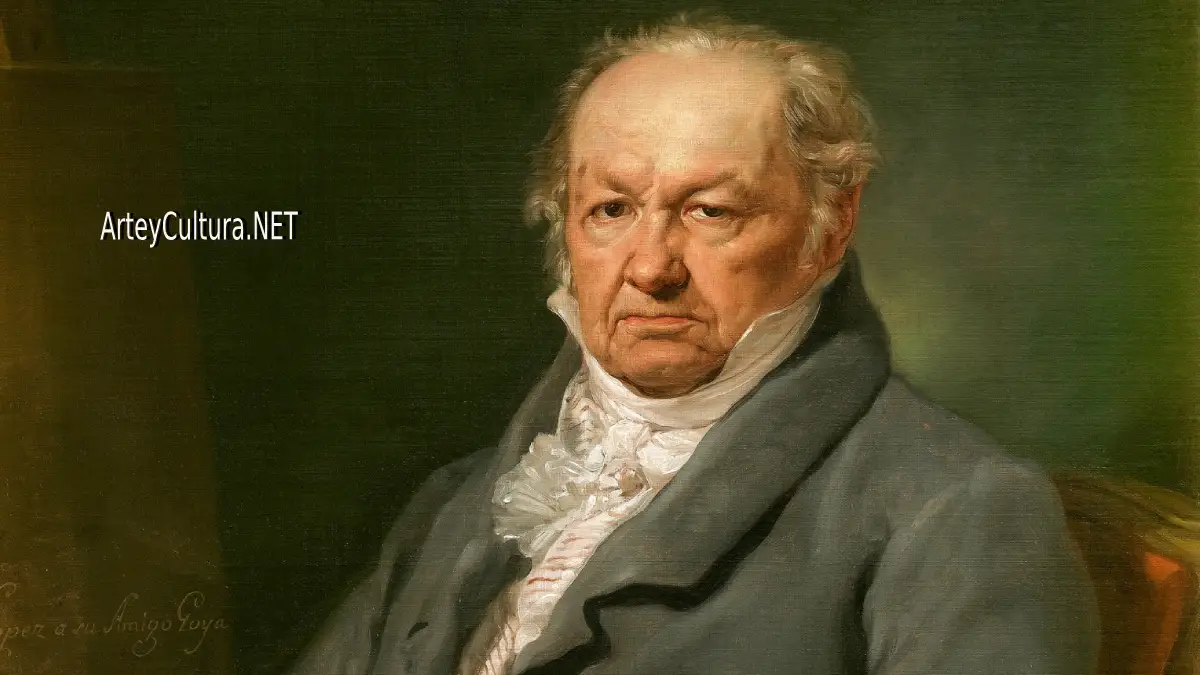
Francisco Jose de Goya y Lucientes was born in Fuendetodos, Spain, on March 30, 1746, and died in Bordeaux, France, on April 16, 1828. Painter and printmaker, he witnessed court ceremony, popular life, invasion and political repression while continually reinventing his visual language.
Training and ascent at court
Goya trained in Zaragoza and travelled to Italy before establishing himself in Madrid. Designs for the Royal Tapestry Factory brought lively scenes of recreation, labour and fashion into royal interiors. Their apparent ease already reveals careful observation of class and gesture.
He became a court painter and an incisive portraitist. Sitters retain status, fabrics and ceremonial presence, yet their expressions often resist flattery. In The Family of Charles IV, splendour coexists with unsettling psychological directness.
Illness and an altered perspective
A severe illness in the 1790s left Goya deaf. Isolation affected his social life and sharpened his inward, critical imagination, although official portraiture and private experimentation continued side by side.
The print series Los Caprichos attacks superstition, corruption, vanity and failures of education. Its famous sleeping figure surrounded by creatures makes reason and nightmare mutually dependent rather than simple opposites.
Goya’s darker vision
This English documentary, presented by critic Robert Hughes, studies Goya’s later work and historical experience. It connects technical freedom with physical vulnerability and political disillusion without reducing the paintings to symptoms of madness.
War without heroic distance
The French occupation and the violence of the Peninsular War transformed Goya’s art. The Second of May 1808 depicts chaotic uprising, while The Third of May 1808 confronts the machinery of execution through light, gesture and anonymous force.
In The Disasters of War, bodies suffer without the consoling structure of victory. The etched captions often question what can be known and whether viewers are capable of learning from repeated cruelty.
An English documentary overview
This English-language documentary surveys the range of Goya’s production. Comparing portraits, prints and private paintings makes clear that the artist cannot be confined to a single dark period or stylistic category.
The Black Paintings
Late in life, Goya covered the walls of his home, the Quinta del Sordo, with images later known as the Black Paintings. They were not originally intended as museum canvases. Their transfer from plaster changed their material condition, an important fact when interpreting them today.
Figures such as the devouring Saturn and the gathering of distorted faces remain ambiguous. Fear, age, violence and collective irrationality are present, but no single narrative exhausts them.
The legacy of Francisco Goya
Goya’s loose handling, ethical unease and refusal of idealized warfare opened paths toward Romanticism, Realism, Expressionism and modern political art. Manet and Picasso are among the artists who responded to his compositions. His greatest legacy is a visual freedom joined to scepticism: power, reason and spectatorship are never allowed to remain innocent.