Jules Verne: Extraordinary Voyages Between Science and Imagination
Jules Verne transformed geographical and scientific knowledge into compelling adventures whose machines, explorers and ethical conflicts still shape popular imagination.
- Jules Verne
- French literature
- Extraordinary Voyages
- science fiction
- Twenty Thousand Leagues Under the Seas
- Around the World in Eighty Days
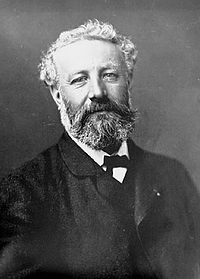
Jules Gabriel Verne was born in Nantes, France, on February 8, 1828, and died in Amiens on March 24, 1905. His Extraordinary Voyages made scientific and geographical knowledge the engine of modern adventure.
From Nantes to the Paris stage
Growing up in a port city exposed Verne to ships, maps and stories of distant travel. He went to Paris to study law, but theatre and literature absorbed his attention. He wrote plays, libretti and stories while building wide knowledge through reading.
His career changed when publisher Pierre-Jules Hetzel accepted Five Weeks in a Balloon. Hetzel’s editorial direction and marketing helped establish a long series intended to survey the known and imagined worlds.
The Extraordinary Voyages
Verne’s major novels include Journey to the Centre of the Earth, From the Earth to the Moon, Twenty Thousand Leagues Under the Seas, Around the World in Eighty Days and The Mysterious Island.
These stories combine carefully assembled information with suspense, humour and memorable personalities. Travel is never only movement: it becomes a test of knowledge, character, technology and power.
A modern English introduction
This English-language France 24 feature revisits the Extraordinary Voyages and their continuing cultural appeal. It offers a concise way to distinguish Verne’s documented imagination from the simplified image of a fortune-teller of technology.
Science without simple prophecy
Verne is often said to have predicted submarines, spaceflight and other inventions. A more accurate account is that he studied contemporary experiments, engineering debates and geographical reports, then extrapolated their possibilities with unusual narrative discipline.
The Nautilus, for example, is compelling not only as machinery. It is inseparable from Captain Nemo, a brilliant and wounded figure whose resistance, secrecy and violence complicate the technological wonder.
The writer who imagined possible futures
This English educational film from the European Space Agency uses Jules Verne as a starting point for explaining ballistics and rocketry. It does not provide a second biography; instead, it demonstrates how his cultural legacy can lead into a documented discussion of the science behind leaving Earth.
Global circulation and adaptation
Verne became one of the world’s most translated authors. Yet abridged editions and loose translations sometimes reduced the intellectual and political complexity of his prose, especially in English-speaking markets.
Cinema, television, illustration, comics and theme parks turned his voyages into a shared visual vocabulary. Adaptations often change plots, but the fusion of exact mechanisms with impossible horizons remains recognizable.
The legacy of Jules Verne
Verne helped establish a literature in which research and speculation could coexist with mass appeal. His books inspired explorers, engineers, filmmakers and later science-fiction writers, but their lasting force comes from more than invention: they ask who controls knowledge, what exploration costs and whether progress can be separated from responsibility.