Camille Claudel: Sculpture, Independence and a Life Reconsidered
Camille Claudel created psychologically intense sculpture in bronze, plaster and stone, overcoming exclusion before decades of confinement obscured her achievement.
- Camille Claudel
- French sculpture
- Auguste Rodin
- The Waltz
- The Mature Age
- women artists
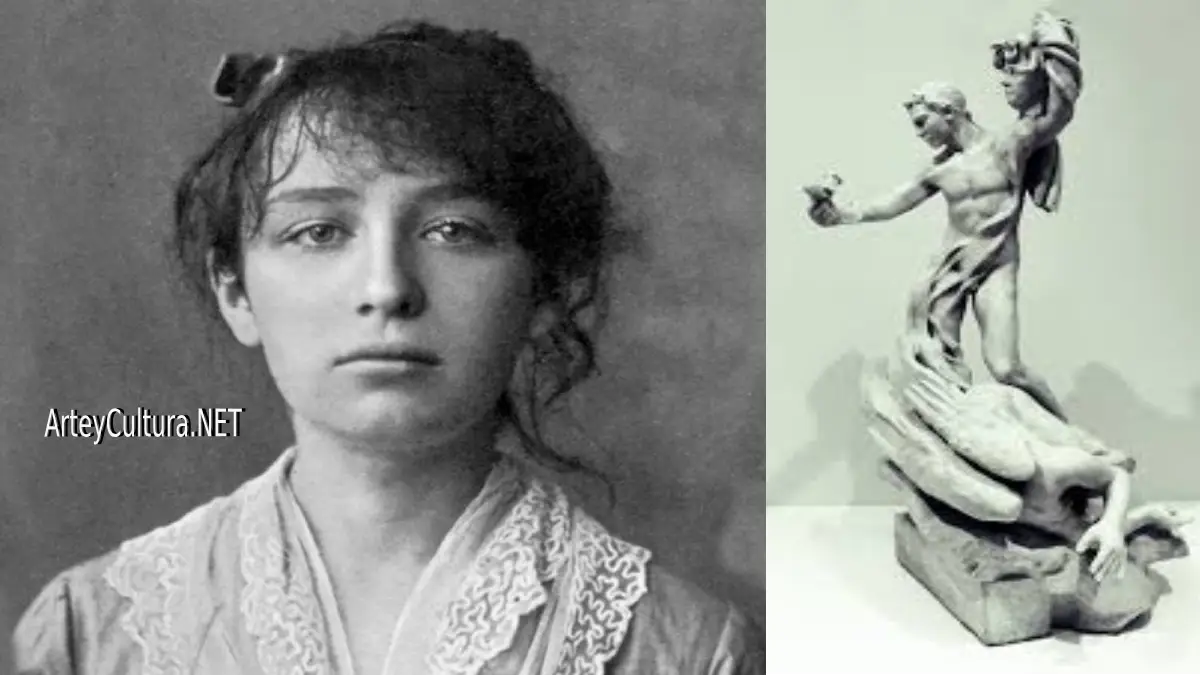
Camille Claudel was born in Fere-en-Tardenois, France, on December 8, 1864, and died at the Montdevergues asylum near Avignon on October 19, 1943. Her sculpture combines formal daring, psychological tension and an extraordinary sensitivity to bodies in motion.
An early determination to sculpt
Claudel modelled clay from childhood and moved with her family to Paris so that she could study art. Because the Ecole des Beaux-Arts did not admit women, she trained at the Academie Colarossi and shared a studio with other women artists.
The sculptor Alfred Boucher encouraged her. When he left Paris, Auguste Rodin became an adviser to the group and later employed Claudel in his studio.
Collaboration and artistic independence
Claudel and Rodin developed an intense personal and professional relationship. She modelled hands and feet, understood large workshop practices and participated in an exchange of poses and ideas. Yet defining her only through Rodin conceals her own authorship.
Works such as Sakuntala, The Waltz and The Mature Age possess distinct rhythms and emotional structures. Claudel compressed complicated relationships into gestures, leaning bodies and charged empty spaces.
Looking closely at the sculpture
This visual study allows sustained attention to Claudel’s surfaces and compositions. It is particularly valuable for observing how a change in angle transforms an embrace, a retreating body or a figure pleading across open space.
Recognition and resistance
Claudel exhibited at major salons and received praise from critics, but large sculpture required money, materials, foundries and official commissions. Gender restrictions, financial hardship and hostile expectations narrowed her opportunities.
After separating professionally and emotionally from Rodin, she pursued her own studio practice. Her suspicions and isolation deepened, and she destroyed some works during periods of crisis.
A life recovered from the archive
This English-language documentary reconstructs Claudel’s development and the circumstances surrounding her confinement. It also helps separate surviving evidence from the romantic myths that have often overwhelmed discussion of her art.
Thirty years of confinement
Following her father’s death, Claudel was committed to an institution in 1913. Although medical records at times considered the possibility of release, her family did not bring her home. She remained confined for approximately thirty years. She was initially buried in a temporary grave in Montfavet cemetery; her remains were later transferred to a communal grave.
Her experience raises difficult questions about mental health, family authority, gender and the historical silencing of women. Those questions matter, but they should not replace serious attention to the sculptures themselves.
The legacy of Camille Claudel
Museums, scholarship and the Musee Camille Claudel in Nogent-sur-Seine have restored her position within modern sculpture. Today she is recognized not as a footnote to a famous man but as an artist whose modelling, movement and emotional precision created an unmistakable language.