Mario Vargas Llosa: Freedom, Books and Public Responsibility
The life, major novels, changing political thought and literary legacy of Mario Vargas Llosa, whose work linked formal invention with debates about freedom and power.
- Mario Vargas Llosa
- Peruvian literature
- Nobel Prize
- Latin American Boom
- freedom
- The Time of the Hero
Mario Vargas Llosa was born in Arequipa on March 28, 1936, and died in Lima on April 13, 2025. Novelist, essayist, journalist and public intellectual, he became a central figure of the Latin American Boom and received the 2010 Nobel Prize in Literature.
Peru, Bolivia and military school
His childhood unfolded between Peru and Bolivia. Time at Lima’s Leoncio Prado Military Academy supplied material for The Time of the Hero, whose multiple perspectives expose violence and conformity inside an authoritarian institution.
The novel’s international success began a career in which Peruvian experience entered complex structures without being reduced to documentary transcription.
Narrative architecture and power
The Green House and Conversation in the Cathedral interweave places, periods and voices. The reader must reconstruct relationships, becoming an active participant in the representation of social power.
Later works include The War of the End of the World and The Feast of the Goat. Historical research supports narratives about fanaticism, dictatorship and the moral compromises surrounding authority.
Books and civic imagination
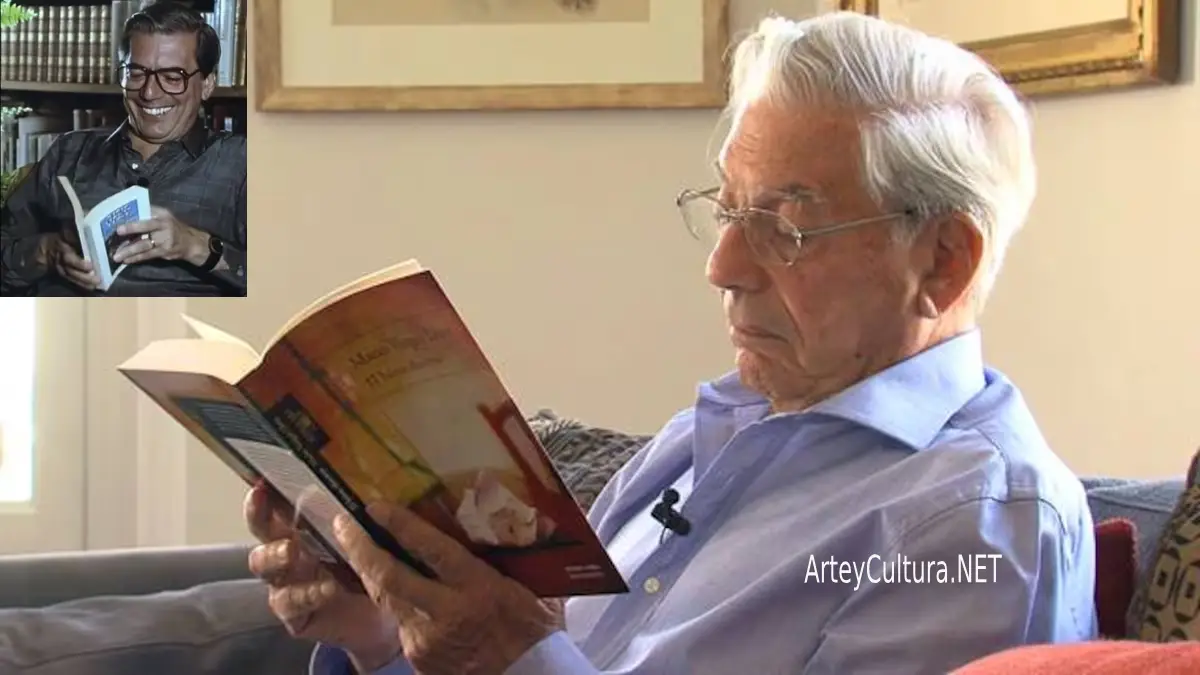
In this Spanish-language public appearance, Vargas Llosa connects books with the ability to imagine lives unlike one’s own. Reading becomes a form of dissatisfaction with inherited limits.
A changing political itinerary
His politics moved from support for the Cuban Revolution toward liberal democracy and market economics. He ran for the Peruvian presidency in 1990 and remained an influential, controversial commentator.
Literary importance does not require agreement with every public position. The changes themselves illuminate tensions between artistic freedom, ideology and political action.
Culture, ideas and freedom
This Spanish conversation develops his defence of open debate and resistance to dogma. It also provides material for readers to assess his arguments directly.
Achievements and legacy
Vargas Llosa received the Cervantes Prize in 1994 and the Nobel in 2010. His legacy joins narrative innovation with an insistent claim: literature expands freedom because it lets readers compare the world they inhabit with worlds that might exist.