Antoni Gaudi: Nature, Structure and Total Architecture
The life, structural experiments, major Barcelona buildings and legacy of Antoni Gaudi, whose architecture integrated geometry, craft, light and symbolism.
- Antoni Gaudi
- Catalan Modernisme
- Sagrada Familia
- Barcelona architecture
- Park Guell
- structural design
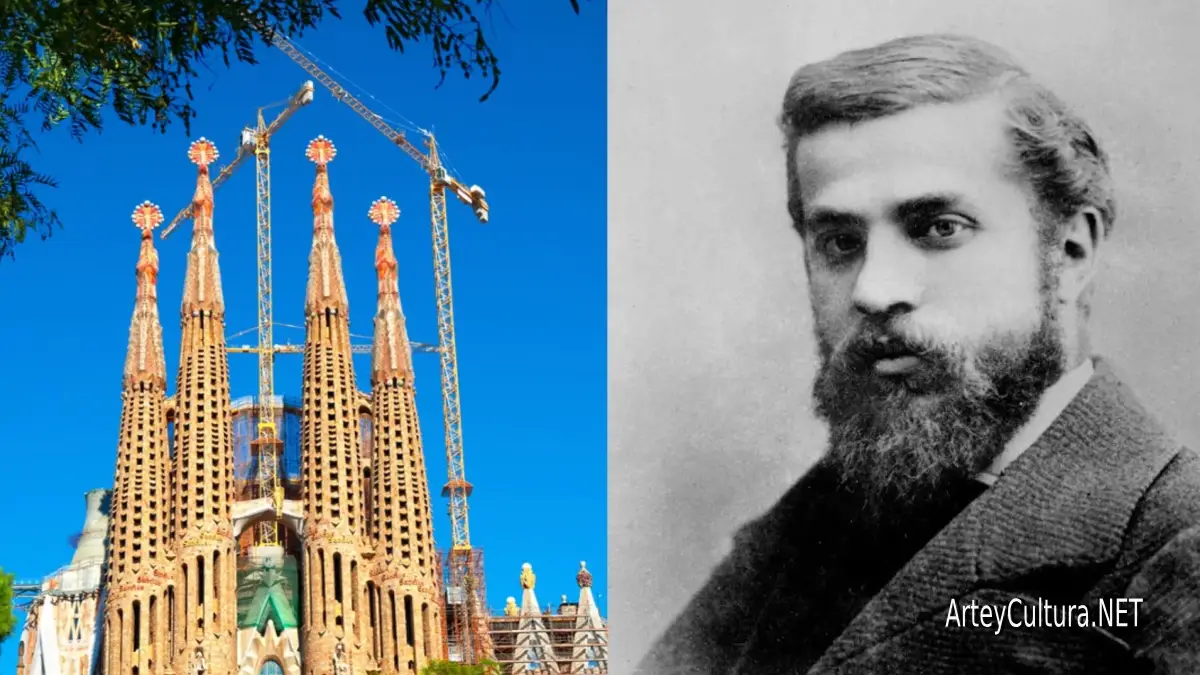
Antoni Gaudi i Cornet was born in Catalonia on June 25, 1852, and died in Barcelona on June 10, 1926. The most singular architect of Catalan Modernisme, he integrated structure, ornament, craft, light and religious symbolism into total environments.
Training and an expanding Barcelona
Gaudi studied architecture in Barcelona while the city was growing beyond its old walls. Early commissions brought him into contact with ironwork, ceramics, carpentry and the collaborative labour essential to his buildings.
Patron Eusebi Guell enabled several ambitious experiments, including Palau Guell, Park Guell and the crypt at Colonia Guell.
Learning geometry from nature
Gaudi did not copy flowers or bones as decoration. He studied how natural forms distribute weight and used catenary arches, ruled surfaces, branching columns and inclined supports.
Hanging-chain models allowed gravity to generate efficient compression structures. Photographs of inverted models helped translate those forces into masonry.
Architecture and art as one system
This English UNESCO/NHK overview surveys the seven properties on the World Heritage List. Its views of buildings, gardens and decorative arts show how Gaudi treated architecture as a unified environment.
Houses and public spaces
Casa Batllo transforms an existing building through flowing surfaces, colour and an ingenious roof. Casa Mila uses stone facades, courtyards and a free structural system to reconsider urban housing.
Park Guell began as an unsuccessful residential development but became a public environment where topography, water management and mosaic craft interact.
The Sagrada Familia
Gaudi took responsibility for the basilica in 1883 and devoted increasing attention to it. He designed a building that communicates Christian narrative through geometry, sculpture and changing light.
This detailed English architectural tour explains the basilica’s facades, interior, columns, openings and surviving plans. It clarifies how later teams interpret an unfinished design rather than simply executing a complete set of instructions.
Death and legacy
Gaudi died after being struck by a tram. Seven properties associated with him are UNESCO World Heritage sites. His legacy shows that technical calculation and imagination need not oppose one another: structure itself can become expressive form.