Los Jaivas: Rock, Andean Roots and Collective Experiment
The Chilean origins, exile, instruments, major albums and enduring legacy of Los Jaivas, whose music created an original encounter between rock and Andean traditions.
- Los Jaivas
- Chilean rock
- Andean music
- Alturas de Machu Picchu
- Latin American rock
- Pablo Neruda
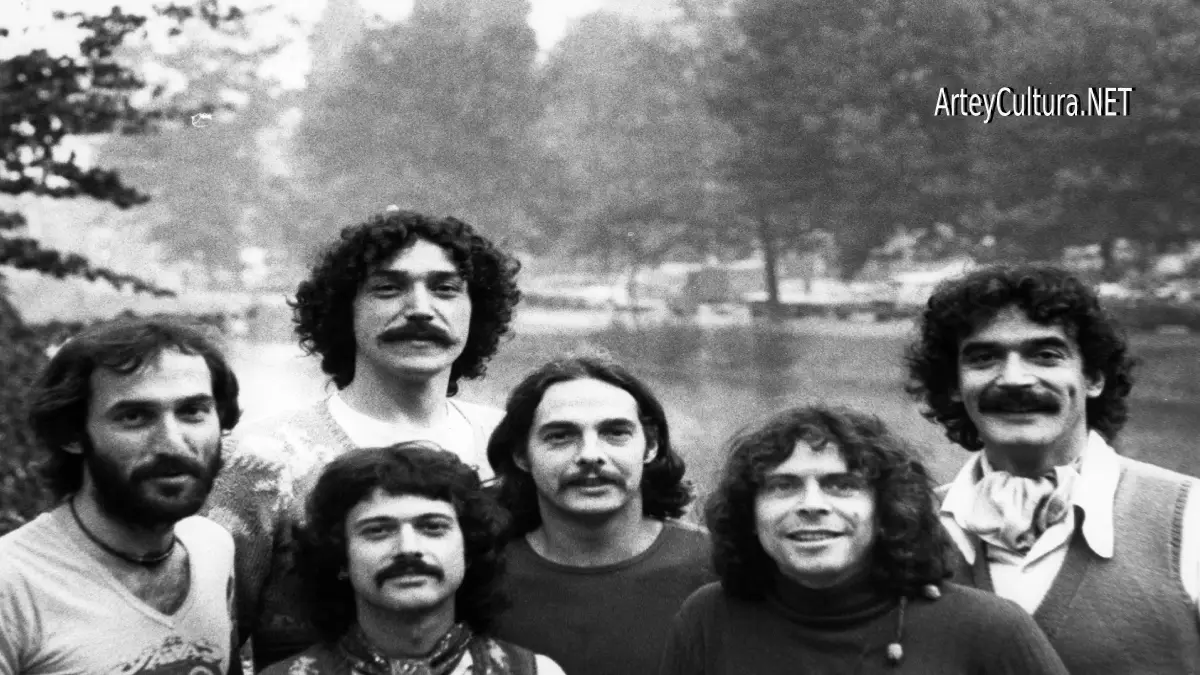
Los Jaivas formed in Viña del Mar, Chile, in 1963. Across more than six decades, the group has brought electric rock, improvisation and Andean instruments into a language that treats Latin American traditions as structural foundations rather than exotic decoration.
From High Bass to a new identity
The musicians first performed dance repertory under the English name High Bass. Extended improvisation gradually displaced imitation, and the Spanish-sounding name Los Jaivas marked a more personal direction.
Their early experiments grew from collective performance. Rhythm, noise and spontaneous interaction mattered before the group developed the large song forms for which it became famous.
Instruments in genuine dialogue
Quena, charango, trutruca and Andean percussion coexist with electric guitar, bass, piano and synthesiser. The music does not simply place a panpipe melody over a standard rock backing.
Rhythmic organisation, timbre and form change through the encounter. Traditional references and studio technology become parts of one evolving ensemble sound.
Neruda at Machu Picchu
This Spanish-language performance of Sube a nacer conmigo hermano was filmed at Machu Picchu. Neruda’s words, the archaeological landscape and the band’s arrangement create a powerful meeting, though the Inca site should not be reduced to scenery for modern spectacle.
Exile and transnational creation
After the 1973 Chilean coup, the group lived first in Argentina and later in France. Exile altered its audience and working conditions while strengthening a Latin American identity that crossed national borders.
Loss also shaped the ensemble. Drummer Gabriel Parra died in 1988, and later generations of family and collaborators helped continue the group without pretending that replacement leaves music unchanged.
Songs and major works
Todos juntos and Mira niñita became defining Chilean songs. The album Alturas de Machu Picchu, released in 1981, sets passages from Pablo Neruda’s Canto General in a large-scale suite.
The project joins progressive-rock development with indigenous instruments and choral force. Poetry is not an introductory quotation; it determines the work’s emotional and formal journey.
The complete concert experience
This Spanish-language full concert version allows the album’s scale to unfold. Hearing the complete sequence reveals thematic returns and transitions lost when individual songs are isolated.
Achievement and legacy
Los Jaivas survived dictatorship, exile, death and generational change while retaining a recognisable collective voice. Their legacy is an original Latin American fusion in which history and experimentation remain equally active.