Sokurov's Faust: Power, Desire and Moral Deformation
The literary sources, distorted visual language, power tetralogy and legacy of Aleksandr Sokurov's Faust, winner of the 2011 Venice Golden Lion.
- Faust
- Aleksandr Sokurov
- Russian cinema
- Goethe
- Venice Film Festival
- arthouse film
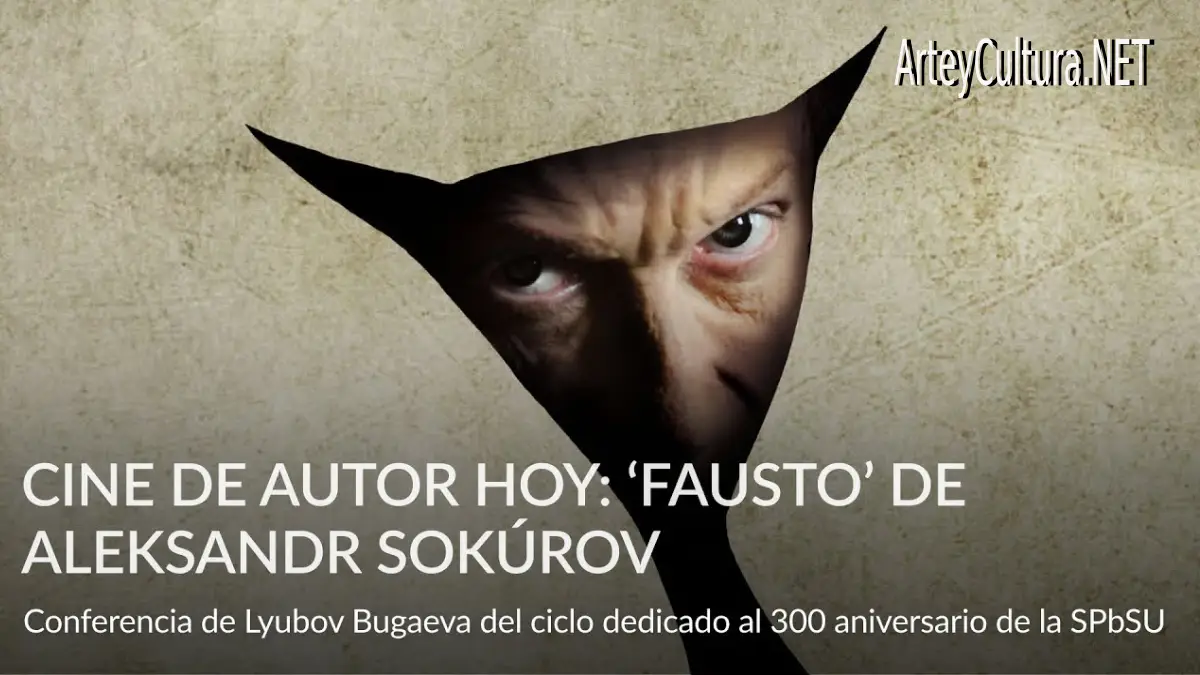
Faust is a 2011 film directed by Russian filmmaker Aleksandr Sokurov. Freely reworking Goethe and earlier versions of the legend, it replaces a straightforward literary adaptation with a dense physical world of appetite, humiliation and moral compromise.
Closing a tetralogy about power
Sokurov conceived the film as the final part of a cycle following Moloch, about Hitler; Taurus, about Lenin; and The Sun, about Emperor Hirohito. The first three concern historical rulers; Faust represents the impulse that precedes political domination.
His hunger is not merely for authority over others. He wants knowledge, experience and control over mortality, yet cannot accept human limits.
Goethe transformed rather than illustrated
The film draws principally on Goethe’s Faust, Part One but rearranges events and character relationships. Its moneylender, Sokurov’s grotesque counterpart to Mephistopheles, is bodily, intrusive and vulgar rather than elegantly satanic.
Faust’s attraction to Margarete remains important, but the bargain emerges from a wider dissatisfaction. Desire becomes one expression of an appetite that no achievement can settle.
The English-language trailer
This English TIFF trailer introduces the compressed interiors, restless camera and earth-coloured palette. It communicates immediately that the film seeks sensory disorientation rather than the clarity of a conventional period drama.
A distorted visual world
Sokurov and cinematographer Bruno Delbonnel use altered lenses, unusual colour and a near-square frame. Bodies crowd one another, streets twist and rooms rarely offer stable depth.
The visual deformation is not ornament added to the story. It makes power visible as an inability to recognise other people as fully independent beings.
Language, painting and physical performance
The German dialogue is rapid and layered, while the imagery recalls Northern Renaissance painting and later Expressionism. Faces and flesh are treated with an attention that can be comic, repulsive and painfully human.
Actors move through spaces as though the world itself resisted them. This physical pressure prevents philosophical questions from floating free of hunger, sex, money and mortality.
Venice recognition in English coverage
This English Euronews report records the film’s reception at Venice. It provides historical context for the award while offering another view of Sokurov’s unusual imagery.
Achievement and legacy
Faust won the Golden Lion at the 2011 Venice Film Festival. Its transcendence lies in renewing a canonical myth without treating it as a museum piece: the desire to master everything becomes a bodily prison built one compromise at a time.