Beatlemania: When Popular Music Became a Global Event
The origins, media expansion and cultural consequences of Beatlemania, the mass phenomenon that carried the Beatles from Liverpool to worldwide fame.
- Beatlemania
- The Beatles
- British Invasion
- popular music
- youth culture
- 1960s
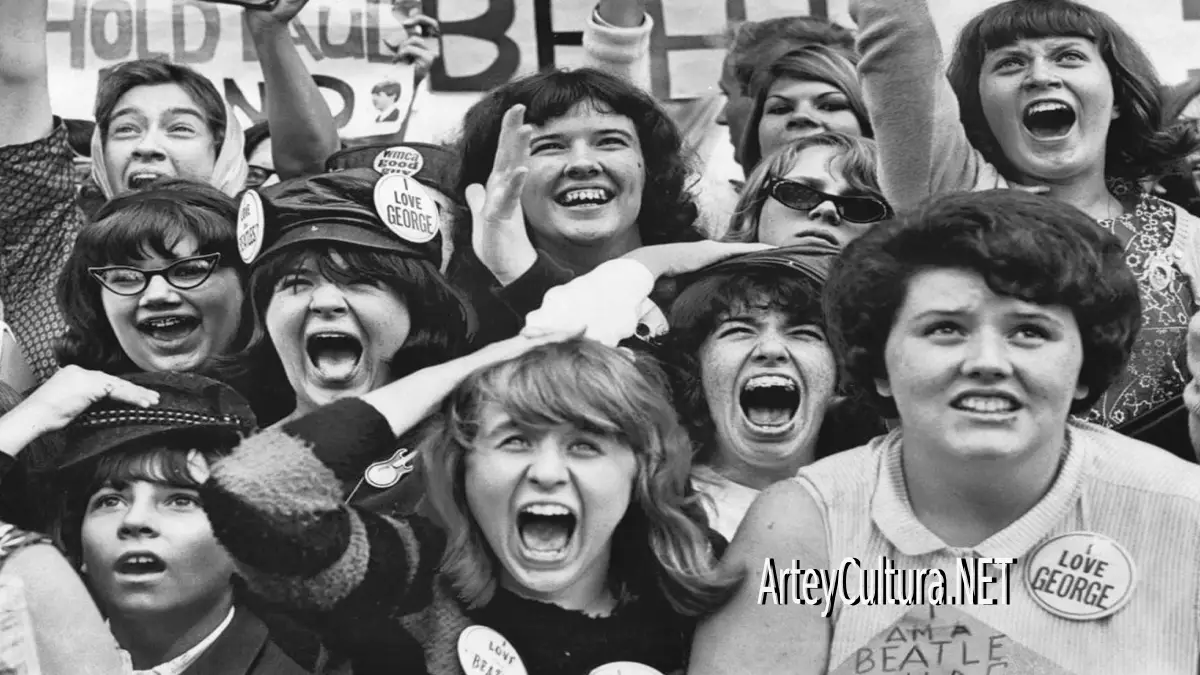
Beatlemania names the extraordinary mass enthusiasm surrounding John Lennon, Paul McCartney, George Harrison and Ringo Starr, especially from 1963 onward. Screaming crowds became its most visible sign, but the phenomenon joined musical craft, television, journalism, fashion and a newly powerful youth audience.
Before the screaming crowds
The Beatles developed through sustained performance in Liverpool and Hamburg. Long club engagements sharpened ensemble playing, enlarged their repertoire and created the confident stage identity later presented to national audiences.
Manager Brian Epstein refined their public presentation, while producer George Martin helped turn energetic live musicians into inventive recording artists. Success therefore emerged from work, collaboration and timing rather than sudden luck.
Britain in 1963
Singles such as Please Please Me and She Loves You brought chart dominance, television appearances and intense press coverage. The word Beatlemania entered common use as crowds gathered at theatres, stations and public appearances.
Teenage fans were often described by adult commentators as irrational. Yet fandom also expressed new purchasing power and a public culture in which young women, especially, asserted tastes that established institutions could not control.
Remembering the people around the band
This English trailer for Good Ol’ Freda introduces Freda Kelly, secretary to the Beatles and their fan club. Her perspective reminds viewers that Beatlemania depended on extensive, frequently overlooked organisational labour.
The United States and the British Invasion
The Beatles appeared on The Ed Sullivan Show in February 1964 before an enormous American television audience. Their success opened commercial opportunities for other British groups and accelerated transatlantic exchange in popular music.
Tours soon revealed the limits of the existing concert industry. Amplification could not overcome constant audience noise, security systems were improvised and stadium shows created a scale of performance that technology had not yet learned to support.
Fame alongside artistic development
Beatlemania did not freeze the group musically. In a few years, songwriting, studio methods and instrumentation moved from compact pop singles toward albums such as Rubber Soul and Revolver.
By 1966, the Beatles stopped touring. The decision separated recording from the demands of reproducing every new idea onstage and made the studio itself an instrument of composition.
Animation and the continuing myth
This English trailer for Yellow Submarine shows how the Beatles’ cultural image moved beyond documentary likeness into a graphic universe. Animation became another way to sustain and reinterpret their collective identity.
Transcendence and legacy
Beatlemania changed publicity, merchandising, touring and the international reach of youth culture. Its deeper significance lies in the coexistence of commerce and invention: mass attention surrounded a group that continued changing the musical object at the centre of the spectacle.