La Bella Principessa: Attribution, Evidence and the Leonardo Debate
The disputed history, technical evidence and methodological lessons of La Bella Principessa, a vellum portrait attributed by some specialists to Leonardo da Vinci.
- La Bella Principessa
- Leonardo da Vinci
- art attribution
- Renaissance drawing
- vellum
- technical art history
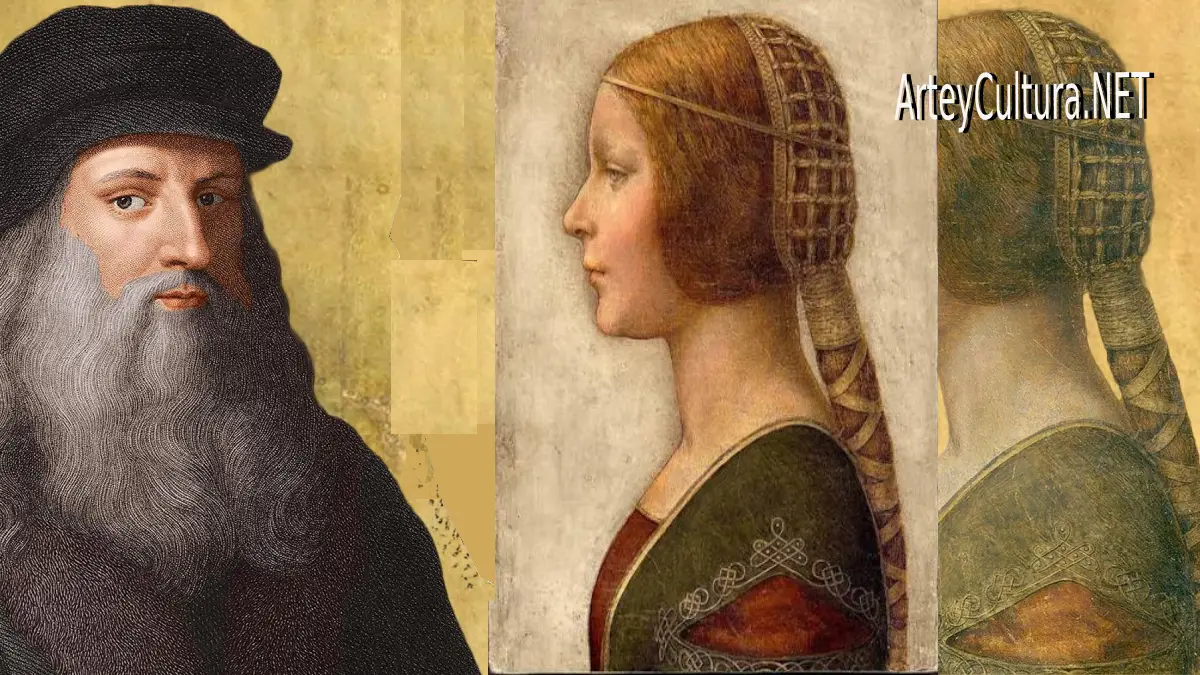
La Bella Principessa is a profile portrait in coloured chalks and ink on vellum. Some scholars attribute it to Leonardo da Vinci and identify the sitter with a young woman at the Sforza court; many other Leonardo specialists remain unconvinced.
From auction catalogue to international controversy
The sheet appeared at auction in 1998 catalogued as a nineteenth-century German work. A later owner sought further study, and a group led publicly by art historian Martin Kemp argued that its materials and style point instead to Milan around 1495.
The dramatic change in proposed identity gave the object enormous financial and cultural attention. It also made careful separation of evidence, interpretation and publicity especially important.
Arguments supporting a Leonardo attribution
Supporters cite the left-handed hatching, subtle modelling, hairstyle and costume associated with Milan, and technical features they consider compatible with Leonardo’s practice. They have proposed that the sitter may be Bianca Sforza.
Another hypothesis connects the vellum sheet with a copy of the Sforziada, a celebratory book associated with the Milanese dynasty. Matching stitch holes and material have been presented as evidence that the portrait was once bound into the volume.
Building the case on film
This English presentation outlines the affirmative attribution case and gives close views of the profile and surface. It is useful evidence about the argument, but viewers should distinguish advocacy for an attribution from scholarly consensus.
Why specialists remain divided
Provenance before the twentieth century is uncertain, and vellum was an unusual support for Leonardo. Critics dispute whether stylistic similarities, fingerprint claims and the proposed book connection are sufficiently secure.
No single laboratory result can identify an artist. Dating the support establishes when the material could have been used, not whose hand worked upon it. Attribution normally requires convergence among provenance, technique, documentation and sustained comparison with accepted works.
A Spanish explanation of the puzzle
This Spanish-language account introduces the visual clues in accessible form. Its value lies in showing why the case attracts attention; its conclusions should still be weighed against the unresolved objections.
The significance of uncertainty
The portrait may eventually gain or lose support as research develops. For now, presenting it simply as “a Leonardo” would erase the most intellectually valuable part of the story.
Its transcendence lies in the method it exposes: art history is not a treasure hunt decided by one spectacular clue. It is a cumulative argument in which material science, documentary history and visual judgement must remain open to correction.