Egon Schiele: The Body, Tension and Viennese Expressionism
The brief life, angular drawing, portraits, landscapes and legacy of Egon Schiele, whose art confronted desire, isolation and bodily vulnerability.
- Egon Schiele
- Austrian Expressionism
- Vienna
- figurative drawing
- self-portrait
- Gustav Klimt
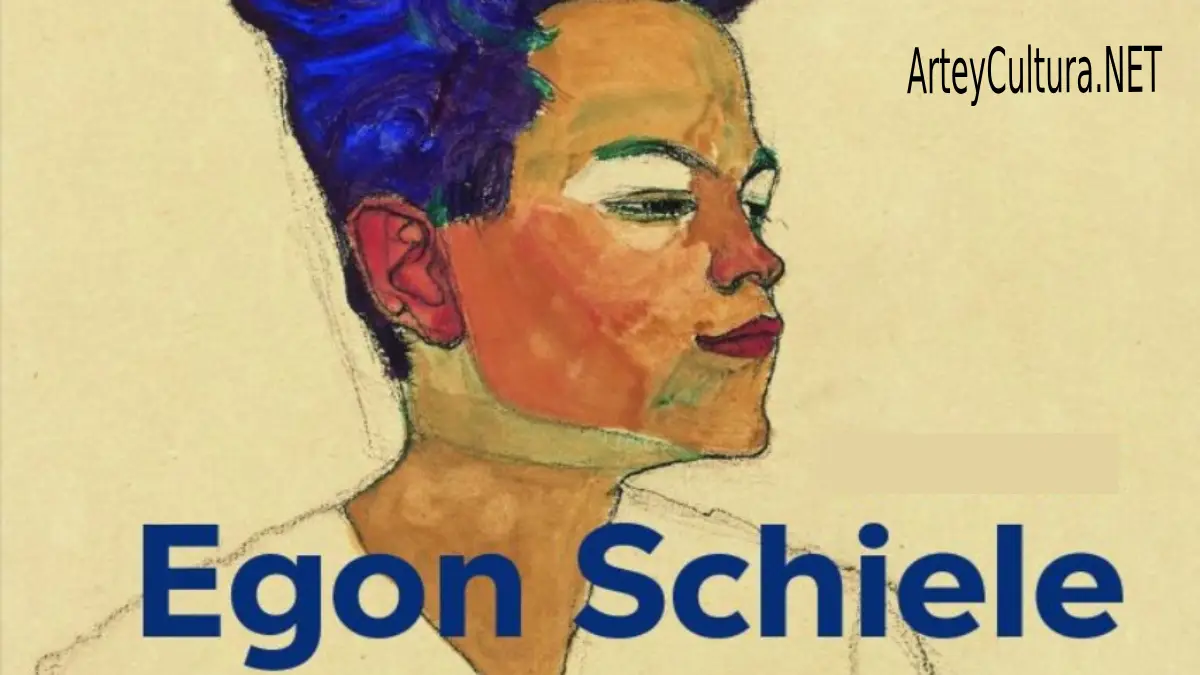
Egon Schiele was born in Tulln, Austria, on June 12, 1890, and died in Vienna on October 31, 1918. In little more than a decade, he produced an unmistakable body of drawings and paintings marked by broken contours, exposed gesture and psychological tension.
Training and rebellion
Schiele entered the Vienna Academy of Fine Arts in 1906. Its conservative instruction frustrated him, and in 1909 he left with other students to establish the Neukunstgruppe, or New Art Group.
The break was not a rejection of drawing itself. Schiele demanded that line register contemporary experience rather than repeat academic ideals of smoothness, beauty and bodily control.
Gustav Klimt as mentor
Gustav Klimt recognised the younger artist’s talent, exchanged drawings with him and introduced him to patrons and the Secession environment. Schiele absorbed Klimt’s emphasis on the figure and decorative surface but moved toward a barer, more angular language.
Empty paper became an active space. A few areas of colour, surrounded by raw support, could make a body seem isolated and acutely vulnerable.
An intense and abbreviated career
This language-neutral visual survey brings together self-portraits, figures and landscapes. Distorted hands, twisted postures and direct gazes are deliberate expressive decisions, not failures of anatomical knowledge.
The body without academic protection
Schiele’s nudes removed conventional mythological settings and idealised poses. His models often confront the viewer, curl inward or appear suspended against blank space. Desire and discomfort coexist rather than resolve into an easy celebration of beauty.
His life and work also demand careful historical discussion. In 1912 he was detained and convicted for allowing an erotic drawing to be accessible to minors; other accusations were dropped. The episode cannot be replaced by romantic myths of the persecuted genius.
Portraits, towns and trees
Schiele did not paint only the nude. Portraits of patrons and family members use pose and contour to disclose emotional distance. Townscapes and trees behave like organisms: windows become repeated eyes, while bare branches carry a sense of mortality.
Marriage to Edith Harms in 1915 and military service during the First World War changed his circumstances. His later figures often became more substantial, though the underlying tension remained.
How the drawings work
This second language-neutral survey encourages close attention to untouched paper, incisive contour and limited accents of pigment. Schiele achieves intensity through selection: what he omits is as important as what he describes.
Death and legacy
Schiele gained major recognition at the Vienna Secession exhibition of 1918. That autumn, the influenza pandemic killed Edith, who was pregnant, and Schiele died three days later at the age of 28.
His achievement transformed figurative drawing into an arena for fractured identity, sexuality and mortality. Later Expressionists and contemporary artists inherited his belief that a line can expose psychological pressure as directly as a face.