Anthony van Dyck: Elegance and Power in Baroque Portraiture
The life, travels, court portraits and legacy of Anthony van Dyck, the Flemish painter whose images of Charles I reshaped British portraiture.
- Anthony van Dyck
- Flemish Baroque
- portrait painting
- Charles I
- British art
- Rubens
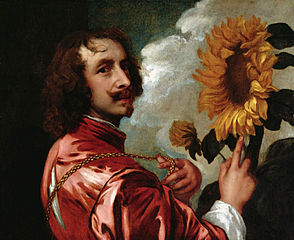
Anthony van Dyck, also known as Anton van Dyck, was born in Antwerp on March 22, 1599, and died in London on December 9, 1641. A Flemish Baroque painter of remarkable precocity, he gave court portraiture a new combination of psychological presence, elegance and apparently effortless authority.
Precocious success in Antwerp
Van Dyck trained with Hendrick van Balen and operated an independent workshop while still very young. He was admitted as a master to Antwerp’s Guild of Saint Luke and worked within the orbit of Peter Paul Rubens.
Rubens’s dynamic composition, rich colour and sophisticated studio practice profoundly shaped him. Yet Van Dyck soon distinguished himself through elongated figures, expressive hands and a more restrained form of aristocratic drama.
Learning from Italy
Between 1621 and 1627, Van Dyck travelled through Italy. He studied Venetian painting, especially Titian, and found important patrons among Genoa’s ruling families.
His Genoese portraits place sitters within grand architecture and luxurious textiles, but costume never entirely overwhelms personality. Pose, gaze and gesture convey rank while preserving a sense of a living encounter.
A portrait examined closely
This English Sotheby’s analysis of Portrait of a Carmelite Monk shows a different side of Van Dyck’s practice. Close observation reveals economical brushwork and concentrated attention to the face and hands rather than courtly display.
Principal painter to Charles I
Van Dyck settled in London in 1632 and became principal painter to King Charles I, who knighted him. He produced portraits of the king, Queen Henrietta Maria, their children and leading members of the Stuart court.
Images such as Charles I at the Hunt present the monarch with relaxed elegance while subtly maintaining hierarchy. The apparent informality is carefully designed: landscape, viewpoint, dress and gesture all sustain royal authority.
Religious and mythological painting
Portraiture brought Van Dyck his greatest fame, but it was not his only field. He also produced altarpieces, devotional subjects and mythological scenes. These works demonstrate his ability to organise complex narratives and emotional gestures on a larger scale.
His etched portrait series, the Iconography, circulated images of rulers, scholars and artists and helped shape the visual memory of European cultural elites.
A gallery across the career
This English-titled visual survey allows comparison between the energetic Flemish works, the grandeur of the Italian years and the cultivated ease of the English court portraits. Repeated viewing makes the consistency of his figure design especially clear.
Achievements and legacy
- He became one of the most influential court portraitists in European art.
- He created the enduring public image of Charles I and the Stuart court.
- He joined status and psychological character with unusual fluency.
- His model shaped British portraiture from Peter Lely to Joshua Reynolds and Thomas Gainsborough.
Van Dyck’s legacy rests on a subtle achievement: he made power appear natural. Later portraitists inherited not only poses and fabrics, but an entire visual language for turning social position into personal presence.