

Ludwig van Beethoven: Music, Struggle and Revolutionary Form
The life, works, deafness and legacy of Ludwig van Beethoven, whose symphonies, sonatas and quartets transformed Western musical expression.
- Ludwig van Beethoven
- classical music
- Ninth Symphony
- Fifth Symphony
- piano sonatas
- string quartets
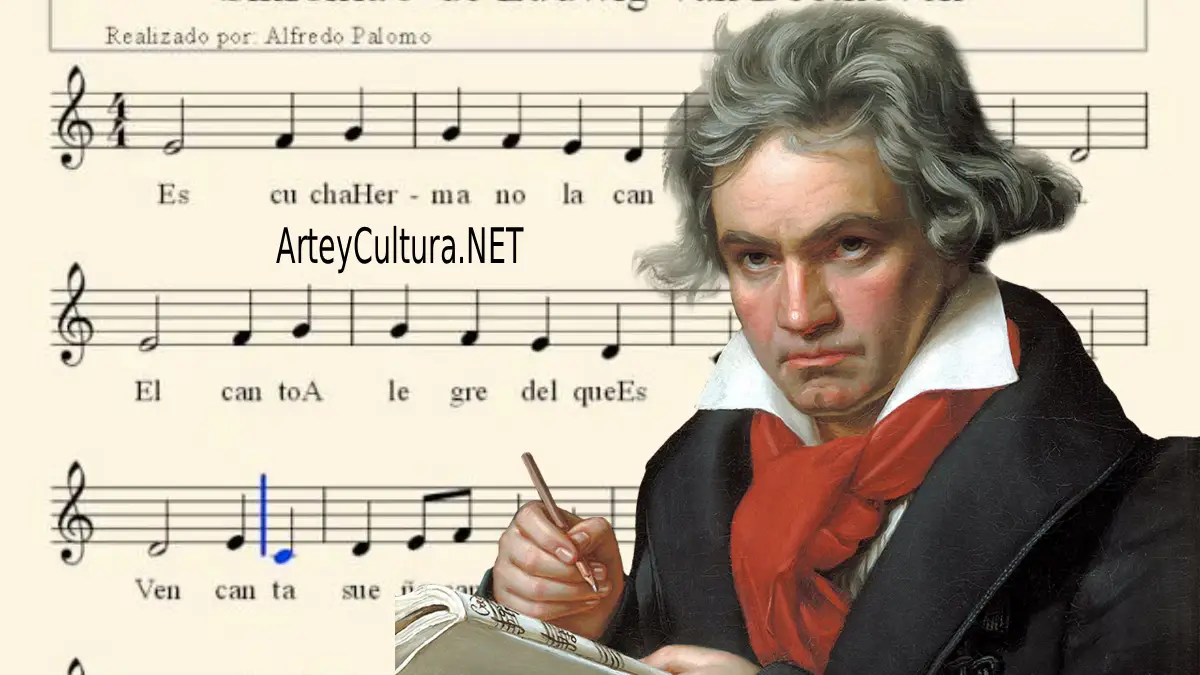
Ludwig van Beethoven was baptised in Bonn on December 17, 1770, and was probably born the previous day. He died in Vienna on March 26, 1827. As pianist and composer, he enlarged the scale, emotional range and structural ambition of Western art music.
From Bonn to Vienna
Beethoven grew up in a musical household and worked as a court musician in Bonn. In 1792 he moved to Vienna, where he studied with Joseph Haydn and developed a formidable reputation as a pianist and improviser.
His early compositions mastered the Classical language inherited from Haydn and Mozart. Yet forceful contrasts, extended development and unexpected silences already indicated a composer willing to test the limits of established form.
Deafness and the decision to continue
Hearing loss began while Beethoven was still a young professional musician. In the Heiligenstadt Testament of 1802, a private letter to his brothers, he described isolation and despair but also resolved to continue living for his art.
The condition worsened until conversation often required notebooks. Deafness ended his public career as a virtuoso, but it did not stop composition. Many of his most radical works were written when hearing the outside world had become extremely difficult or impossible.
The Fifth Symphony
This excerpt from a performance conducted by Leonard Bernstein presents the opening of the Fifth Symphony. It shows how the famous four-note cell generates tension through rhythm, harmony and orchestration; following the work’s complete journey to C major requires the remaining movements.
A catalogue of expanding possibilities
Beethoven wrote nine symphonies, 32 numbered piano sonatas, 16 string quartets, concertos, chamber music, two masses and the opera Fidelio. The Eroica Symphony enlarged the dimensions of the genre, while the Pastoral joined landscape, feeling and symphonic organisation.
The piano sonatas turned a domestic and concert instrument into a laboratory of texture and form. His late quartets moved between fugue, song, dance and fragmentation in ways that puzzled some contemporaries and inspired later generations.
The Ninth Symphony and the human voice
This performance of the Ninth is primarily language-neutral music, although its finale sets Friedrich Schiller’s German poem Ode to Joy. By introducing vocal soloists and chorus into a symphonic finale, Beethoven created an unprecedented public drama about human fellowship.
Between Classical and Romantic worlds
Beethoven preserved rigorous motivic development and formal architecture, yet gave individual struggle, intimacy and aspiration new prominence. Later composers could neither ignore his example nor simply repeat it.
His career also helped change the social image of the composer. Patronage remained essential, but Beethoven asserted an artistic authority less dependent on permanent court employment.
Achievements and legacy
- He transformed small musical motifs into large, coherent dramatic structures.
- He expanded the expressive and technical possibilities of symphony, sonata and quartet.
- He continued composing major works through profound hearing loss.
- He became a central reference for Romanticism and for modern ideas of artistic independence.
Beethoven endures because discipline and emotion are inseparable in his music. Conflict is not decoration placed upon form; it is the energy through which form discovers a new destination.