Lucho Quequezana: Instruments, Encounter and Peruvian Music
The career and projects of Peruvian composer and multi-instrumentalist Lucho Quequezana, who creates dialogue among regional traditions and contemporary audiences.
- Lucho Quequezana
- Peruvian music
- multi-instrumentalist
- Kuntur
- Sonidos Vivos
- Andean instruments
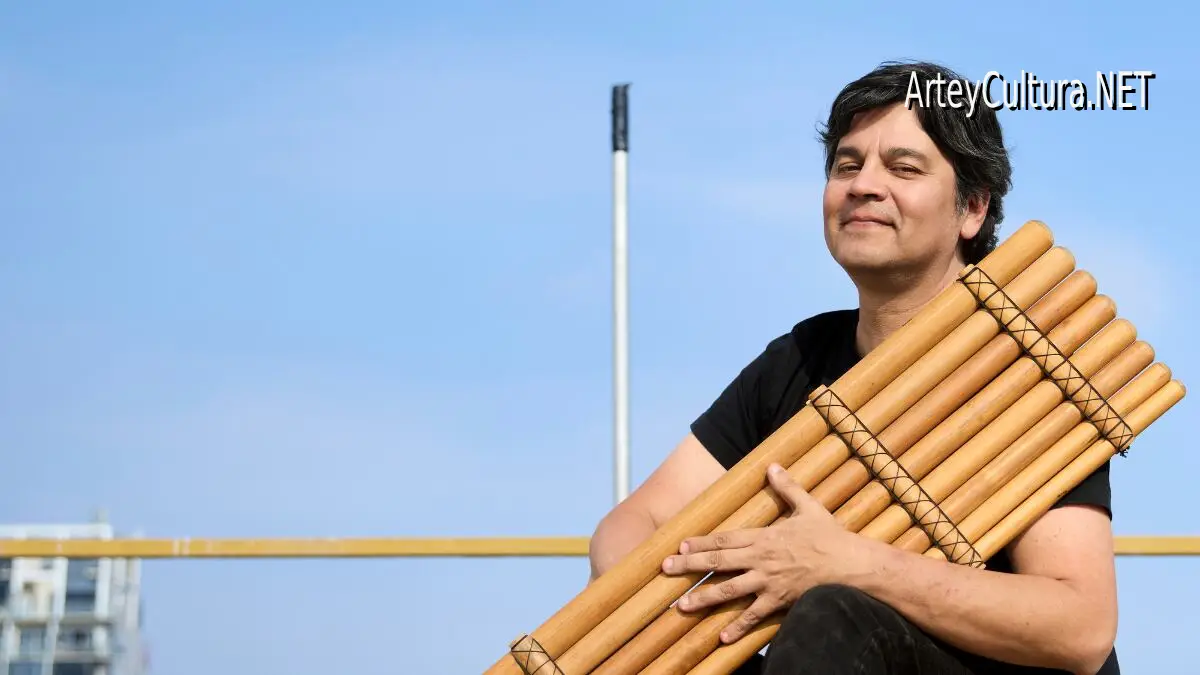
Luis Quequezana Jauregui, known as Lucho Quequezana, was born in Lima on September 25, 1974. Composer, multi-instrumentalist, producer and cultural communicator, he creates encounters among Peruvian traditions without reducing them to a single national sound.
Learning through instruments
Quequezana’s formation combines study, travel, attentive listening and work with musicians from different regions. Quena, charango, winds, strings and percussion are not interchangeable colours. Each carries technique, social memory and a way of organising time.
Playing many instruments can become spectacle, but his strongest projects use versatility to understand what another performer needs. Arrangement becomes an act of translation between musical systems.
Kuntur and international residency
A Canadian artistic residency brought Quequezana together with musicians from several countries who did not necessarily share a spoken language. The resulting Kuntur project treated rehearsal as cultural negotiation rather than instant fusion.
Musicians had to discover compatible pulse, tuning, gesture and space. Difference remained audible while a common structure emerged through repeated listening.
Music in orchestral dialogue
This language-neutral making-of record follows Quequezana working with Peru’s National Symphony Orchestra. Rehearsal images reveal how an idea moves among score, oral explanation, instrumental technique and collective adjustment.
Sonidos Vivos
The stage and television project Sonidos Vivos introduced audiences to instruments, rhythms and performers through demonstration and collaboration. Quequezana became a communicator as well as a concert musician.
The project’s value lies in showing diversity as a living practice. Andean, coastal, Amazonian and urban traditions are not museum compartments, and no one concert can claim to represent all of them.
A complete live encounter
This language-neutral concert documents ensemble coordination across an extended performance. Changes of instrument serve the musical narrative rather than functioning as isolated displays of skill.
Composition and public culture
Quequezana has created music for theatre, audiovisual media and public ceremonies. Large cultural events demand accessibility, but arrangement can retain specific timbres and rhythmic identities rather than replacing them with a generic orchestral sound.
Achievements and an evolving legacy
- He brought a broad range of Peruvian instruments to contemporary stages and media.
- Kuntur demonstrated collaboration based on patient intercultural listening.
- Sonidos Vivos connected performance with musical education.
- His projects present Peruvian identity as plural, mobile and continually renewed.
Quequezana’s contribution is not fusion for its own sake. It is the creation of conditions in which distinct musical voices can meet, alter one another and remain recognisable.