Johannes Vermeer: Silence, Light and Everyday Attention
The life, technique and small surviving body of Johannes Vermeer, whose interiors and city views transform ordinary moments through light and structure.
- Johannes Vermeer
- Dutch Golden Age
- Girl with a Pearl Earring
- The Milkmaid
- View of Delft
- light
Johannes Vermeer was baptised in Delft on October 31, 1632, and was buried there on December 15, 1675. Only about thirty-five paintings are widely accepted as his, yet their measured light and suspended actions have given him an exceptional place in the history of art.
A life with limited documentation
Vermeer joined the Delft Guild of Saint Luke in 1653 and later served as one of its heads. He worked as a painter and art dealer, married Catharina Bolnes and supported a large household. The identity of his teacher remains uncertain.
War and economic crisis damaged the art market during his final years. After his death, his widow described financial distress and substantial debt. The slow production now admired for concentration offered little protection against sudden economic collapse.
Rooms as narrative structures
Women read letters, make lace, pour milk, play music or stand before windows. Floors, chairs, maps and fabrics organise these interiors with great precision. The action is often simple, but a turned head, hidden letter or interrupted task creates narrative tension.
Light usually enters from the left, yet it does more than illuminate objects. Gradations of brightness separate surfaces, guide attention and make silence feel spatial.
The mystery examined
This English documentary surveys Vermeer’s biography, methods and rediscovery. It is especially useful when it distinguishes material evidence from attractive speculation about secret techniques or an entirely isolated genius.
Pigment, focus and optical hypotheses
Vermeer used expensive natural ultramarine with unusual generosity. Small points of bright paint and softened contours can resemble optical effects seen through a camera obscura. Scholars continue to debate whether he used such a device; no surviving document proves a particular procedure.
Optical assistance, if present, would not explain composition, colour judgement or meaning. A tool can offer information, but an artist still decides what to select, suppress and transform.
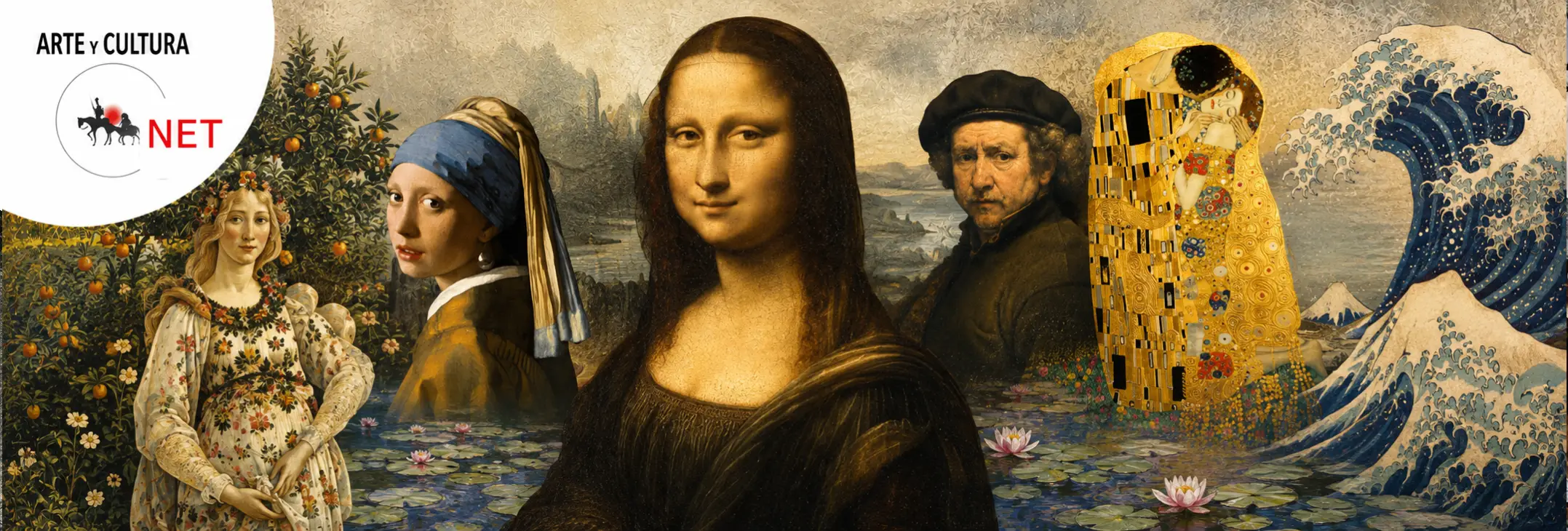
Girl with a Pearl Earring
This English close reading considers pose, gaze, turban and the famous earring. The painting is a tronie, a study of an imagined character or expression, rather than an identified commissioned portrait.
Essential works
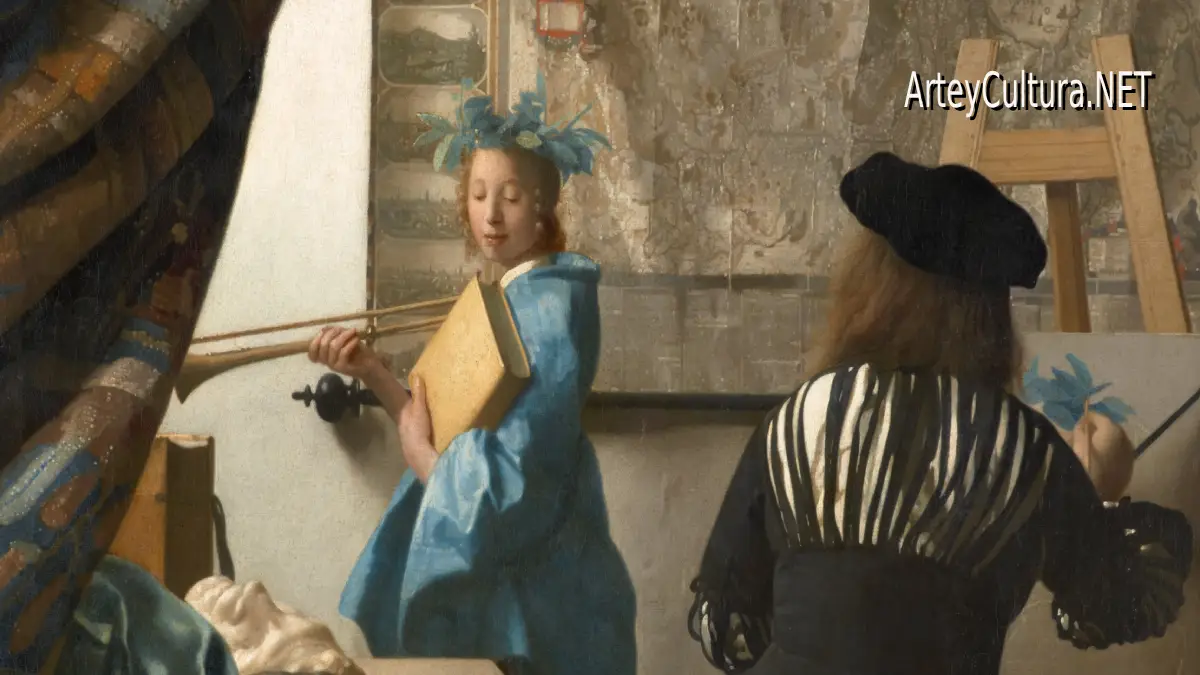
The Milkmaid gives monumental weight to domestic labour. View of Delft balances urban detail with weather and reflection. The Art of Painting turns a studio scene into a meditation on history, representation and the painter’s status.
Rediscovery and legacy
Vermeer remained known to some collectors but was not celebrated internationally until nineteenth-century scholarship reconstructed his career. Modern fame brought another challenge: the forger Han van Meegeren exploited the scarcity of genuine works.
- Vermeer made concentrated attention the subject of domestic painting.
- His colour and edge control transformed ordinary light into pictorial structure.
- His small oeuvre generated major advances in technical examination and attribution.
- Photography, cinema and literature continue to draw upon his quiet staging.
Vermeer’s legacy rests not on solving every mystery but on learning to look slowly. His paintings reward the same patient attention that their figures appear to give the world around them.