Zhang Daqian: Chinese Tradition, Global Travel and Modern Ink
The life, techniques and legacy of Zhang Daqian, a master of Chinese brush painting who transformed ancient models through splashed ink and colour.
- Zhang Daqian
- Chinese painting
- splash ink
- Dunhuang
- ink landscape
- twentieth-century art
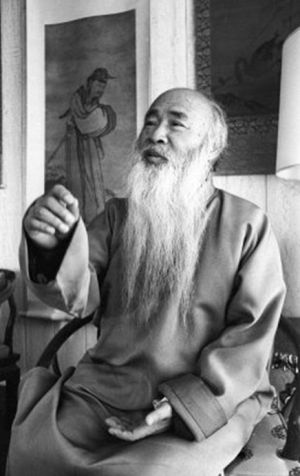
Zhang Daqian was born in Neijiang, Sichuan, on May 10, 1899, and died in Taipei on April 2, 1983. He mastered historical modes of Chinese brush painting before developing monumental landscapes in splashed ink and colour that spoke powerfully to twentieth-century viewers.
Learning through the old masters
Zhang studied calligraphy, figure painting and landscape through close copying. Within Chinese artistic traditions, copying can be a form of disciplined dialogue: the painter enters an earlier master’s brush rhythm and compositional decisions before producing variation.
This command allowed Zhang to work convincingly in several historical styles. It also created later problems of attribution because some imitations entered collections as genuine ancient works.
Dunhuang and the expansion of colour
Between 1941 and 1943, Zhang studied and copied Buddhist murals at the Mogao caves near Dunhuang. The project helped preserve visual knowledge of fragile works and introduced him to powerful mineral colours and figure conventions outside the literati canon.
Modern conservation also raises questions about the impact of early copying methods at archaeological sites. The episode must therefore be understood as both scholarship and a product of the conservation standards of its time.
A twentieth-century master
This English documentary surveys Zhang’s classical training, international career and technical transformations. It provides a broad visual foundation for understanding why comparison with Picasso is commercially memorable but historically limited.
Exile and global movement
After leaving mainland China in 1949, Zhang lived and worked in Hong Kong, India, Argentina, Brazil, the United States and finally Taiwan. Gardens and studios became environments where memory of Chinese landscape met new geographies.
His widely publicised meeting with Pablo Picasso in 1956 symbolised an encounter between modern art worlds. Zhang was not a Chinese version of a European master; he worked within different histories of authorship, brushwork and tradition.
Splashed ink and colour
Declining eyesight and continued experimentation contributed to large landscapes in which poured or splashed fields suggest mountain, mist and water. Controlled brush passages anchor chance effects. Apparent spontaneity depends on knowledge of paper absorbency, mineral pigment and the strategic use of empty space.
Exhibition and close viewing
This English Sotheby’s exhibition film presents works across Zhang’s career. Although produced within the art market, its detailed images help viewers compare precise classical brushwork with later abstracted landscapes.
Achievements and legacy
- He sustained and transformed several centuries of Chinese painting practice.
- His Dunhuang project renewed attention to early Buddhist colour and figure painting.
- Splashed-colour landscapes created a distinctive modern synthesis of control and chance.
- His imitations remain central to debates about authenticity, connoisseurship and the art market.
Zhang’s legacy rejects the simple opposition between tradition and innovation. For him, historical mastery was not a cage but the deep reservoir from which modern transformation became possible.