
Artistic Suicide at Tacheles: Burning Art as Urban Protest
The context and meaning of the April 2012 protest in Berlin when artists burned their own works to defend independent cultural spaces.
- Tacheles
- Berlin art
- art protest
- artist squats
- urban redevelopment
- independent culture
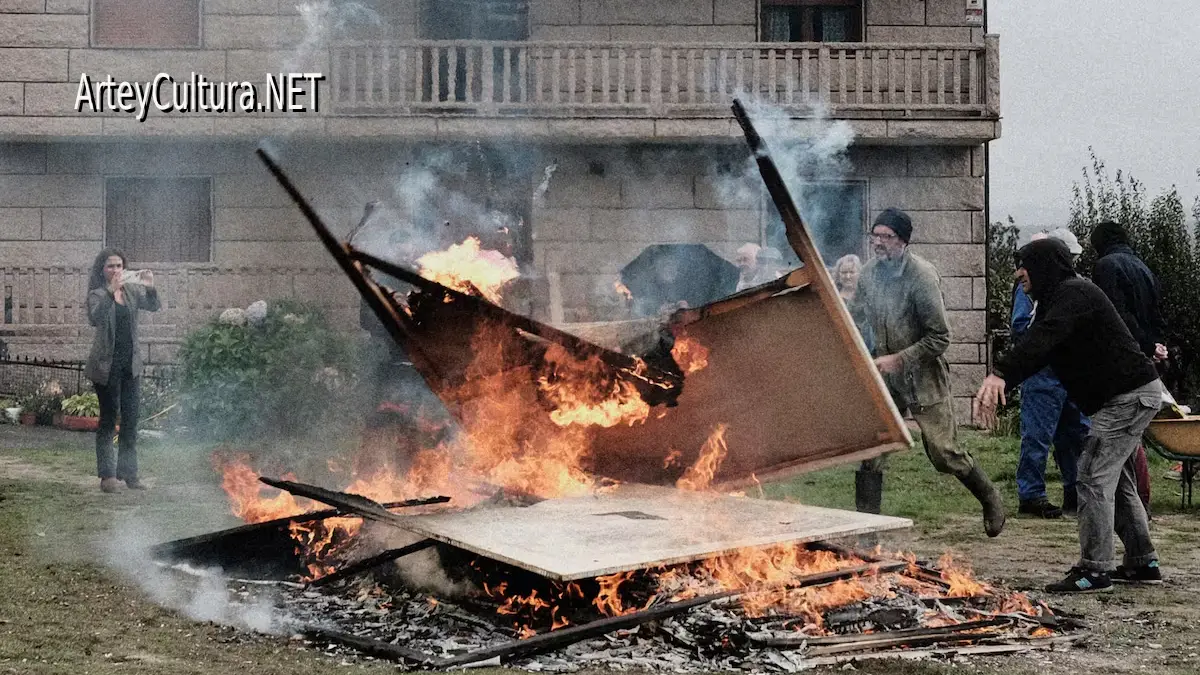
On April 27, 2012, nine artists burned nearly one hundred of their own works at Kunsthaus Tacheles in Berlin. They called the action artistic suicide: a deliberately shocking protest against cultural austerity, property speculation and the disappearance of independent spaces.
The name described the destruction of artworks, not physical self-harm. Its provocation depended on reversing the expected role of the artist. Instead of preserving objects for sale or exhibition, participants used their loss as a public message.
What was Tacheles?
The large building on Oranienburger Strasse opened as a department-store complex in the early twentieth century and later passed through several uses. After the fall of the Berlin Wall, artists occupied the damaged structure in 1990 and prevented its planned demolition.
Studios, performance rooms, a cinema, bars, sculpture areas and painted walls made Tacheles an international symbol of post-reunification alternative culture. It was never a simple utopia: internal disagreements, tourism, ownership claims and financial pressure accompanied its fame.
The burning of the works
This direct German record preserves the action as performance. Flames, assembled artworks and spectators demonstrate that the destruction was staged as a visual argument designed to circulate beyond the building.
Solidarity beyond Berlin
The protest also expressed solidarity with the contemporary art museum in Casoria, near Naples, whose director had begun burning works in response to inadequate public support. Linking Berlin and Italy framed precarity as a wider European cultural problem rather than one local property dispute.
Art, ownership and urban value
Tacheles helped make its neighbourhood attractive, yet rising land values threatened the community that had contributed to that transformation. This recurring pattern raises a difficult question: when unofficial culture creates symbolic value, who benefits once that value becomes real estate capital?
Destroying art did not solve the legal dispute. It did, however, make invisible pressures visible and challenge the assumption that preserving every object is always more important than preserving the conditions in which art can be made.
The world behind the building
This documentary chapter introduces the people and working environment of Tacheles. It provides the human context missing from images of flames: a cultural space consists of practices, relationships and contested forms of collective organisation.
The end of a chapter and its significance
Artists were evicted from Tacheles in September 2012. The building’s later redevelopment confirmed that the protest could not stop large economic forces, but its history remains relevant to cities where cultural vitality and displacement advance together.
- The action turned destruction into a critique of cultural economics.
- Tacheles demonstrated the creative importance and fragility of artist-run spaces.
- The event connected local redevelopment with European cultural austerity.
- Its legacy asks whether cities protect living communities or only their marketable image.
The lasting importance of artistic suicide lies not in the spectacle of burning objects. It lies in the unresolved conflict between a city’s cultural memory and the economic systems that decide who can remain within it.