Keith Haring: Public Art, Graphic Rhythm and Activism
The life and legacy of Keith Haring, whose radiant figures carried an immediate visual language from the New York subway into museums and social campaigns.
- Keith Haring
- public art
- street art
- New York art
- AIDS activism
- Pop art
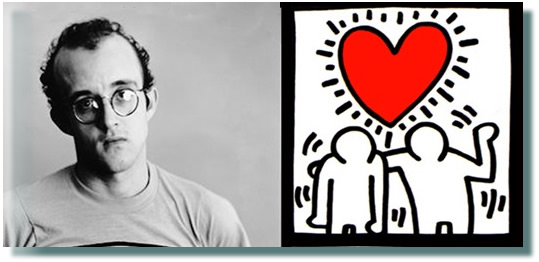
Keith Haring was born in Reading, Pennsylvania, on May 4, 1958, and died in New York City on February 16, 1990. His radiant babies, barking dogs, dancing bodies and emphatic lines formed one of the most recognisable visual languages of the twentieth century.
Drawing as a public encounter
Haring learned cartooning from childhood and studied at the School of Visual Arts after moving to New York in 1978. He became part of an experimental downtown culture that connected clubs, performance, graffiti, music and independent exhibitions.
Empty advertising panels in subway stations were covered with matte black paper. Haring drew on them rapidly in white chalk while commuters watched. The act turned a commercial surface into a temporary public studio and exposed him to audiences far beyond the gallery system. Police sometimes arrested him for these unauthorised interventions.
Haring at work in 1984
This English Walker Art Center recording preserves Haring working and speaking at a decisive moment in his career. The speed of the line is not carelessness: repeated practice allows the image to remain direct while filling a large surface coherently.
A language of signs
Haring avoided fixed definitions for every symbol. Meaning emerges through relation: rays imply energy, repeated marks indicate movement, and bodies may cooperate, desire, dominate or threaten one another. The apparent simplicity made the work accessible while supporting themes of technology, racism, sexuality and power.
Activism and circulation
Public murals and posters addressed apartheid, nuclear danger, drug addiction and children’s welfare. After being diagnosed with HIV, Haring established the Keith Haring Foundation in 1989 to support AIDS organisations and programmes for children.
The Pop Shop, opened in 1986, sold affordable objects bearing his images. Critics saw commercialisation; Haring considered it another route for broad access. The tension between democratic circulation and brand culture remains part of the work’s history.
The work explained
This English visual analysis connects major images with Haring’s New York context and activism. It shows how his pictograms can be immediately legible without becoming politically empty.
Achievements and legacy
- He transformed subway drawing into an influential form of public performance.
- He developed a graphic vocabulary that crossed language and institutional borders.
- He linked artistic visibility to sustained activism during the AIDS crisis.
- His murals and foundation continue to support public education and social causes.
Haring’s legacy rests on movement between worlds: street and museum, unique drawing and mass image, visual pleasure and political urgency. Accessibility was not a retreat from seriousness but the means by which his art entered public life.