


Michelangelo's David: Anatomy of a Civic Symbol
The history, technique and legacy of Michelangelo's David, the Renaissance marble carved in Florence between 1501 and 1504.
- Michelangelo
- David
- Renaissance sculpture
- Florence
- marble carving
- Galleria dell'Accademia
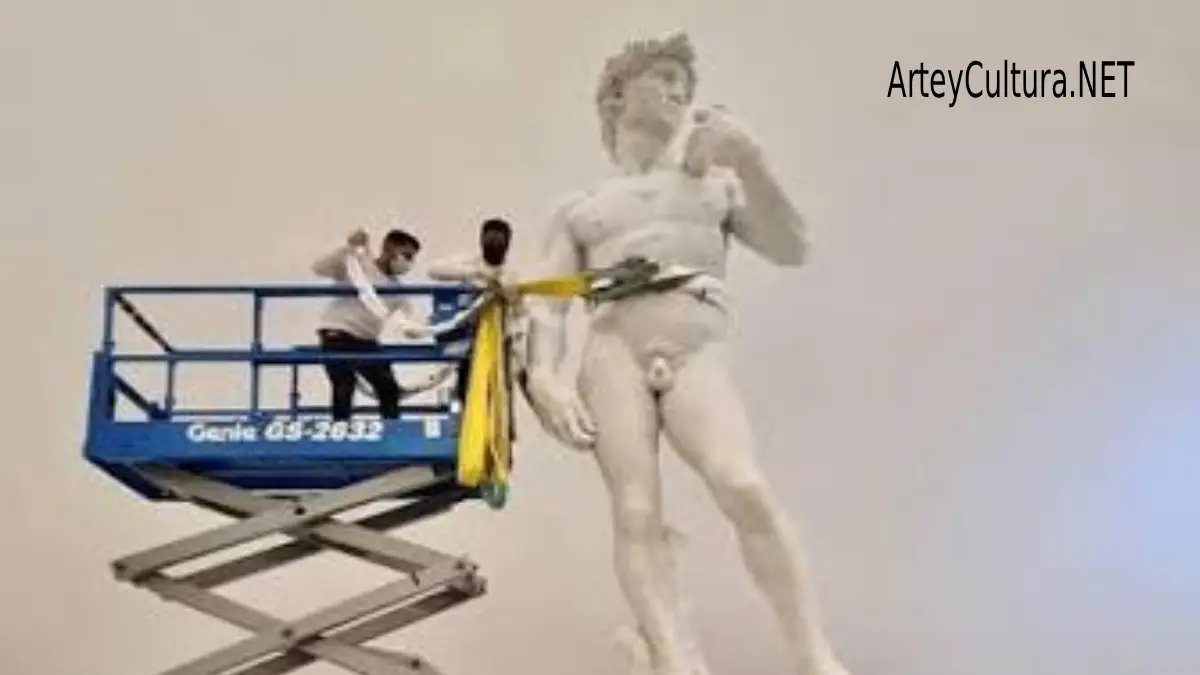
Michelangelo carved David between 1501 and 1504. More than five metres tall, the marble figure represents the biblical hero before his encounter with Goliath. Michelangelo Buonarroti was born on March 6, 1475, and died on February 18, 1564.
A rejected block
The marble had been quarried decades earlier for Florence Cathedral and partially worked by other sculptors. Its narrow form and damaged areas made the commission unusually difficult. Michelangelo accepted the material as a constraint and designed the standing figure within what remained.
Carving by subtraction
Stone sculpture cannot restore material once removed. The sculptor moved from broad masses toward muscles, veins, hair and surface transitions, constantly coordinating several viewpoints. The polished skin and rougher details create different responses to light.
The statue explained
This English analysis introduces the carving process, anatomy and political setting. It shows how technical decisions support meaning: tension gathers in the neck, brow and right hand before any physical combat begins.
Before the battle
Earlier Davids often showed victory after Goliath’s defeat. Michelangelo chose anticipation. The sling is understated and the giant absent, so the spectator confronts concentration rather than spectacle.
Florence and civic liberty
The statue was intended for the cathedral but was installed outside Palazzo della Signoria. Florentines read the vulnerable young hero as an emblem of a republic defending itself against larger powers.
Many meanings of David
This English TED-Ed lesson connects biblical narrative, Renaissance anatomy and civic politics. It also explains why the enlarged head and hands make sense when seen from below rather than as errors in proportion.
Conservation and legacy
Exposure outdoors caused weathering, and the original moved to the Galleria dell’Accademia in 1873. Conservation now balances cleaning, structural monitoring and the risks created by millions of visitors.
- Michelangelo transformed a compromised block into a monumental figure.
- He made psychological anticipation the centre of heroic action.
- The work joined biblical story with republican identity.
- Its anatomy became a benchmark of Renaissance sculpture.
David endures because physical perfection is joined to uncertainty. Strength appears not after victory, but at the instant a human being decides to act.