Magical Mystery Tour: The Beatles as Audiovisual Experimenters
The history of Magical Mystery Tour, the 1967 film and musical project in which The Beatles combined travel, comedy, improvisation and psychedelia.
- Magical Mystery Tour
- The Beatles
- Paul McCartney
- John Lennon
- George Harrison
- Ringo Starr
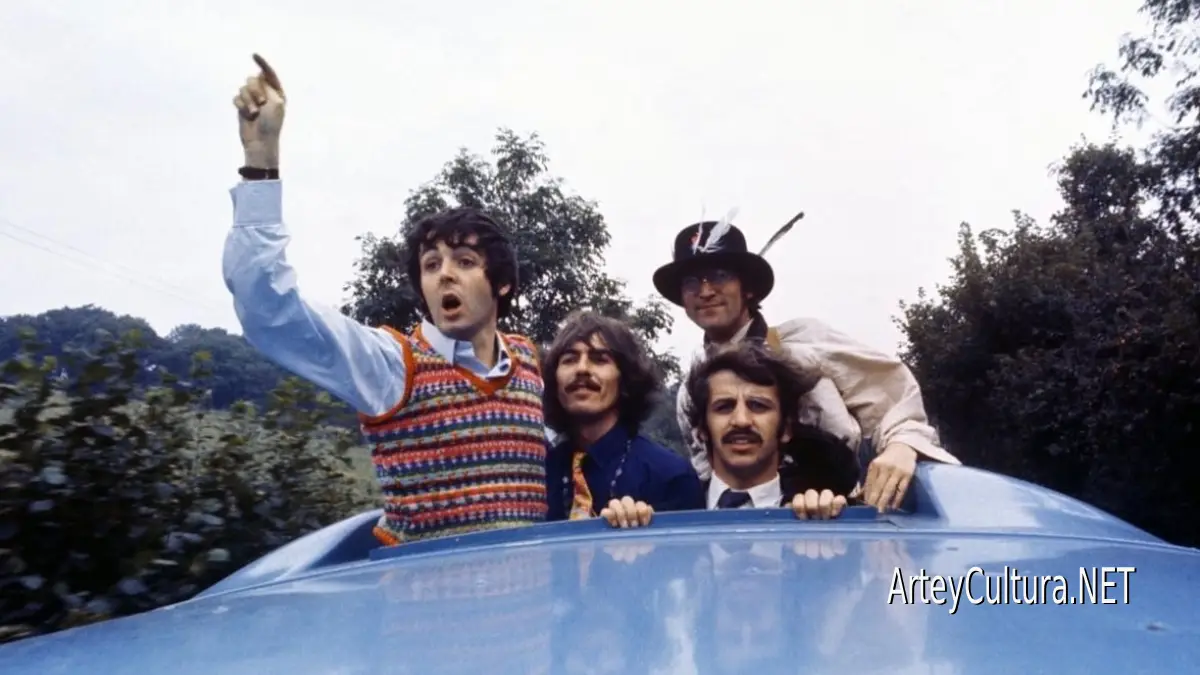
Magical Mystery Tour was a Beatles project first broadcast on British television on December 26, 1967. Conceived mainly by Paul McCartney, it combined a coach excursion, comic episodes and musical sequences without a conventional plot. Its soundtrack became celebrated even while the film initially met bewilderment and hostility.
After Sgt. Pepper
The band was extending studio experimentation and had recently lost manager Brian Epstein. With little experience of collective directing, the musicians chose to film from sketches and situations rather than a completed screenplay. Their creative confidence in music did not automatically provide the organizational discipline of cinema.
The journey as a loose structure
The project borrowed from popular British mystery coach trips and from psychedelic ideas of unpredictable travel. Actors, technicians and passengers moved through English locations while scenes were invented or revised. Freedom generated memorable images but also confused schedules, camera crews and performers.
How the film was made
This English documentary reconstructs the planning, filming and post-production. It shows that spontaneity needs a framework if collaborators are to understand what should be captured. The production is fascinating because it preserves artists learning another medium in public and paying the price for uncertainty.
A severe initial reception
The BBC first broadcast the film in black and white, weakening a design heavily dependent on colour. Many viewers expected a clear story and rejected its fragmentary movement. It became one of the first unmistakable public failures of a group accustomed to extraordinary success.
The criticism was not simply conservatism. Editing and dramatic structure were genuinely uneven. A mature assessment can value experimentation without pretending that every experiment succeeds.
An exceptional soundtrack
The project introduced “I Am the Walrus,” “The Fool on the Hill,” “Your Mother Should Know,” “Blue Jay Way” and the title song. In the United States, the album edition also collected major 1967 singles including “Strawberry Fields Forever” and “Penny Lane.” Music gave the fragmented film strong individual sequences and an afterlife independent of its broadcast.
Memories of the mystery tour
This English documentary gathers recollections and production context. Testimony from participants reveals the difference between a cultural icon remembered from a distance and the practical confusion experienced by people on the bus. Such memories turn a mythic object back into collaborative labour.
Rediscovery in colour
Later restoration and colour screenings encouraged more sympathetic readings. Filmmakers and musicians recognized free montage, surreal humour and a form anticipating the extended music video. Historical distance also made its imperfections part of the fascination.
Film, music and productive failure
The Beatles had already reshaped recording practice, but cinema required different authority, continuity and division of labour. Magical Mystery Tour matters because it records the limits of transferring mastery from one medium to another. Failure became information for later projects.
Achievements and legacy
- It extended Beatles experimentation into television and film.
- It produced some of the group’s most imaginative songs and sequences.
- It exposed the risks of working without a unified script or director.
- It moved from notorious broadcast failure to influential cult object.
Magical Mystery Tour is not a perfect film. Its lasting appeal lies in watching The Beatles accept the possibility of error while searching for new relationships between sound, colour and moving image.