Don Quixote: Reality, Fiction and Freedom
The history, characters and legacy of Don Quixote, the novel by Miguel de Cervantes that transformed modern narrative through comedy and self-awareness.
- Don Quixote
- Miguel de Cervantes
- Sancho Panza
- Spanish literature
- modern novel
- Dulcinea
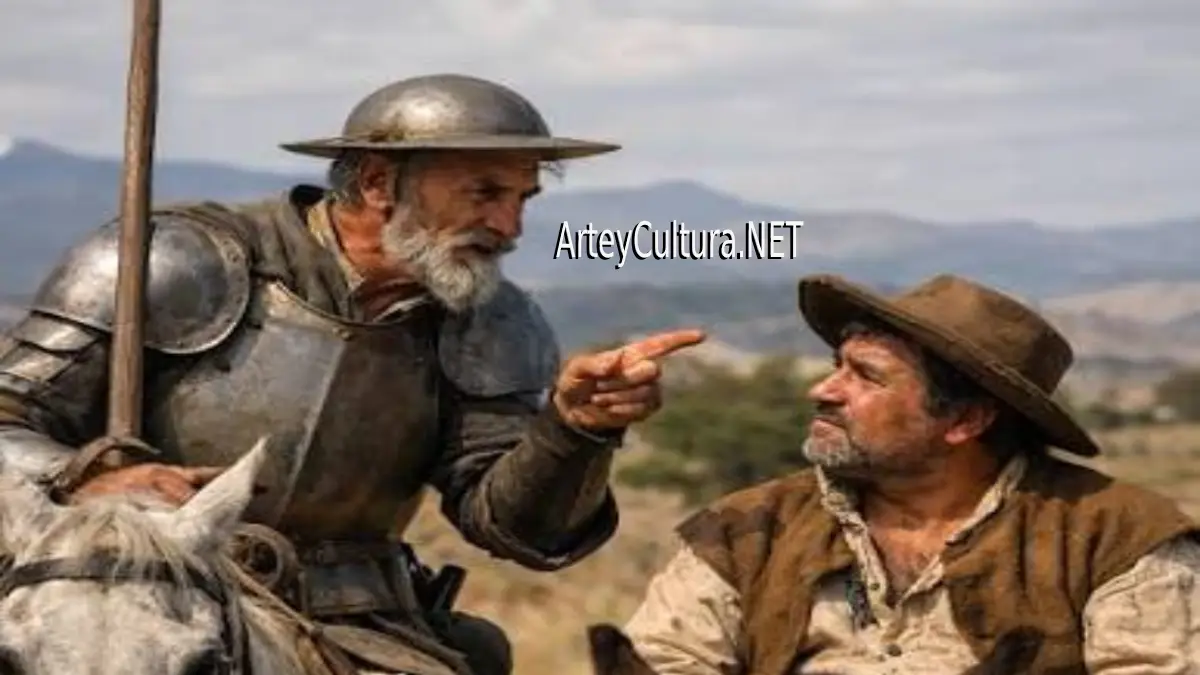
Don Quixote is a novel by Miguel de Cervantes Saavedra, born in 1547 in Alcalá de Henares and deceased in Madrid on April 22, 1616. His baptism is documented on October 9, 1547; September 29 is a probable rather than proven birth date. Part One appeared in 1605 and Part Two in 1615. The work parodies chivalric romances while asking how stories reorganize reality, identity and moral action.
Alonso Quijano becomes a knight
A country gentleman reads so many romances that he decides to live by their rules. He renames himself Don Quixote, calls his horse Rocinante and chooses Dulcinea del Toboso as the lady he will serve. Imagination transforms an inn into a castle, peasants into noble figures and windmills into threatening giants.
The comedy comes from the gap between what he sees and what others see. Yet Cervantes does not make reality simple. Social conventions, money and reputation also depend on collective fictions, while the knight’s impossible ideals sometimes expose genuine injustice.
Sancho Panza
Sancho becomes the knight’s squire after being promised the government of an island. Proverbs, appetite and practical caution contrast with Don Quixote’s elaborate rhetoric. Their long conversations gradually transform both men: Sancho learns to imagine beyond immediate necessity, and his master sometimes absorbs the wisdom of ordinary experience.
Why read Don Quixote?
This English TED-Ed lesson explains how parody grows into a layered investigation of authorship, freedom and friendship. It offers a clear entrance to the novel without pretending that a summary can replace the experience of its shifting narrators and accumulating episodes.
A novel aware of itself
The narrator attributes much of the story to the supposed historian Cide Hamete Benengeli and plays with manuscripts, translation and competing versions. In Part Two, characters have read Part One and use the published adventures to manipulate the protagonists. Fiction enters the narrated world and changes what can happen next.
The unauthorized sequel
In 1614 a continuation appeared under the name Alonso Fernández de Avellaneda. Cervantes answered inside his own second part. Don Quixote learns of the rival book and changes his route partly to contradict it. A publishing conflict becomes material for the novel’s argument about identity and ownership.
A lively English overview
This English animated summary follows the main arcs with energy and humour. Its speed is useful for mapping the immense narrative, while comparison with the book reveals what every retelling must omit: changes in tone, embedded stories and the slow growth of affection between knight and squire.
Dulcinea and the power of naming
Dulcinea is the ideal identity Don Quixote gives to Aldonza Lorenzo. She is less a conventional character than an act of language and desire. Through her, Cervantes asks how names, expectations and stories shape social reality long before anyone recognizes them as fiction.
The ending
After defeat, the knight returns home and again calls himself Alonso Quijano. His death prevents further continuations and produces a final reversal: readers mourn the disappearance of an imaginative world that initially looked like mere madness.
Achievements and legacy
- It transformed chivalric parody into a polyphonic modern novel.
- It made narration, translation and authorship part of the plot.
- It created one of literature’s richest friendships.
- It influenced fiction worldwide for more than four centuries.
Don Quixote refuses a simple choice between reason and dream. Stories can deceive, but they can also create courage, companionship and the freedom to imagine that the world might be otherwise.