The Beatles on the Rooftop: Their Final Public Concert
The story of the January 30, 1969 rooftop concert at Apple Corps, when The Beatles turned a practical solution into an enduring cultural image.
- The Beatles
- rooftop concert
- Get Back
- Let It Be
- John Lennon
- Paul McCartney
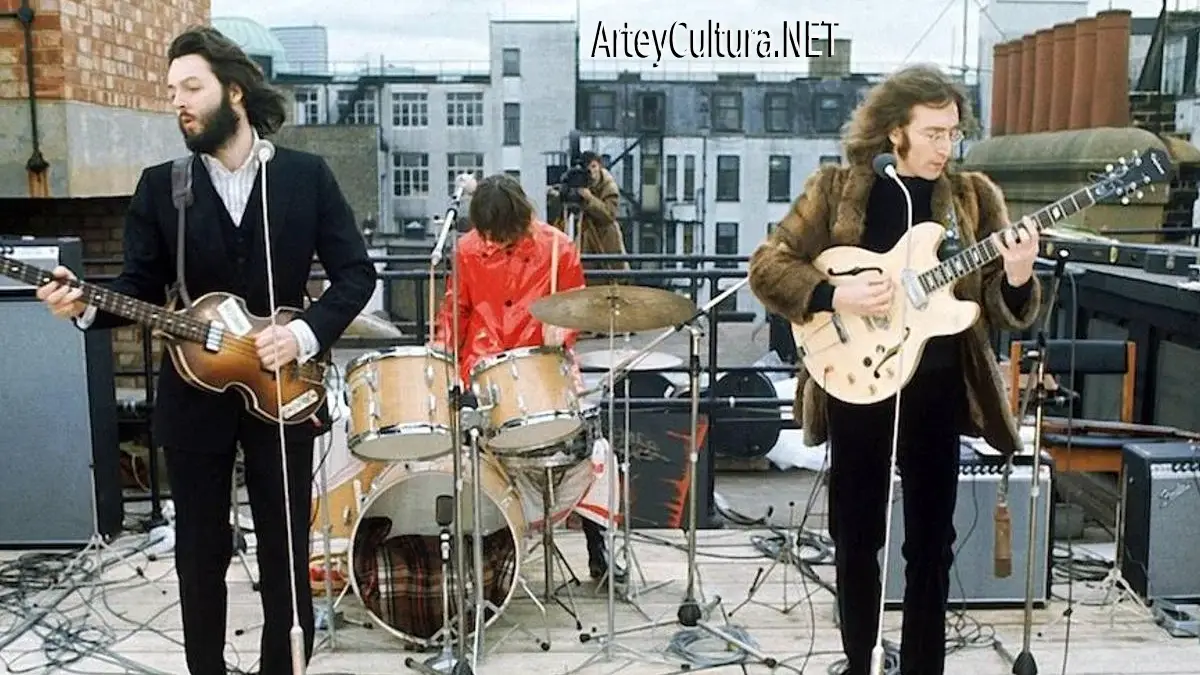
On January 30, 1969, John Lennon, Paul McCartney, George Harrison and Ringo Starr climbed onto the roof of Apple Corps at 3 Savile Row in London. Joined by keyboard player Billy Preston, they performed for approximately 42 minutes. It became The Beatles’ final public appearance as a group.
The Get Back project
The band entered January intending to rehearse new material before cameras and conclude with a live performance. The sessions exposed exhaustion, different creative priorities and uncertainty about what the final event should be. The project was not conceived as a farewell, although later history makes every moment look like one.
From Twickenham to Apple
Early rehearsals at Twickenham Film Studios felt exposed and unproductive. Moving to the Apple building improved the working atmosphere. The arrival of Billy Preston added warmth and musical focus; his electric piano gave the arrangements colour while his presence helped the group concentrate on playing.
Why the rooftop won
The band and production team considered more ambitious destinations, but the roof offered an immediate solution. It required no distant travel and allowed the surrounding city to become part of the film. Practical compromise produced a more memorable image than many elaborate plans could have achieved.
“Don’t Let Me Down”
This English-language performance shows the urgency of Lennon’s lead vocal and the band’s close musical communication. McCartney’s harmony, Harrison’s concise guitar, Starr’s grounded pulse and Preston’s electric piano produce a compact ensemble despite the strain surrounding the sessions.
The video rewards attention to glances and gestures. The musicians adjust in real time, demonstrating that interpersonal conflict had not erased their extraordinary shared vocabulary.
What they played
The rooftop set included multiple takes of “Get Back” and performances of “Don’t Let Me Down,” “I’ve Got a Feeling,” “One After 909” and “Dig a Pony.” Selected recordings later appeared in the Let It Be project and in films assembled from the January footage.
London listens from below
Sound travelled through streets and offices. Some people climbed onto nearby roofs, others gathered at street level, and complaints about noise reached police. Camera crews recorded delight, curiosity and annoyance, turning accidental listeners into part of the event’s narrative.
“Get Back” on the roof
This English performance presents “Get Back” within the same physical conditions. Wind, cold, repetition and the city’s interruptions belong to the sound. Comparing it with “Don’t Let Me Down” reveals how the band adjusted energy and phrasing across takes rather than delivering a polished music video.
Police and the ending
Officers entered the building after complaints. Staff attempted to delay them while the group continued. The intervention was less dramatic than later myth suggests, but it supplied the performance with a natural conclusion. Lennon’s closing joke about passing the audition turned interruption into one final piece of Beatles wit.
Was it truly the last concert?
It was their last public performance, not their final work together. During 1969 the band still recorded essential material for Abbey Road. The separation became public in 1970 after a gradual process rather than one decisive rooftop farewell.
Achievements and legacy
- A practical compromise became an iconic image of popular culture.
- The film documented The Beatles performing live near the end of their career.
- City, accidental audience, documentary cinema and music became one event.
- The concert inspired rooftop performances and homages around the world.
The rooftop remains moving because it contains farewell and vitality at once. As the group approached its end, its music could still stop a London street and transform a working day into history.