Priscila Navarro: Discipline and the International Reach of Peruvian Piano
The career of Priscila Navarro, a Peruvian pianist whose training, competitions, concerts and teaching have built an international classical profile.
- Priscila Navarro
- Peruvian pianist
- classical piano
- piano competitions
- Chopin
- Rachmaninoff
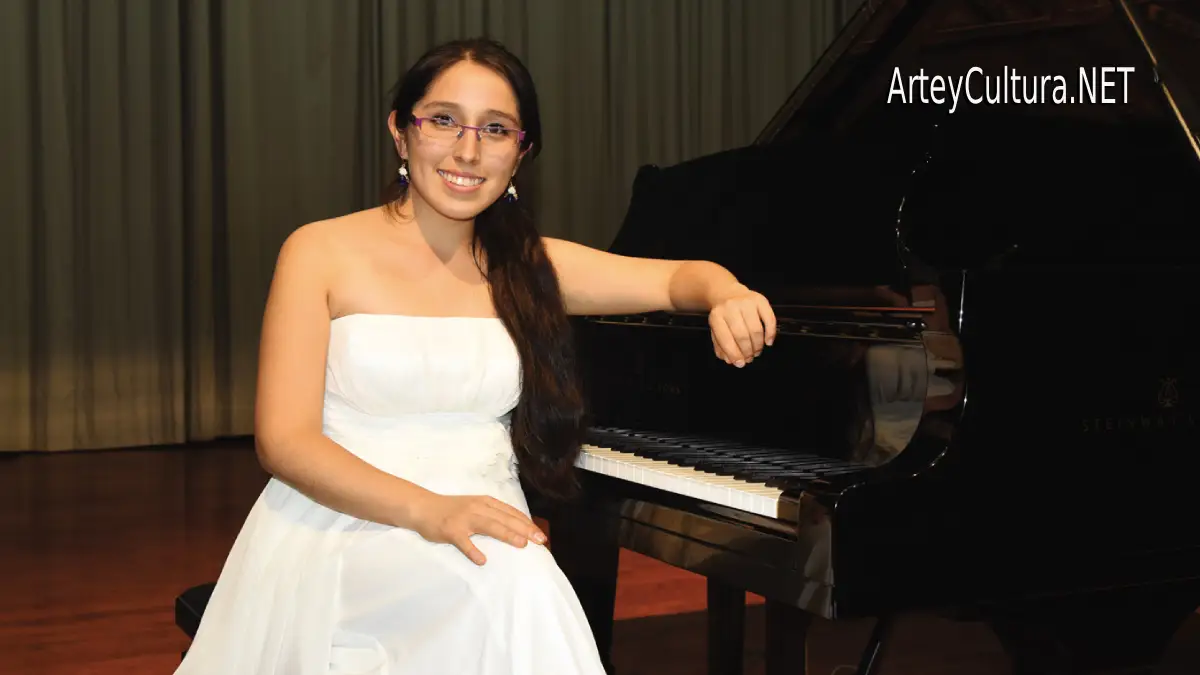
Priscila Navarro is a Peruvian pianist born in Lima. A complete birth date has not been published consistently in reliable public biographies, so it should not be invented. From studies begun in childhood, she developed an international career built on disciplined practice, advanced training, competitions, recitals and teaching.
Early years at the piano
Navarro began musical study as a child. Early aptitude is only a beginning: independence of the hands, reading, tone production, memory and stylistic judgement require years of daily work. Her development illustrates how education converts facility into durable musicianship.
Training between Peru and the United States
After studying in Lima, she continued her university education in the United States. Working with different teachers and within demanding academic environments expanded her repertory and exposed her to international standards of audition, ensemble collaboration and solo performance.
Education abroad did not erase her Peruvian identity. Her career demonstrates how a contemporary musician can participate in an international classical tradition while remaining connected to the country and institutions that shaped her beginnings.
Competition as a laboratory
A piano competition demands contrasting programs, physical endurance and control under unfamiliar conditions of instrument and hall. A prize provides visibility, but the preparation itself can be more important: it requires building repertory, recording progress, hearing peers and responding to expert evaluation.
At the Leeds competition
This language-neutral performance records Navarro in the second round of the 2021 Leeds International Piano Competition. The uninterrupted concert format allows viewers to observe concentration, transitions and long-range planning rather than only a short virtuoso excerpt.
Her technique serves musical architecture. Balance between voices, articulation and release of tension determine whether a passage becomes speech rather than a sequence of accurate notes.
Chopin and the singing piano
The music of Frédéric Chopin demands rhythmic flexibility without loss of structure. Melody must breathe while the left hand maintains harmony and direction. The interpreter’s challenge is to join intimacy with projection, especially in a large hall where softness still needs presence.
Interpreting familiar masterpieces
Classical pianists work with pieces performed thousands of times. Originality does not mean arbitrary distortion. It appears through defensible relationships of tempo, tone, voicing and character grounded in the score. A convincing interpretation lets personality emerge through coherence.
Rachmaninoff’s Third Piano Concerto
This language-neutral concert performance places Navarro within one of the repertory’s most demanding large-scale works. Rachmaninoff’s Third Concerto requires stamina, orchestral awareness and the ability to project multiple melodic layers through dense textures. The video shows that virtuosity is collaborative: the soloist must lead and listen at the same time.
Awards and professional projection
Navarro has received recognition in national and international competitions, including awards connected with Chopin repertory. Such results strengthened her visibility as part of a new generation of Peruvian classical musicians working across continents.
Teaching and continuity
A musical career includes more than public appearances. Teaching transfers methods of listening, reading and practice. An interpreter who teaches must translate intuitive choices into explanations another musician can test, refine and eventually make their own.
Achievements and contribution
- She earned international recognition through major piano competitions.
- She has represented contemporary Peruvian musicianship in international settings.
- She developed a career combining performance and advanced academic formation.
- She offers young Peruvian pianists a visible model of sustained preparation.
Priscila Navarro shows that an artistic career is built long before applause. Every public performance condenses years of invisible work, critical listening and patience at the instrument.