Edgar Allan Poe: Mystery, Reason and the Birth of Detection
The life, works and legacy of Edgar Allan Poe, a master of the modern short story, psychological horror, poetry and detective fiction.
- Edgar Allan Poe
- American literature
- The Raven
- detective fiction
- Gothic fiction
- short stories
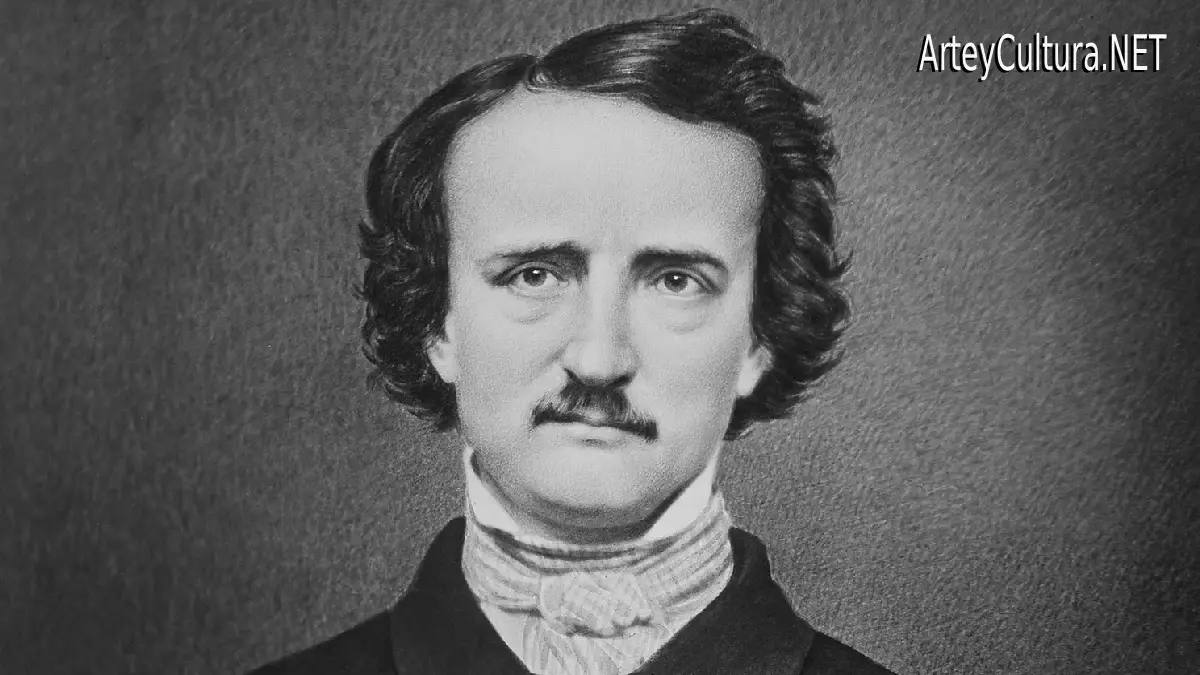
Edgar Allan Poe was born in Boston on January 19, 1809, and died in Baltimore on October 7, 1849. An American poet, fiction writer, critic and editor, he transformed the short story, established the pattern of modern detective fiction and gave psychological horror a formal precision that continues to influence literature, film and music.
A childhood shaped by loss
Poe’s parents were actors. His father disappeared from family life and his mother died when Edgar was two. John and Frances Allan took him into their Richmond household but never legally adopted him. His relationship with John Allan combined dependence, affection, authority and recurring conflict over money.
University, army and West Point
He briefly attended the University of Virginia, where debt and inadequate support forced him to leave. He enlisted in the army under another name and later entered the United States Military Academy at West Point. His dismissal closed a conventional institutional path and strengthened his commitment to earning a living through writing.
The professional writer
Poe published poetry and worked for magazines in Baltimore, Richmond, Philadelphia and New York. His sharp reviews built a reputation as a formidable critic. Irregular pay and fragile publishing businesses kept him in financial insecurity, even when his name was widely known.
Buried Alive: life and legend
This English documentary from PBS American Masters combines dramatization with scholarship. It is especially valuable for distinguishing the working writer from the later caricature of a permanently intoxicated madman. Poe calculated structure, rhythm, readership and publication strategy with great discipline.
The unity of effect
Poe argued that a short literary work should be readable in one sitting and direct all its elements toward a dominant emotional effect. Setting, narrator, sound and conclusion cooperate. This principle helped define the modern short story as a deliberately constructed form rather than a shortened novel.
Terror inside consciousness
In “The Tell-Tale Heart,” “The Black Cat” and “The Fall of the House of Usher,” fear grows through unreliable narrators, guilt and distorted perception. The reader must solve two problems at once: what happened and whether the person recounting it can be trusted.
Why read Poe today?
This English TED-Ed lesson surveys Poe’s techniques and cultural reach. Its animation makes recurring structures visible: confined spaces, obsessive repetition, doubles and minds that undermine their own claims to reason. The video also explains why his influence extends well beyond horror.
The analytical detective
C. Auguste Dupin, introduced in “The Murders in the Rue Morgue,” established foundational elements of detective fiction: an eccentric analyst, a companion-narrator, baffled police and a solution reconstructed from overlooked clues. Arthur Conan Doyle and generations of crime writers developed this architecture.
The Raven
Published in 1845, “The Raven” gave Poe immediate fame. Refrain, internal rhyme and the bird’s repeated answer turn mourning into obsession. The poem’s public success did not rescue him from poverty, but it fixed his rhythms and symbols within popular culture.
A death without a final answer
Poe was found in Baltimore in a confused condition and died several days later. Surviving records do not establish one conclusive cause. Illness, intoxication and electoral violence have all been proposed, but responsible biography must preserve uncertainty rather than convert speculation into fact.
Achievements and legacy
- He helped define the modern short story through the unity of effect.
- He created the foundational model of the analytical detective.
- He expanded psychological horror and early speculative fiction.
- He profoundly influenced French Symbolists and writers worldwide.
Poe turned darkness into architecture. His stories disturb not through an inventory of monsters, but by showing how much terror a mind can produce while attempting to explain itself.