Óscar Avilés: The First Guitar of Peru
The life, style and legacy of Óscar Avilés, the guitarist, singer and arranger who helped define the modern sound of Peruvian música criolla.
- Óscar Avilés
- Peruvian guitar
- música criolla
- Peruvian waltz
- Los Morochucos
- Chabuca Granda
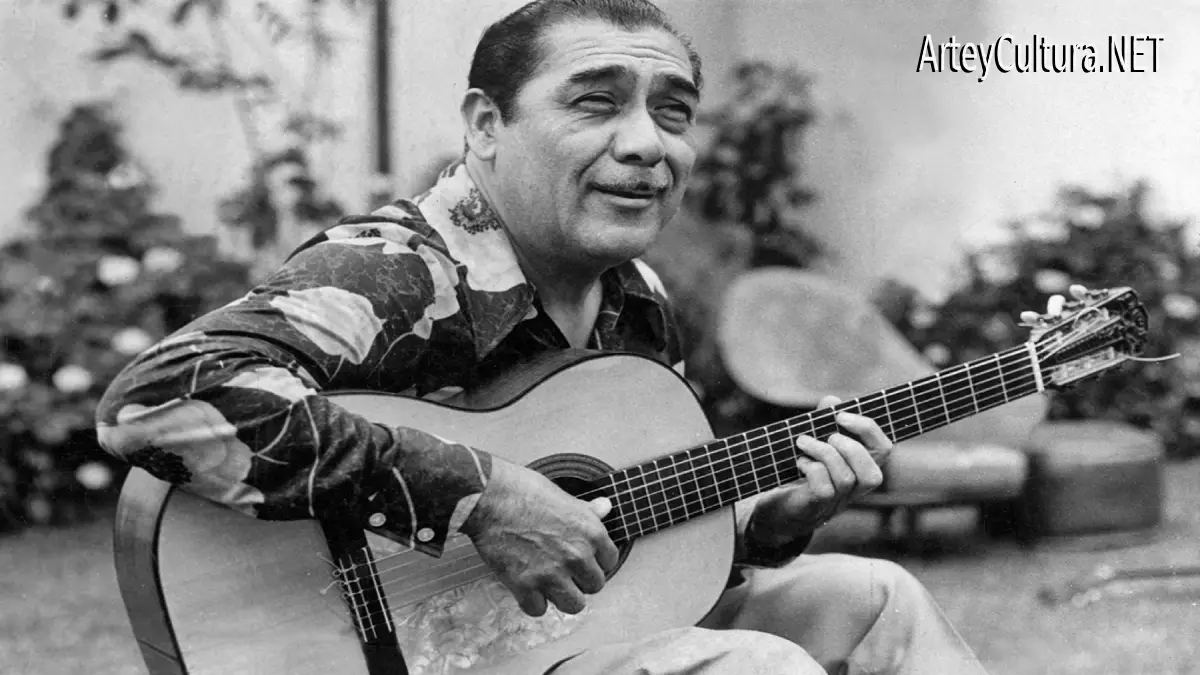
Óscar Guillermo Avilés Arcos was born in Callao on March 24, 1924, and died in Lima on April 5, 2014. A guitarist, singer, composer and arranger, he became known as The First Guitar of Peru. His playing brought rhythmic precision, harmonic depth and an unmistakable voice to the Peruvian waltz, marinera and other traditions of música criolla.
Learning to accompany
Avilés grew up surrounded by popular music and learned by listening closely to older performers. Informal gatherings and ensemble work taught him a principle that shaped his entire career: accompaniment is not a secondary task. A guitarist must hear the singer’s breathing, phrasing and emotional direction, then support them without crowding the song.
Los Morochucos
During the 1940s he joined and later directed Los Morochucos, one of the defining ensembles of Peruvian criollo song. Their refined sound depended on coordinated voices, exact silences and guitar parts in which bass movement and chordal rhythm remained clear. Avilés helped turn ensemble accompaniment into a recognizable modern language.
The tundete
The pattern widely known as the tundete is closely associated with his playing. Alternating bass, chords and accents create propulsion without competing with the vocal line. It is better understood as a way of organizing musical time than as one rigid formula. Avilés adjusted weight, anticipation and silence to the character of every verse.
Guitar mastery without excess
This instrumental performance allows the guitar itself to carry the explanation. Listen to the independence of the bass line, the clarity of each chord and the calm control of tempo. Avilés does not prove mastery through an accumulation of notes; he places each sound where it gives the phrase maximum life.
A partner to great voices
He accompanied major performers including Jesús Vásquez, Eloísa Angulo, Eva Ayllón and Arturo “Zambo” Cavero. His approach changed with each voice. At times the guitar anticipates a cadence; elsewhere it answers a phrase or withdraws entirely. This responsiveness made him an interlocutor rather than a repetitive background.
Chabuca Granda
His collaboration with Chabuca Granda was especially important. Their performances carried Peruvian repertoire to international audiences and balanced harmonic sophistication with popular roots. Avilés could follow the composer’s flexible sense of pulse without weakening the underlying dance rhythm.
The guitar as a complete voice
This second performance is language-neutral and concentrates on the physical relationship between both hands. Melody, bass and harmony appear as simultaneous layers. It demonstrates why his recordings continue to serve as practical lessons for guitarists even when no spoken explanation is present.
Arranger and musical memory
Avilés knew repertories transmitted orally and helped preserve them through recording. An arrangement determines introductions, harmonic movement, instrumental responses and endings; it can make an older song newly legible without erasing its origin. His studio work connected generations and established models still studied by criollo musicians.
Honours and public recognition
He received the Palmas Magisteriales, the Order of the Sun of Peru and distinctions from public institutions, universities and his native Callao. These honours recognized more than celebrity. They acknowledged a body of work regarded as part of Peru’s living cultural heritage.
Achievements and legacy
- He defined a modern approach to accompanying Peruvian criollo song.
- He gave Los Morochucos a precise and influential ensemble identity.
- He collaborated with leading singers and composers across generations.
- He left recordings that function as a school for new guitarists.
- He projected the sound of Peruvian guitar onto international stages.
Óscar Avilés made accompaniment a major art. His guitar never displaced the song; it illuminated the song from within and could make Peru recognizable in only a few measures.