Octavio Paz: Poetry, Criticism and the Search for Modernity
The life, major works and legacy of Octavio Paz, the Mexican poet and essayist who received the Cervantes Prize and the Nobel Prize in Literature.
- Octavio Paz
- Mexican poetry
- Nobel Prize in Literature
- The Labyrinth of Solitude
- Sunstone
- essays
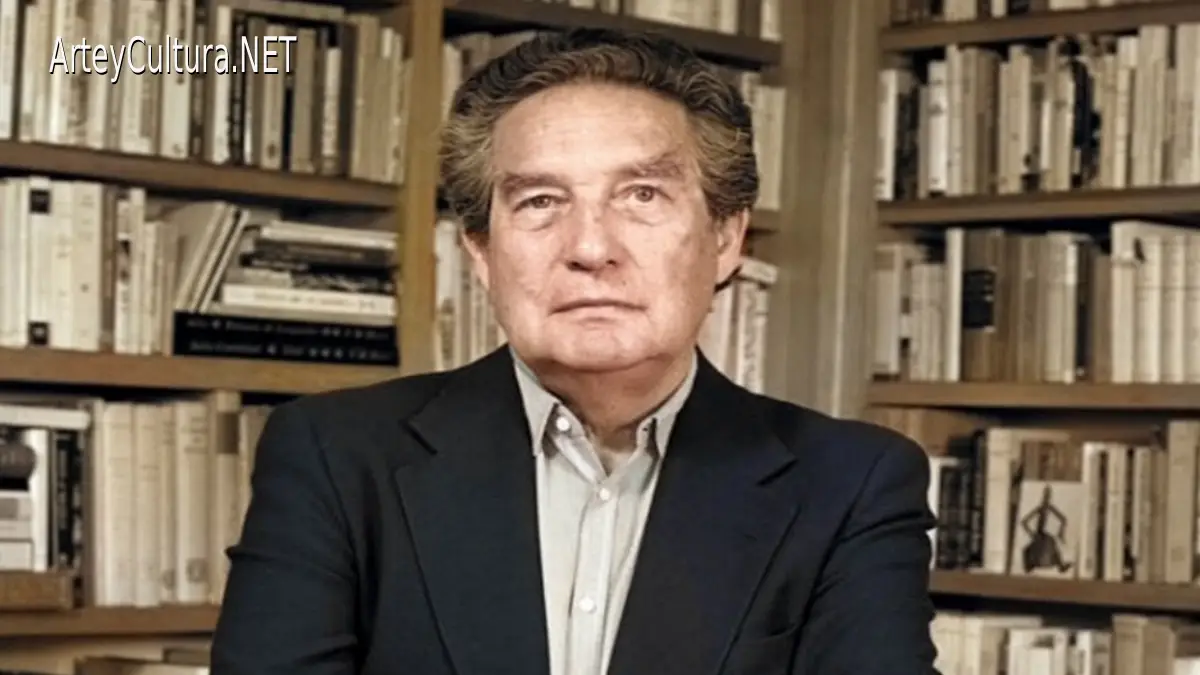
Octavio Paz Lozano was born in Mexico City on March 31, 1914, and died there on April 19, 1998. Poet, essayist, editor and diplomat, he investigated Mexican identity, language, eroticism, art and modernity. He received the Cervantes Prize in 1981 and the Nobel Prize in Literature in 1990.
Books and politics in childhood
Paz’s grandfather Ireneo was a writer and publisher; his father supported the Zapatista movement. The family library and the aftershocks of the Mexican Revolution formed an environment in which literature and history could not be separated. He published poetry while young and helped establish literary magazines that connected his generation with international debates.
Early poetry and the Spanish Civil War
Romanticism, Surrealism, modernist experiment and social concern all entered his early writing. A visit to Spain during the Civil War placed him among writers confronting the political responsibilities of art. Paz would later resist demands that literature obey any single ideology, but history remained an inescapable presence in his poems.
The Labyrinth of Solitude
Published in 1950, this sequence of essays examines masks, festivals, conquest, revolution and national identity. The book became enormously influential and has also been criticized for generalizing “the Mexican” into a single figure. Its continuing importance lies less in providing a final definition than in opening arguments that later generations have revised.
Diplomacy and Asia
Paz entered Mexico’s diplomatic service and lived in France, Japan and India. Asian poetry, philosophy and visual culture transformed his sense of form and time. In 1968 he resigned as ambassador to India in protest after the Mexican government’s violent repression of the student movement at Tlatelolco.
Conversations across languages
This English-language conversation offers the rare experience of hearing Paz discuss poetry for an Anglophone audience. His movement between explanation and image demonstrates a defining feature of his work: criticism was not separate from poetry but another way of testing what language can reveal.
Sunstone
Published in 1957, Sunstone is a long poem whose circular form is related to the 584-day cycle of Venus. Love, memory, history and perception unfold in an extended verbal current. The final line returns to the opening, making repetition a renewal rather than a closed loop.
The poem is central to twentieth-century Latin American literature because personal encounter and collective history continuously interrupt one another. Its form asks the reader to experience thought as rhythm.
A Nightwatch interview
In this English interview, Paz reflects on his intellectual formation and public role. The extended format allows ideas to develop beyond the compact declarations of an award ceremony. It also reveals the cosmopolitan range of a writer who remained rooted in Mexican history while refusing cultural isolation.
Magazines and public debate
Paz founded Plural and later Vuelta, journals that became influential forums for literature, art and politics. He defended criticism against ideological dogma, a position that generated both admiration and sharp controversy. His editorial influence is therefore part of his legacy, not merely a supplement to his poems.
The Bow and the Lyre
This major essay considers rhythm, inspiration and poetic experience. It is not a writing manual. Paz asks what happens when ordinary language is reorganized so that readers encounter the world—and themselves—with renewed attention.
Achievements and legacy
- He renewed Mexican poetry through dialogue with international traditions.
- He wrote foundational essays on identity, visual art and modernity.
- He created journals that shaped cultural debate across the Spanish-speaking world.
- He received both the Cervantes Prize and the Nobel Prize in Literature.
Octavio Paz understood literature as exploration and critique. His work remains alive because it does not offer sealed identities; it examines the fractures through which individuals and societies attempt to recognize themselves.