
Andrew Wyeth and His Models: Lives Behind the Portraits
The life and art of Andrew Wyeth through Christina Olson and Sissy Spruance, two models who reveal how memory, place and trust shaped his realism.
- Andrew Wyeth
- American realism
- Christina Olson
- Sissy Spruance
- Christina's World
- portraiture
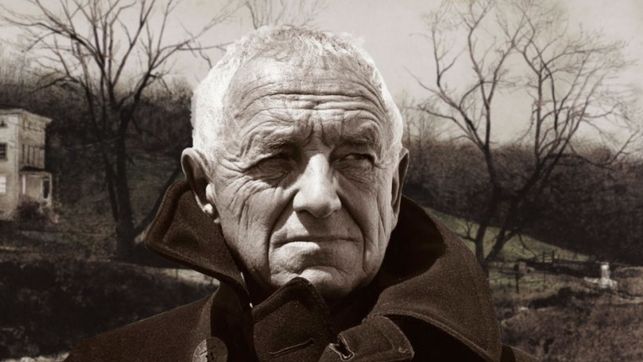
Andrew Newell Wyeth was born on July 12, 1917, in Chadds Ford, Pennsylvania, and died there on January 16, 2009. One of the best-known American realist painters of the twentieth century, he transformed familiar houses, fields and neighbours into images of endurance, solitude and memory. His models were never interchangeable figures: the history he shared with each person changed what a painting could mean.
Learning from N. C. Wyeth
Andrew’s father, the celebrated illustrator N. C. Wyeth, supervised an exacting artistic education. Because of frail health, Andrew was taught mainly at home. He studied drawing and watercolor in a family workshop where craftsmanship, literature and narrative imagination belonged together.
The training was traditional, yet the son did not simply reproduce his father’s dramatic illustration. Andrew gradually developed a quieter art in which an empty room, weathered wall or distant hill could carry as much psychological weight as a face.
Two territories, one visual world
Wyeth worked repeatedly around Chadds Ford and Cushing, Maine. Instead of searching endlessly for new subjects, he studied a small number of places across decades. Seasonal light, worn surfaces and traces of human occupation allowed those landscapes to function as indirect portraits.
He moved between spontaneous watercolor and painstaking egg tempera. Watercolor welcomed speed and accident; tempera required layers of small strokes on a carefully prepared surface. His realism was selective rather than photographic: he omitted, shifted and simplified details to intensify an emotional structure.
Entering Wyeth’s world
In this English-language BBC documentary, Michael Palin visits the landscapes and communities that sustained Wyeth’s art. The film demonstrates that the barns, coastlines and domestic interiors are not picturesque backgrounds. They retain the memory of the people who lived there and explain why a geographically narrow practice produced such an expansive imaginative world.
Christina Olson and distance
Christina’s World (1948) depicts a woman lying in a field and looking toward a distant farmhouse. The model, Anna Christina Olson, lived with a condition that severely restricted her mobility. Wyeth admired her determination and knew the Olson farm intimately.
The painting does not explain whether Christina is arriving, leaving or resting. Its low viewpoint and enormous interval between body and house turn distance into effort and desire. Wyeth used Christina’s body as a starting point, while the head and torso were informed partly by his wife Betsy. That construction reminds us that even a recognizable scene is an invented image rather than a neutral document.
How Wyeth constructed a painting
This English visual essay follows Wyeth’s preparatory studies and compositional decisions. It is especially useful for seeing how repeated drawings and watercolors could lead toward a finished tempera. The apparent stillness of the final work emerged from sustained revision, changes of viewpoint and control over every interval.
Sissy Spruance and the model’s voice
Sissy Spruance posed for My Young Friend in 1970. Her recollections of meeting Wyeth and sitting for him restore agency to someone often encountered only as an image. A portrait grows through practical negotiation: time, posture, trust and the model’s willingness to be observed.
Wyeth also suggested people without showing their faces. Clothes, beds, windows and paths become biographical evidence. That is why his seemingly empty interiors and landscapes often feel inhabited.
Recognition and debate
Wyeth received the Presidential Medal of Freedom, the Congressional Gold Medal and the National Medal of Arts. His immense popularity coexisted with criticism from commentators who considered realism old-fashioned during the ascendancy of abstraction and conceptual art. Later scholarship has paid closer attention to the strangeness, ambiguity and rigorous construction beneath his accessible surfaces.
Achievements and legacy
- He renewed American realism through memory, atmosphere and psychological tension.
- He mastered watercolor and egg tempera as distinct but complementary languages.
- He turned a few deeply known places into an art of universal emotional reach.
- He created some of the most enduring American images of the twentieth century.
Wyeth’s relationships with Christina Olson, Sissy Spruance and other neighbours show that every portrait contains at least two histories: the image built by the artist and the life retained by the person represented.