
Louis Armstrong: The Sound That Transformed Jazz
The life, recordings and legacy of Louis Armstrong, the trumpeter and singer who placed individual improvisation at the creative heart of jazz.
- Louis Armstrong
- jazz
- trumpet
- Satchmo
- Hot Five
- What a Wonderful World
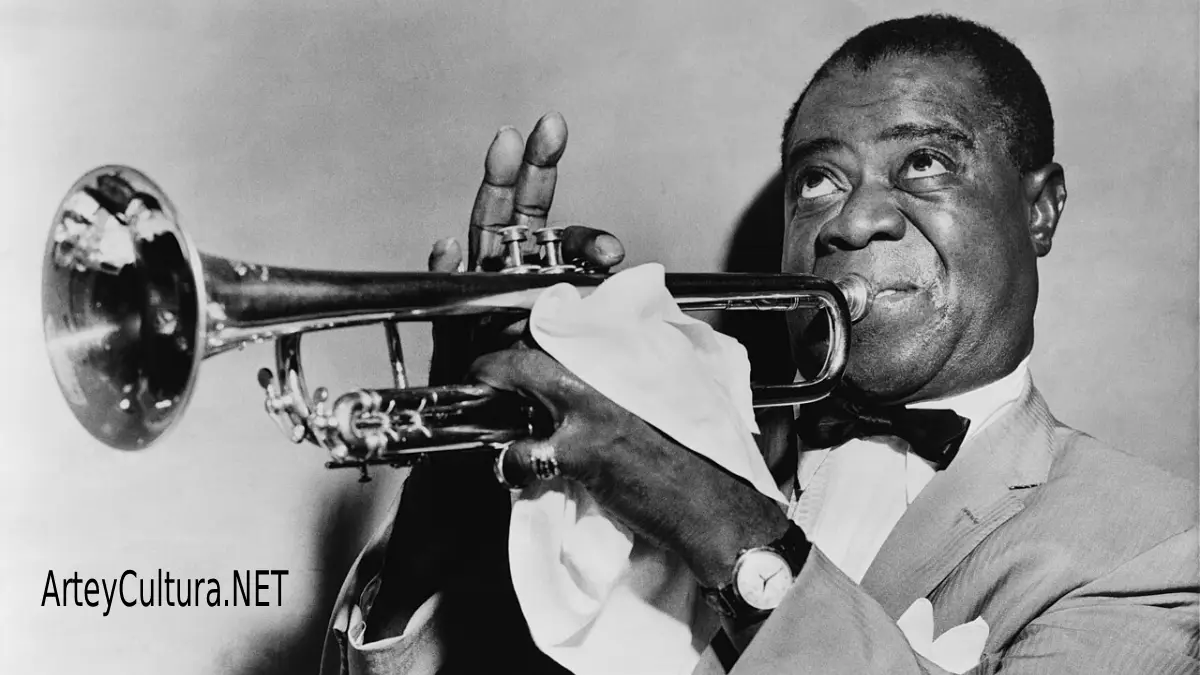
Louis Daniel Armstrong was born in New Orleans on 4 August 1901 and died in New York on 6 July 1971. Known as Satchmo and Pops, he was a trumpeter, singer and one of the most influential musicians of the twentieth century.
Armstrong placed the individual soloist at the creative centre of jazz. His phrasing altered how musicians understood rhythm, melody and personal sound, while his singing opened new expressive possibilities for nearly every form of popular song that followed.
Childhood in New Orleans
Armstrong grew up in severe poverty and worked from childhood. After firing a pistol in the air during a New Year’s celebration, he was sent to the Colored Waifs’ Home, where he learned cornet and played in the band.
The institution imposed discipline but also gave musical direction. After leaving, he performed in parades, neighbourhood venues and on Mississippi riverboats, absorbing the many sounds of New Orleans.
King Oliver, Chicago and New York
Joe “King” Oliver became a mentor and invited Armstrong to join his Creole Jazz Band in Chicago in 1922. Their recordings captured brilliant collective improvisation. Armstrong then spent time with Fletcher Henderson’s orchestra in New York, where his rhythmic force surprised musicians accustomed to more measured phrasing.
These experiences connected New Orleans ensemble practice with the expanding recording and dance-band industries of northern cities.
The Hot Five and Hot Seven revolution
Between 1925 and 1928, Armstrong recorded with the Hot Five and Hot Seven. These sessions transformed jazz. Collective variation remained important, but the solo acquired narrative structure and unmistakable personality.
Armstrong built phrases with clarity, rhythmic risk and extraordinary swing. Each chorus could develop an argument: an opening idea was varied, delayed, intensified and brought to a convincing conclusion.
A voice turned into an instrument
His gravelly singing challenged conventional ideals of vocal beauty. He played with timing, altered melodies and gave each word a unique inflection. Scat singing—improvisation through non-lexical syllables—became internationally popular through his performances.
Singers learned that interpretation did not mean reproducing a written melody exactly. The voice could reshape a song in the present, just as a horn solo did.
Ambassador of jazz
This widely viewed English historical documentary follows Armstrong’s journey from New Orleans to international fame. Archival performance and social context make clear why his entertainer’s warmth and his radical musical innovation must be understood together rather than treated as opposing identities.
From innovator to global celebrity
Armstrong toured relentlessly and carried jazz to audiences around the world. Some later critics mistook popularity and theatrical humour for artistic decline. Yet the stage persona rested on musical command, precise timing and decades of invention.
He became a cultural ambassador during the Cold War, even as the United States remained segregated. That contradiction complicates any simple celebration of his official international role.
“What a Wonderful World”
Recorded in 1967, this English song became one of Armstrong’s most enduring performances. The lyric observes trees, skies, friendship and children; his aged voice gives those ordinary images gratitude and fragility. The official video has reached tens of millions of viewers.
The performance is powerful precisely because optimism is not naïve. It comes from an artist who knew poverty, segregation and grief, yet could still make attention to beauty sound morally serious.
Race, image and public action
As a Black artist, Armstrong worked within a segregated entertainment industry. His smiling public image generated debate, especially among younger activists, but assessments must account for the restrictions and survival strategies of his era.
He sometimes acted publicly and forcefully. During the 1957 Little Rock school integration crisis, he condemned government inaction and cancelled a planned State Department tour. His private financial support for civil-rights work also complicates stereotypes of political passivity.
Achievements and legacy
- He redefined solo improvisation in jazz.
- He transformed vocal phrasing across popular music.
- He made foundational recordings with the Hot Five and Hot Seven.
- He carried jazz to a genuinely worldwide audience.
- His sound influenced trumpeters, singers and composers across genres.
Louis Armstrong changed how people play, sing and listen. Every phrase still seems to be invented directly before the audience, even after countless hearings. That sensation of present-tense creation is the core of his legacy.