Giuseppe Verdi: Drama, Opera and the Voice of a People
The life, major operas and legacy of Giuseppe Verdi, the Italian composer who joined unforgettable melody with profound theatrical and human insight.
- Giuseppe Verdi
- Italian opera
- La traviata
- Rigoletto
- Aida
- Otello
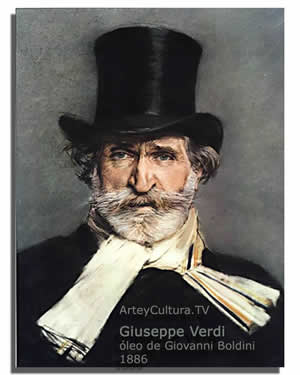
Giuseppe Fortunino Francesco Verdi was born on 10 October 1813 in Le Roncole, near Busseto, and died in Milan on 27 January 1901. The foremost Italian opera composer of the nineteenth century, he united theatrical momentum, memorable melody and a rare understanding of the human voice.
Verdi did not write vocal display around a weak story. He sought situations in which music could intensify choice, conflict and consequence. His greatest characters sing because ordinary speech can no longer contain what is at stake.
From Le Roncole to Milan
Verdi grew up in a modest family and received his earliest musical instruction locally. Antonio Barezzi, a Busseto merchant and music lover, recognised his ability and supported further training. Although the Milan Conservatory rejected his application, Verdi continued private study and gained practical experience as performer, conductor and composer.
The rejection later became an ironic detail in a celebrated career, but his development was never effortless. Knowledge of voices, orchestras and provincial musical life came from sustained work rather than institutional prestige.
Early success and devastating loss
His first opera, Oberto, received a favourable response at La Scala. The following years brought the deaths of his two young children and his wife, Margherita Barezzi. He nearly abandoned composition after the failure of a comic opera written amid that grief.
Nabucco, premiered in 1842, changed his direction. Its success made him a national figure and began the demanding period he later called his “galley years”, when one commission followed another.
The composer’s life and places
This English documentary follows Verdi through Le Roncole, Busseto, Milan and the country estate of Sant’Agata. Seeing the places in which he learned, worked and withdrew from public life gives geographic form to a career often reduced to a sequence of operatic titles.
Music driven by theatre
Verdi began with dramatic situation. The orchestra supports and complicates the characters rather than replacing them. A melody can survive outside the theatre, yet inside the opera its full force depends on the exact moment when someone hopes, accuses, forgives or dies.
He worked intensely with librettists, demanded revisions and challenged theatrical convention when it obstructed emotional truth. The growing integration of word, action and musical continuity defines his artistic development.
The popular trilogy
Rigoletto, Il trovatore and La traviata, premiered between 1851 and 1853, established Verdi’s international dominance. Each places vulnerable individuals against family, political or social power. A court jester, a persecuted family and a courtesan judged by respectable society become the emotional centres of grand public theatre.
La traviata is especially radical in bringing a contemporary woman and her illness onto the operatic stage. Violetta’s vocal writing changes with her emotional condition, making virtuosity inseparable from character.
Verdi explained through four major operas
Baritone Thomas Hampson leads this substantial English documentary through Nabucco, Macbeth, Il trovatore and La traviata. Musical examples and dramatic explanation reveal how Verdi shapes text for specific voices and turns recurring public themes into private human decisions.
Opera and Italian identity
During the Risorgimento, some choruses and works became associated with aspirations for national unity. “Viva VERDI” could also be read as an acronym for Vittorio Emanuele Re d’Italia. The political relationship was more complex than later legend suggests, but the composer’s name undoubtedly acquired symbolic force.
Verdi briefly served as a deputy and later as a senator. His most enduring public influence, however, came through theatres where audiences experienced a shared language of suffering, resistance and hope.
Monumental scale and late mastery
Aida can organise immense choral and orchestral forces, yet its central conflict remains intimate: public triumph destroys private loyalty. After a long interval, Verdi returned with Otello in 1887 and Falstaff in 1893, both written with Arrigo Boito after Shakespeare.
Otello achieves extraordinary dramatic continuity. Falstaff closes the career with agile comedy and intricate ensembles, proving that the elderly composer could still surprise audiences rather than imitate his own past.
Casa Verdi, death and remembrance
Verdi funded a Milan residence for retired musicians, the Casa di Riposo per Musicisti, which he regarded as one of his finest works. He died after a stroke in 1901. When his remains and those of his second wife, Giuseppina Strepponi, were transferred to Casa Verdi, a vast crowd sang “Va, pensiero”.
That farewell demonstrated how completely his music had entered collective Italian memory.
Achievements and legacy
- He transformed Italian opera through increasingly integrated musical drama.
- He created roles of exceptional vocal and psychological complexity.
- He composed works that remain central to the global repertory.
- He joined popular melodic power with sustained artistic ambition.
Verdi remains onstage because he understood the voice as human action. In his operas, singing means deciding, resisting, remembering and revealing what society would prefer to silence.