Albert Camus: The Absurd, Rebellion and Human Dignity
The life, ideas and major works of Albert Camus, the Algerian-born French writer whose lucid humanism earned the 1957 Nobel Prize in Literature.
- Albert Camus
- absurdism
- The Stranger
- The Plague
- The Myth of Sisyphus
- French literature
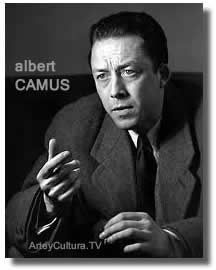
Albert Camus was born on 7 November 1913 in Mondovi, in French-administered Algeria, and died on 4 January 1960 near Villeblevin, France. A novelist, essayist, playwright and journalist, he received the 1957 Nobel Prize in Literature for writing that confronted the moral problems of his time with unusual clarity.
Camus is often described as an existentialist, a label he rejected. His work is better approached as an evolving inquiry into how people can live without absolute certainty while resisting injustice and refusing to treat human life as an expendable instrument.
A working-class childhood in Algeria
Camus’s father died from wounds suffered during the First World War. His mother, who had limited hearing and little formal education, supported the family through domestic labour. They lived in a poor district of Algiers, where a perceptive teacher, Louis Germain, helped Camus continue his education.
Mediterranean light, poverty and the unequal colonial society of Algeria entered his writing in different forms. Tuberculosis ended his hopes of sustained competitive football and repeatedly disrupted his studies and work, giving mortality an early, concrete presence.
Theatre, journalism and resistance
Before literary fame, Camus worked in theatre and investigative journalism. For Alger Républicain, he reported on social deprivation, including conditions in Kabylia. During the German occupation of France, he joined the Resistance newspaper Combat and later became its editor.
He argued that journalism should be answerable to facts and language should not conceal murder. Political commitment mattered, but no future ideal could automatically excuse present cruelty.
What does the absurd mean?
For Camus, the absurd arises from the collision between the human demand for meaning and the world’s silence. It is not simply sadness, chaos or a belief that nothing matters. In The Myth of Sisyphus, he asks whether one can acknowledge this condition without escape into false certainty.
His answer is a conscious form of living: lucid, finite and rebellious. Sisyphus, condemned to push a stone uphill forever, becomes an image of dignity because awareness and persistence remain his own.
An introduction to Camus’s philosophy
This widely viewed English explainer presents absurdity, freedom and the search for an honest life in accessible terms. It offers a useful map, but Camus’s literary method matters as much as any summary: ideas acquire meaning through weather, bodies, decisions and consequences.
Novels of estrangement and solidarity
The Stranger follows Meursault, whose emotional distance from social convention unsettles those around him and shapes his trial. The Plague depicts an epidemic in Oran and tests different responses to fear, separation and collective danger. The Fall takes the form of a confession that gradually exposes moral vanity.
The controlled prose of these books should not be mistaken for emotional emptiness. Restraint allows ethical questions to emerge without an author explaining exactly what readers must conclude.
Rebellion and the break with Sartre
Camus’s friendship with Jean-Paul Sartre ended after the publication of The Rebel. Their dispute concerned revolution, history and the limits of political violence. Camus insisted that rebellion loses its moral purpose when it grants itself unlimited permission to kill.
That position made him isolated during an era of rigid ideological camps. It also explains why his defence of limits and responsibility continues to matter whenever political language reduces individuals to abstractions.
The Plague and shared responsibility
This English analysis examines The Plague as more than a story about disease. It highlights the characters’ practical solidarity and the novel’s argument that decency consists in responding to suffering even when victory is incomplete or temporary.
Nobel Prize, death and unfinished work
Camus received the Nobel Prize at 44. The honour recognised an already influential body of fiction, essays, drama and journalism, but his creative path was far from finished. He died at 46 in a car crash.
The manuscript of The First Man was recovered from the wreckage and published decades later. Its return to Algerian childhood and the search for an absent father suggested a new, more openly autobiographical phase that death interrupted.
Achievements and legacy
- He renewed the relationship among novel, essay, theatre and journalism.
- He described the absurd without surrendering to nihilism.
- He developed an ethics of rebellion based on limits and responsibility.
- His Nobel-recognised work continues to illuminate collective crisis and personal choice.
Camus remains compelling because he offers no final system. He proposes a harder task: to see the world without comforting illusions and still choose solidarity, beauty and human dignity.