Henri de Toulouse-Lautrec: Visual Chronicler of Parisian Nightlife
The life, posters and legacy of Henri de Toulouse-Lautrec, the French artist who transformed the theatres and cabarets of Montmartre into modern visual culture.
- Henri de Toulouse-Lautrec
- French painter
- Moulin Rouge
- Montmartre
- poster art
- lithography
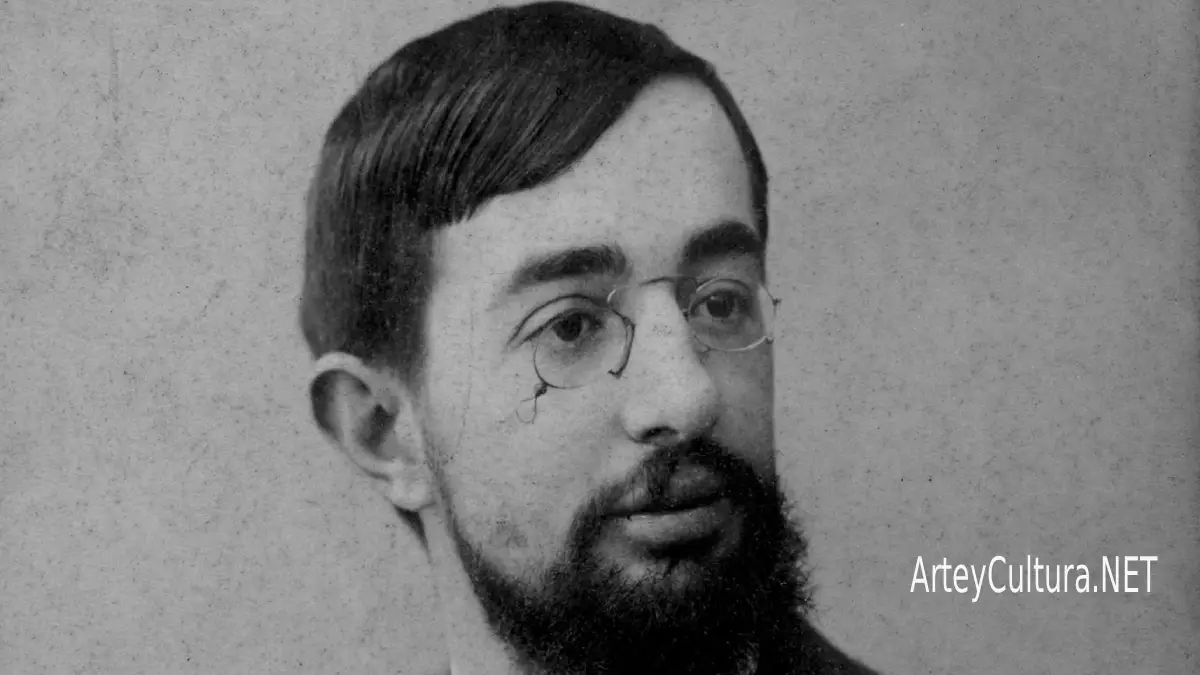
Henri Marie Raymond de Toulouse-Lautrec-Monfa was born on 24 November 1864 in Albi, France, and died on 9 September 1901 at Château Malromé. A painter, draughtsman, printmaker and poster designer, he turned the cafés, cabarets and theatres of Paris into a visual record of modern life.
His art did not merely advertise entertainment. It observed performers, workers and patrons with a sharp understanding of gesture, social position and private fatigue. The spectacle is present, but so are the people who made it possible.
Privilege, illness and observation
Toulouse-Lautrec was born into an aristocratic family. As a teenager he fractured both legs, and an underlying medical condition prevented normal growth. Long periods of recovery encouraged his commitment to drawing. His disability should not be treated as a complete explanation of his art, yet it influenced his experience of moving between privileged society and spaces where he did not entirely conform.
That double perspective sharpened his eye. He could recognise social performance because he had seen it from within and from the edge. His portraits often register confidence and vulnerability at the same time.
Training and the discovery of a modern line
In Paris during the 1880s, he studied with Léon Bonnat and Fernand Cormon. Academic training gave him control of anatomy and composition, but he soon preferred a rapid, expressive line capable of capturing movement. Edgar Degas, Japanese woodblock prints and photography offered additional lessons in cropped figures, unusual viewpoints and compressed space.
Rather than hiding these influences, Toulouse-Lautrec combined them into a language suited to a city of electric signs, popular performances and fleeting encounters.
Montmartre as a living stage
He settled in Montmartre and became a regular presence at the Moulin Rouge, Le Mirliton and other venues. Dancers, singers and actors such as Jane Avril, Aristide Bruant and Yvette Guilbert appear repeatedly in his work. Their silhouettes are immediately recognisable, yet the images avoid flattering convention.
Every figure possesses a particular posture and rhythm. A raised shoulder or tilted head can reveal more than an elaborate setting. Through repetition, these individuals became part of the public identity of fin-de-siècle Paris.
The artist behind the famous posters
This English-language documentary places the familiar Moulin Rouge posters within the artist’s wider life and production. It connects his aristocratic origins, Parisian training and intimate knowledge of nightlife, showing why paintings, drawings and prints need to be considered together.
Turning the street poster into modern art
His 1891 poster for the Moulin Rouge changed urban advertising. Toulouse-Lautrec simplified forms, used broad areas of colour and arranged text and silhouette so that the image could be understood instantly from a distance. Colour lithography allowed him to unite art, performance and mass reproduction.
The innovation was not simply technical. He understood that public attention is brief. A poster needed visual force, but it could also possess wit, character and compositional intelligence. This principle anticipated major developments in twentieth-century illustration and graphic design.
Movement, colour and the unidealised gaze
In his work, a single curve can define a body and suggest movement. Backgrounds are often reduced so that gesture takes control. Colour organises mood rather than passively copying appearances: acidic greens, reds and yellows evoke artificial light and the emotional charge of performance.
Toulouse-Lautrec also refused to disguise boredom, exhaustion or loneliness. His subjects are not decorative figures in a romantic myth of bohemia. They are working people and complex individuals, observed with humour, closeness and frequent empathy.
The man who captured the Moulin Rouge
This substantial English documentary follows his career through the world of nineteenth-century Parisian entertainment. It is especially useful for comparing his public posters with quieter portraits and seeing how recurring profiles, diagonals and cropped spaces formed a consistent visual language.
Final years and death
Heavy work, alcoholism and declining health shaped his last years. After a severe crisis in 1899, he spent time in a clinic and demonstrated his recovered ability by producing a remarkable series of circus drawings from memory. He returned to work but died in 1901, aged only 36.
Despite that short life, he left thousands of drawings along with hundreds of paintings, prints and posters. Their range disproves the idea that he was merely an illustrator of one fashionable district.
Achievements and legacy
- He transformed the advertising poster through bold simplification, flat colour and integrated lettering.
- He made the performers and workers of Montmartre central subjects of modern art.
- He helped dissolve boundaries between painting, illustration, printmaking and commercial communication.
- His compositions influenced graphic design, caricature, photography and visual branding.
Toulouse-Lautrec remains compelling because he understood that a public image can be immediate without being shallow. His posters command attention from across a street; his people, encountered at close range, reveal an entire society.