Lucho González: A Guitar Bridge Between Peru and Argentina
The life, collaborations and legacy of Lucho González, the Peruvian-Argentine guitarist who connected coastal Peruvian music with a wider Latin American sound.
- Lucho González
- Peruvian guitar
- Creole music
- Chabuca Granda
- Mercedes Sosa
- Latin American music
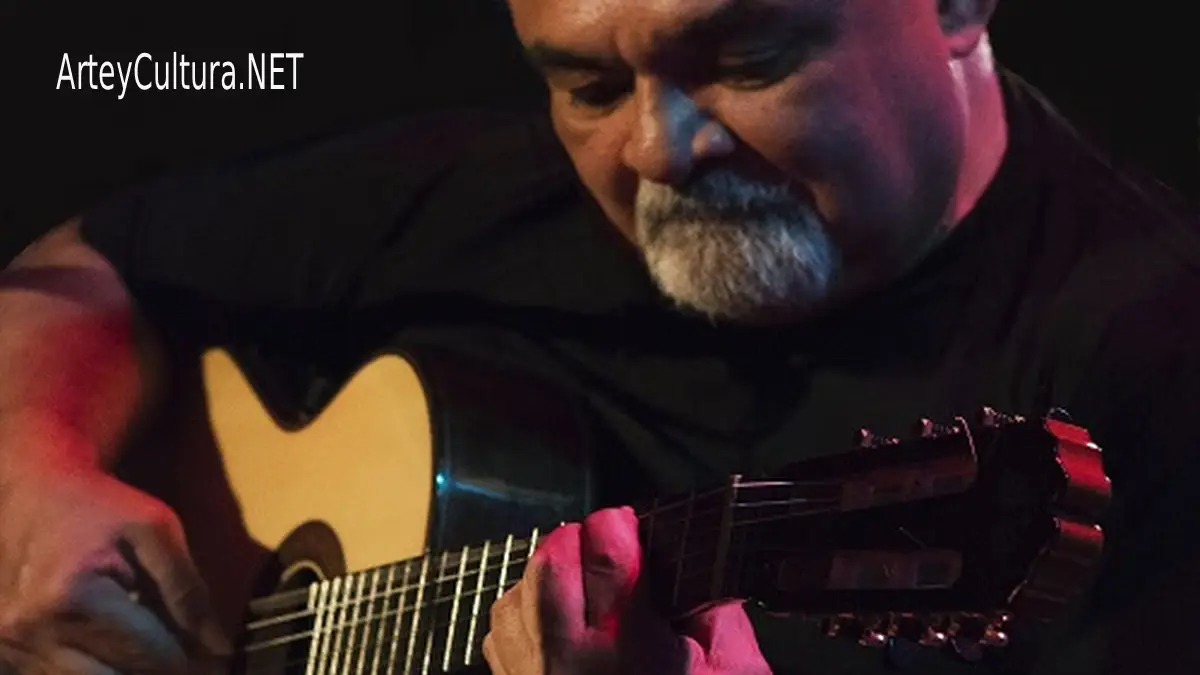
A musician between two shores
Luis Alejandro González Cárpena, known professionally as Lucho González, was born on 25 November 1946 and died in Buenos Aires on 28 March 2026, aged 79. He was a Peruvian-Argentine guitarist, composer, arranger and teacher whose career connected Peruvian coastal traditions with Argentine folklore, jazz and the broader language of Latin American song.
González did more than carry one national repertoire into another country. He understood how rhythm, harmony and phrasing express cultural memory. His guitar could support a singer discreetly, answer a melodic line or reorganise an entire composition without obscuring its original character.
Chabuca Granda and the renewal of Peruvian song
One of his most important creative partnerships was with Chabuca Granda. As guitarist and arranger, González accompanied the composer’s movement from the urban Creole waltz toward a richer dialogue with landó and other Afro-Peruvian forms. That transition helped present Peruvian music as a living field of invention rather than a fixed collection of inherited songs.
His arrangements were attentive to poetry. Instead of filling every silence, he created space around the voice and allowed the rhythmic identity of a piece to emerge through carefully placed accents. The apparent ease of the result concealed considerable harmonic knowledge and disciplined listening.
The musician in his own words
This extended conversation offers something that a list of credits cannot: González explains his craft through memory, anecdote and musical reflection. The interview is in Spanish because no comparable English testimony was available. It reveals why accompaniment is not a secondary task but an art of attention, adaptability and trust.
Collaborations across Latin America
González worked with Mercedes Sosa, Pedro Aznar, Luis Salinas, Tomatito, Eva Ayllón, Tania Libertad and Litto Nebbia, among many others. Each collaboration required a different balance of timbre, pulse and emotional weight. His versatility made him a valued partner on both sides of the Andes.
During the 1980s he joined Lito Vitale and Bernardo Baraj in the Vitale-Baraj-González Trio. The group became an important example of Argentine instrumental fusion, bringing improvisation, popular melody and highly organised arrangements into a shared musical space.
An Afro-Peruvian pulse in Argentine rock
For Fito Páez, González devised the Afro-Peruvian rhythmic arrangement of “Detrás del muro de los lamentos”, included on El amor después del amor. The contribution showed how a traditional rhythmic language could enter a mass-audience rock production without becoming decorative or losing its structural identity.
His role extended beyond guitar performance. He designed relationships among voice, percussion and harmony, creating foundations that sound inevitable even though they arose from precise musical decisions. This ability to make complexity feel natural was one of his defining strengths.
A musical farewell
This Spanish-language tribute brings performance and remembrance together. It helps listeners hear a constant quality in González’s work: the guitar protects the song while retaining an unmistakable voice of its own. The film also records the affection he inspired among colleagues and audiences.
Albums, teaching and method
As a solo artist, González released Esta parte del camino and Chabuca de cámara. He also devoted a significant part of his life to teaching through Siembra Musical and his work on Structural Harmony. His aim was not to make students memorise positions but to help them understand the internal logic of music.
Teaching therefore continued his work as an arranger. Both activities required him to reveal connections, organise listening and give other musicians the tools to form independent artistic judgement.
Achievements and legacy
- He brought Peruvian guitar traditions to international recordings and concert stages.
- He helped renew the relationship between Creole, Afro-Peruvian and Argentine music.
- He created arrangements that became part of the shared memory of Latin American popular music.
- He transmitted a method of listening and harmony to younger musicians.
Lucho González became a cultural bridge because he knew the traditions on both shores. His legacy survives in recordings, students and collaborations that treat identity not as a boundary, but as a source of dialogue.