Armando Villegas: A Painted Bridge between Peru and Colombia
The life, imagined warriors and legacy of Armando Villegas, the Peruvian-Colombian painter who moved freely between abstraction and the human figure.
- Armando Villegas
- Peruvian Colombian artist
- Latin American painting
- imagined warriors
- drawing
- modern art
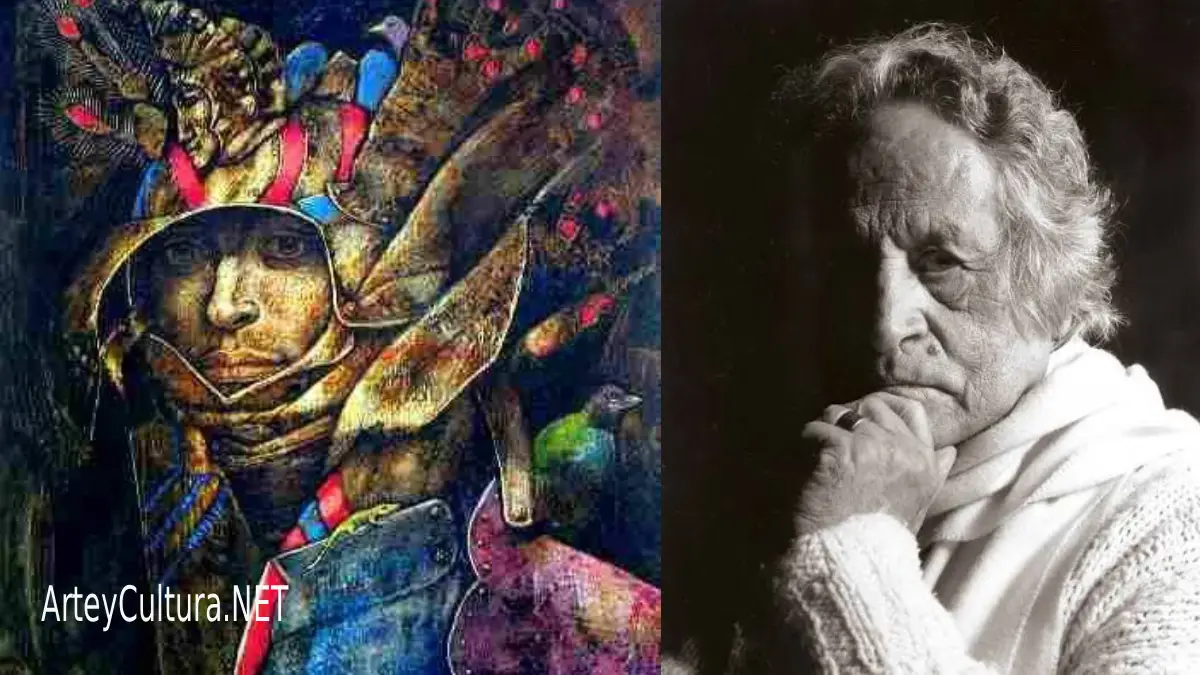
Armando Villegas was born in Pomabamba, Ancash, Peru, in 1926 and died in Bogotá, Colombia, in 2013. Painter and draughtsman, he settled in Colombia and became part of its modern art history while preserving a creative relationship with Peru. His work is especially recognised for warriors and imaginary personages built from layered matter and line.
Peruvian formation
Villegas studied at Peru’s National School of Fine Arts. Drawing, composition and contact with debates around Indigenous and modern art gave him a foundation he would later transform. Peru remained present less as picturesque subject than as memory of material, archaeology and landscape.
Colombia as a second homeland
He moved to Colombia in the early 1950s and developed most of his professional career there. Bogotá offered exhibitions, teaching and dialogue with a rapidly changing art scene. Rather than choose one nationality against another, Villegas became a cultural bridge.
Warriors and personages
His recurring warriors resemble archaeological guardians, theatrical figures and survivors from an invented civilisation. Armour, mask and body merge. They do not illustrate a known historical army; they concentrate ideas of defence, memory and vulnerability.
Between abstraction and figure
Colour fields, scratched surfaces and geometric structures can nearly dissolve the body before a face or weapon restores it. This tension allows the painting to remain material and narrative at once. Drawing organises the image even when paint appears spontaneous.
Recognition
Villegas exhibited widely and entered public and private collections in both countries. Recognition in Colombia did not cancel Peruvian origins; retrospective attention increasingly understands the work through movement across borders.
Video: the artist presents his universe
This Spanish-language recording allows Villegas to present paintings and recurring figures directly. No English film of comparable relevance was found, so his testimony remains an essential exception.
Video: inside the studio
This Spanish studio visit reveals scale, surface and working environment. Visual access to process offers international readers evidence that a generic English survey could not provide.
Achievements and legacy
Villegas built a career across Peru and Colombia, created an immediately recognisable family of warriors, and joined drawing, figurative invention and abstract material. His legacy belongs to both nations and demonstrates that migration can enlarge artistic identity rather than divide it.