Jaume Plensa: Faces, Words and Silence in Public Space
The life, materials and public works of Jaume Plensa, the Spanish sculptor known for monumental faces, letter-built bodies and spaces for reflection.
- Jaume Plensa
- Spanish sculptor
- public art
- Crown Fountain
- contemporary sculpture
- language in art
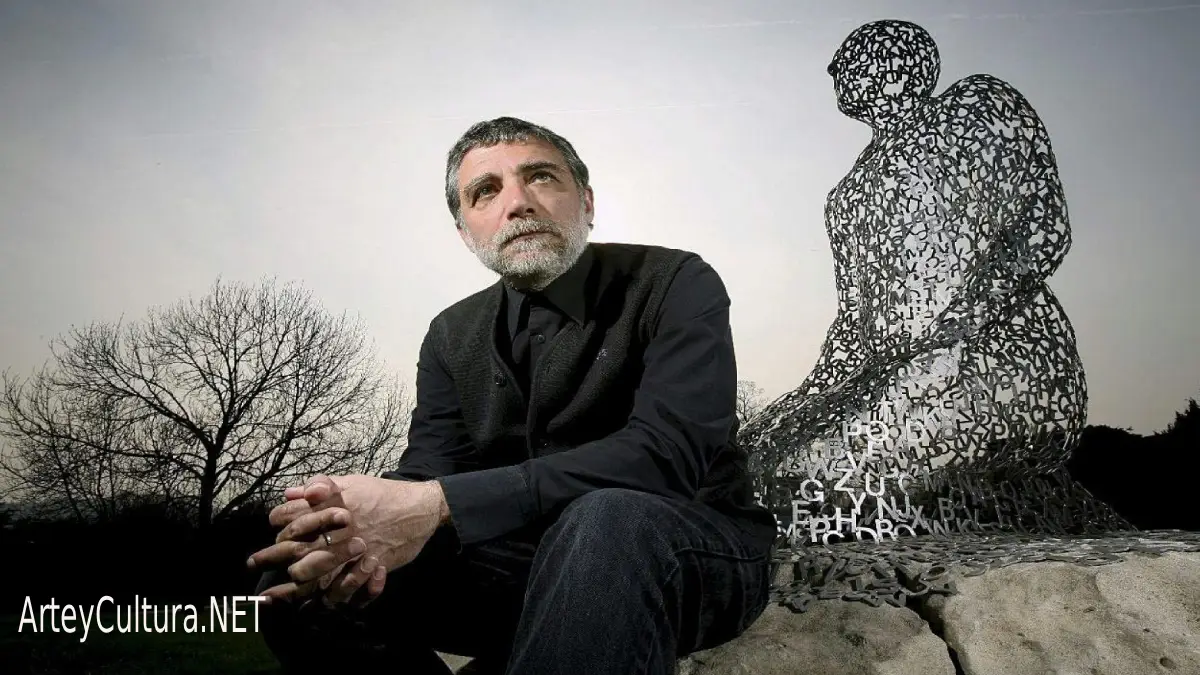
Jaume Plensa was born in Barcelona on 23 August 1955. Sculptor, draughtsman and designer, he is internationally recognised for monumental human heads, seated figures built from alphabets and public works that invite participation rather than demand a single interpretation.
Formation and early materials
Plensa studied in Barcelona and initially worked with iron and bronze. Fire, weight and industrial processes gave early sculptures a force different from the luminous, open works for which he later became famous. This technical range remains important: apparent serenity rests on complex engineering.
The body as common ground
Plensa often enlarges a head while elongating or compressing its proportions. Closed eyes suggest interior attention. The face is individual enough to imply a person, yet simplified enough to become a place where viewers project memory.
Letters and languages
Some seated figures are constructed from metal letters drawn from several alphabets. From a distance they form a body; up close the body dissolves into language and gaps. No single text is meant to be read. The sculpture imagines linguistic difference as a shared structure.
Crown Fountain
Completed in Chicago’s Millennium Park in 2004, Crown Fountain uses two glass towers displaying video portraits of city residents. Water periodically emerges from the projected mouths, recalling the gargoyle while turning a civic plaza into a playful gathering place.
The work depends on participation. Children, families and passers-by complete it through movement and response.
Silence and public space
Monumental works can dominate a site, but Plensa frequently seeks an interval of quiet within urban noise. Closed eyes and sparse forms invite people to slow down. Silence here is not absence; it is room for thought.
Theatre, opera and graphic work
His practice also includes stage design, opera, prints and drawing. These areas reveal the same interest in voice, body and text while requiring collaboration with performers and time-based events.
Video: an English interview
In this English Yorkshire Sculpture Park interview, Plensa explains the relationship between scale, body and landscape. Seeing works outdoors clarifies how environment becomes part of their meaning.
Video: sculpting the human spirit
This English documentary surveys major public projects and the ideas behind his recurring faces and letter figures. It also reveals the technical collaboration required by apparently weightless forms.
Achievements and developing legacy
Plensa created one of the most recognisable languages in contemporary public sculpture, transformed digital portraits into an interactive fountain and used alphabets to imagine cultural plurality. Major awards include Spain’s National Prize for Visual Arts and Velázquez Prize.
His legacy continues to develop wherever a sculpture becomes not an object to pass, but a space in which strangers pause together.