Albrecht Dürer: The Artist Who Revolutionised European Printmaking
The life, journeys, prints, paintings and legacy of Albrecht Dürer, the German Renaissance master who transformed the printed image.
- Albrecht Dürer
- German Renaissance
- printmaking
- engraving
- woodcut
- self-portrait
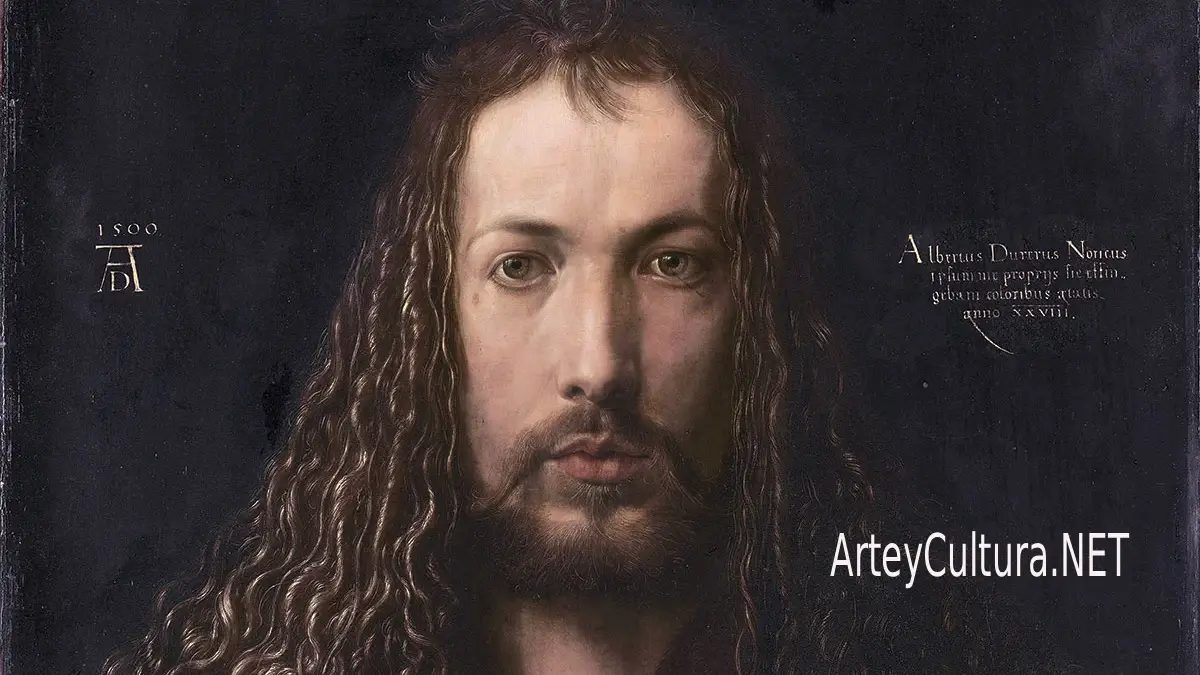
Albrecht Dürer was born in Nuremberg on 21 May 1471 and died there on 6 April 1528. Painter, draughtsman, printmaker and theorist, he joined northern precision with ideas encountered in Renaissance Italy. Above all, he showed that an image printed on paper could possess the ambition, complexity and authorship of a major painting.
Apprenticeship and journeys
Dürer first learned goldsmithing in his father’s workshop, gaining control of line and small detail. He then trained with painter and print publisher Michael Wolgemut. Journeys through German lands and two visits to Italy expanded his knowledge of perspective, classical proportion and new ideas about the artist’s status.
He did not merely import Italian models. He combined them with northern attention to texture, landscape and devotional imagery.
The print revolution
Woodcuts had often been treated as relatively simple illustrations. Dürer used dense networks of line to create light, volume, weather and emotion. His Apocalypse series of 1498 demonstrated that a sequence of prints could circulate widely while retaining monumental power.
Engraving allowed still finer control. Because impressions travelled beyond courts and churches, his monogram became one of Europe’s first immediately recognisable artistic signatures.
Three master engravings
Knight, Death and the Devil, Saint Jerome in His Study and Melencolia I, all made in 1513–1514, are known as the master engravings. They present moral endurance, contemplative scholarship and frustrated creative intellect. Their symbols invite interpretation without collapsing into a single code.
Self-portrait and artistic identity
Dürer’s self-portraits assert unusual dignity for an artist of his period. The frontal self-portrait of 1500 deliberately recalls sacred images, not as a claim to divinity but as a statement that creative capacity and intellectual labour deserve recognition.
Nature observed
Watercolours such as Young Hare and Great Piece of Turf unite close observation with compositional discipline. Each hair, leaf and root matters, yet the works are more than scientific records. Attention turns an ordinary fragment of nature into a complete world.
Theory and written legacy
Late in life Dürer published studies of measurement, fortification and human proportion. He sought teachable principles without denying that living bodies vary. The books helped establish the artist as both maker and intellectual.
Video: who was Albrecht Dürer?
This English National Gallery introduction connects Dürer’s travels, ambition and self-image. It explains why his career changed expectations surrounding northern European artists.
Video: master of printmaking
This second English National Gallery film examines how carved and engraved lines build surface, shadow and space. Close views make the extraordinary technical control visible.
Achievements and legacy
Dürer elevated woodcut and engraving, created some of art history’s most influential self-portraits, joined observation with mathematical inquiry and used print circulation to establish international authorship.
His legacy reaches far beyond the German Renaissance. Every artist who treats reproduction as an original creative medium continues a path Dürer helped define.