Jorge Luis Borges: Labyrinths, Time and Infinite Literature
The life, stories, poems and legacy of Jorge Luis Borges, whose libraries, mirrors and imagined books transformed twentieth-century literature.
- Jorge Luis Borges
- Fictions
- The Aleph
- Argentine literature
- short stories
- poetry
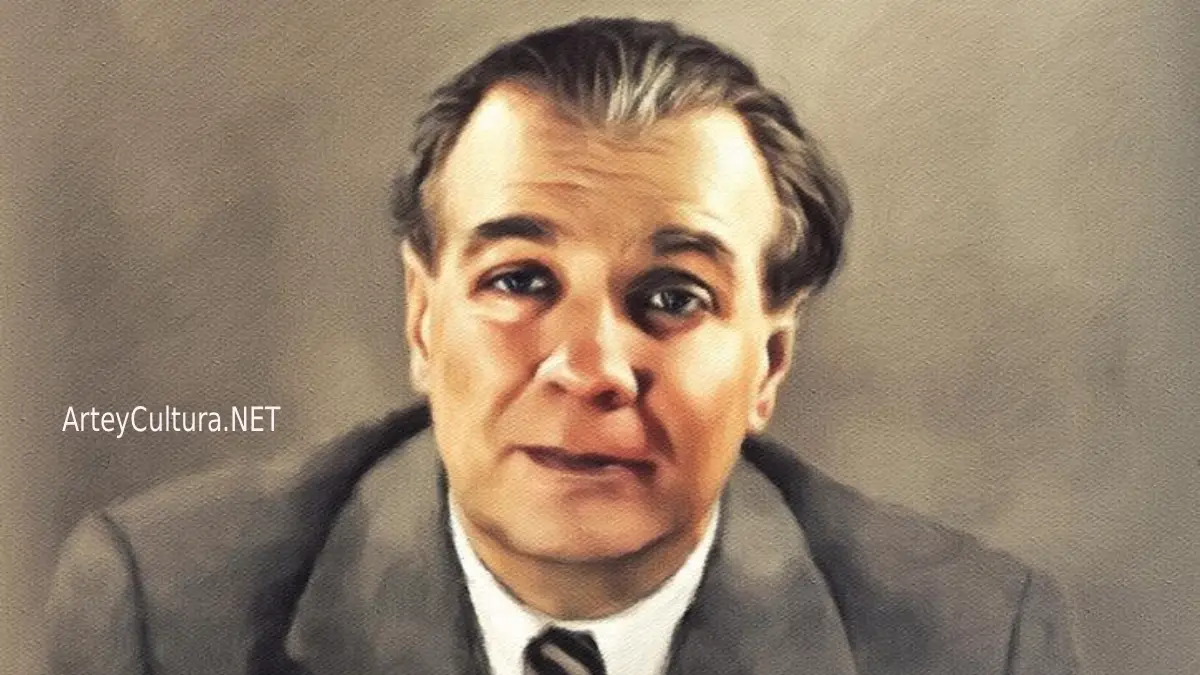
Jorge Francisco Isidoro Luis Borges was born in Buenos Aires on 24 August 1899 and died in Geneva on 14 June 1986. Poet, essayist, translator and short-story writer, he transformed libraries, mirrors, labyrinths and invented books into precise instruments for thinking about time, identity and infinity.
Childhood among books and languages
Borges grew up in a bilingual household with an extensive library. English and Spanish entered his reading from childhood. During the First World War his family lived in Geneva, where he studied French and Latin and encountered European philosophy and literature.
Buenos Aires rediscovered
After time in Spain and contact with the Ultraist movement, Borges returned to Argentina in 1921. Early poetry explored neighbourhood streets, courtyards and the mythology of the city’s edges. Buenos Aires became both physical place and imagined past.
Fictions
The stories collected in Fictions compress philosophical problems into narratives of remarkable clarity. “The Library of Babel” imagines a universe made of every possible book; “The Garden of Forking Paths” turns time into branching alternatives; “Pierre Menard, Author of the Quixote” shows how context changes apparently identical words.
The Aleph
In the title story of The Aleph, a point in a Buenos Aires basement contains every place viewed from every angle. The impossible vision is cosmic, comic and personal. Infinity enters a setting shaped by jealousy and literary vanity.
Time, identity and doubles
Borges repeatedly questioned the stable self. Readers, writers and fictional characters exchange roles; a man may meet his younger self; a traitor may become part of a heroic narrative. These devices are not puzzles for their own sake. They test how memory and language construct identity.
Blindness and the library
His sight declined gradually through a hereditary condition. In 1955 he became director of Argentina’s National Library just as he could no longer read printed books independently. He described the coincidence without sentimental simplification. Dictation and memory changed his prose and returned poetry to the centre of his work.
Recognition and the absent Nobel
Borges received the Cervantes Prize and numerous international honours but never the Nobel Prize. Debate about that omission can distract from the more important fact: writers across languages adopted his compressed forms and ideas.
Video: a conversation without haste
This substantial Spanish RTVE interview preserves Borges’s humour, hesitation and spoken intelligence. It remains an original-language exception because no translated summary can replace the rhythm of his conversation.
Video: Borges before an American audience
In this American television interview, Borges speaks in English about literature and his intellectual formation. It gives English-language readers direct access to a writer who considered that language part of his earliest literary home.
Achievements and legacy
Borges renewed the short story by joining fiction and essay, made philosophical ideas narratively compelling, expanded the literary map beyond national realism and influenced the novel, criticism, cinema and digital culture.
His legacy is a way of reading. Every book may contain another book, every author is also a reader, and a small story can open onto an unlimited universe.