César Calvo de Araújo: Painter of the Living Amazon
The life, murals, writing and legacy of César Calvo de Araújo, the Peruvian artist who represented Amazonian communities as a living cultural world.
- César Calvo de Araújo
- Amazonian art
- Peruvian painter
- Iquitos
- muralism
- Paiche
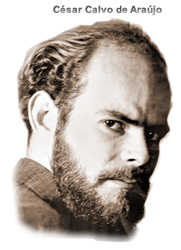
César Calvo de Araújo was a Peruvian painter, muralist, writer and cultural promoter who placed the Amazon at the centre of his work. Known as “the painter of the jungle,” he portrayed rivers, fishing, Indigenous and riverine communities, ports and nocturnal landscapes without reducing them to exotic decoration.
A disputed birth date
Sources agree that Calvo de Araújo was born on 7 June in the Yurimaguas region of Loreto and died in Lima on 21 October 1970. They disagree about the year. Catalogues and academic records commonly use 1910, while institutional publications and a major BRITÁNICO retrospective use 1914.
One account says he was born during his parents’ river journey between Yurimaguas and Iquitos. Responsible biography must preserve this uncertainty rather than present one date as unquestionably settled.
Formation and early work
His parents were Rafael Calvo Sotomayor and María José Araújo. Artistic formation combined study, travel and direct observation. Painting, drawing, photography, sculpture, music and literature were not unrelated interests; each helped record Amazonian memory.
The Amazon as experience
Calvo de Araújo painted a territory inhabited by people who work, travel and form communities. Rivers are roads and sources of food, not backgrounds. Humidity, darkness and reflection become pictorial conditions. This internal viewpoint distinguishes his work from images made for distant consumption.
Murals and the public identity of Iquitos
His murals connected art with civic space. Large compositions gave Amazonian history and labour a visible place within institutions, helping Iquitos represent itself rather than depending on images produced in Lima or abroad.
Portraits and international recognition
Calvo travelled and painted portraits alongside regional scenes. Portraiture strengthened his ability to individualise figures within larger compositions. Recognition beyond Loreto demonstrated that Amazonian subject matter could enter national and international art without surrendering local specificity.
Paiche: the forest as literature
His novel Paiche extends the same project through words. River life, exploitation, community and environment become narrative experience. The book shows that his purpose was not simply to make jungle images but to construct an Amazonian cultural archive across media.
Video: life, journeys and work
This Spanish-language episode of Sucedió en el Perú offers the most extensive audiovisual biography available. No English documentary of comparable substance was found; its locations and testimony justify retaining the original.
Video: the retrospective The Forest Itself
This Spanish exhibition film presents the retrospective La selva misma. Close views allow international readers to examine composition and colour even when narration remains in Spanish. A generic English film about Amazonia would not substitute for direct access to his art.
Achievements and legacy
Calvo de Araújo made Amazonian life central to Peruvian painting, created public murals, worked across visual art and literature, and represented communities as historical agents. Later exhibitions and research have recovered a contribution once marginalised by an art history centred on the capital.
His legacy asks Peru to see the Amazon not as remote nature but as culture, memory and modern social reality. Preserving paintings, murals and writing is therefore part of preserving the country’s plural identity.