Jusepe de Ribera: Light, Truth and the Baroque Body
The life, work and legacy of Jusepe de Ribera, the Spanish-born master who forged an uncompromising naturalism in seventeenth-century Naples.
- Jusepe de Ribera
- José de Ribera
- Spanish Baroque
- Neapolitan art
- naturalism
- etching
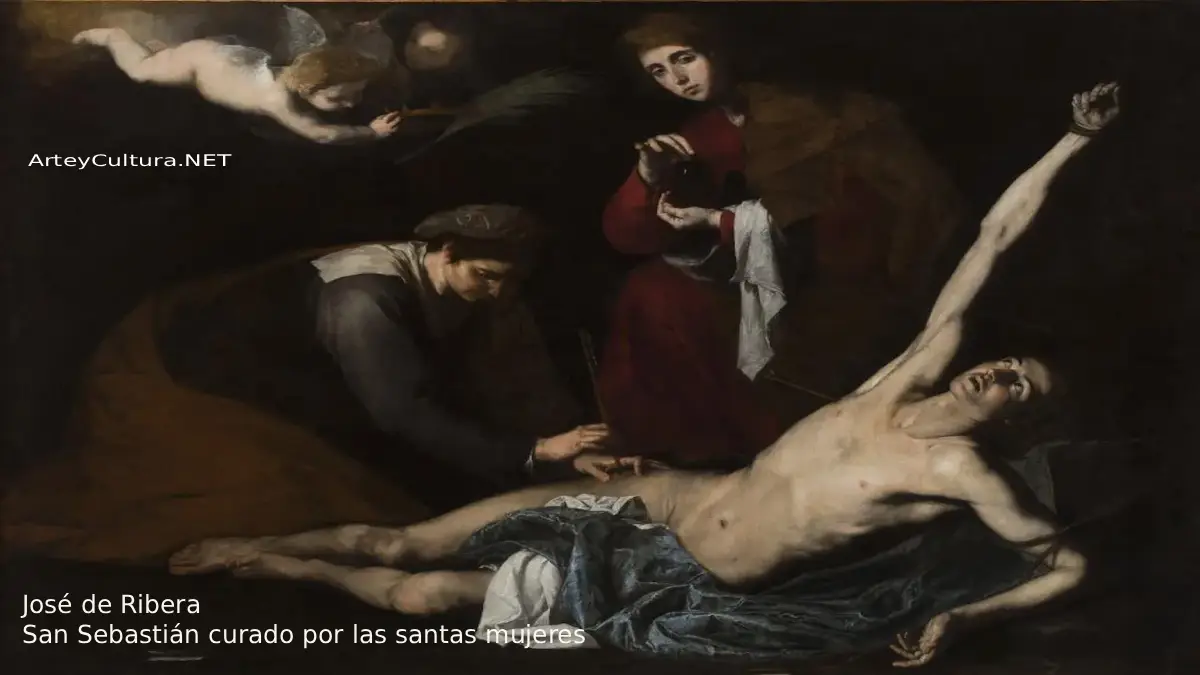
Jusepe de Ribera, also known as José de Ribera and Lo Spagnoletto—the Little Spaniard—was baptised in Xàtiva, Valencia, on 17 February 1591 and died in Naples on 2 September 1652. Although born in Spain, he developed almost his entire career in Italy. His paintings, drawings and etchings gave the Baroque body a startling physical presence.
Ribera is often remembered for dark backgrounds and scenes of martyrdom, yet his achievement is broader. He painted saints, philosophers, mythological punishments and unusual bodies with an attention that joins rough material fact to moral dignity. Wrinkles, torn cloth and weathered skin are not decorative effects: they make thought and suffering visible.
From Xàtiva to Italy
Little is securely documented about his early training. By the beginning of the 1610s he was in Italy, where records place him in Parma and Rome. The work of Caravaggio and his followers offered a decisive model: strong contrasts of light, ordinary human models and sacred events brought close to the viewer’s space.
Ribera did not simply imitate Caravaggio. His line was more analytical, his surfaces often more granular, and his interest in drawing and printmaking gave contour an unusual authority. The young Spaniard absorbed Italian naturalism and turned it into a language recognisably his own.
Naples and an international career
He settled in Spanish-ruled Naples in 1616 and married Caterina Azzolino, daughter of a local painter. Naples was one of Europe’s largest cities and a major artistic centre. Spanish governors, religious institutions and private collectors gave Ribera access to an international network of patronage.
He signed many works in ways that emphasised his Spanish identity. This was both personal and professional: Naples connected the Italian art market with patrons across the Spanish monarchy. His pictures travelled, and his influence returned to Spain even though he never established his mature career there.
Naturalism, darkness and changing colour
Early paintings frequently isolate figures against deep shadow. Light touches a forehead, hand, book or wounded body with almost forensic intensity. The contrast directs attention and makes the viewer feel physically close to the event.
His later palette became brighter and more varied. Silvery air, blues and warm flesh tones entered larger compositions without weakening their force. Ribera’s career therefore cannot be reduced to tenebrism; he continually adjusted colour and space to the demands of each subject.
Saints and philosophers with ordinary faces
Ribera often represented philosophers as poor, elderly men wearing damaged clothes. Their authority comes not from luxury but from concentration, humour or self-possession. This approach questioned the assumption that wisdom must look socially elevated.
The same naturalism shaped his saints. Their bodies may be exhausted or wounded, yet the paintings preserve agency and inner life. Even in scenes of martyrdom, the person is not merely an object of violence. Gesture, gaze and light insist on human presence.
Magdalena Ventura and the ethics of looking
Magdalena Ventura with Her Husband and Son (1631), commonly called The Bearded Woman, portrays a woman from Abruzzi whose facial hair developed in adulthood. She stands upright while nursing a child; her husband remains in shadow behind her. A stone inscription records her name and circumstances.
The painting belongs to a seventeenth-century culture fascinated by bodily difference, but Ribera’s treatment exceeds simple curiosity. Monumental scale, direct gaze and controlled light grant Magdalena an imposing individuality. Modern viewers must still question the conditions under which difference became spectacle, while recognising the dignity the portrait allows its sitter.
Myth, martyrdom and the vulnerable body
Ribera’s mythological paintings include the torments of Tityus, Ixion and Marsyas. Foreshortening and open mouths bring pain close to the spectator. These images can be disturbing, but their purpose is not merely sensational. They test the body’s limits and ask what power does to flesh.
In religious works such as the martyrdoms of Saint Bartholomew and Saint Philip, anticipation can be more powerful than completed violence. Ropes tighten, assistants pull and witnesses gather. Ribera makes the viewer confront the human machinery that turns punishment into public spectacle.
Drawing and printmaking
Ribera was among the most important draughtsmen and printmakers active in seventeenth-century Naples. His etchings circulate hatching around bodies with precision, while drawings range from anatomical studies to grotesque heads and imaginative scenes. Graphic work spread his inventions beyond individual paintings and influenced artists across Europe.
Video: The Trinity in English
This English-language presentation by the American Friends of the Prado examines Ribera’s Trinity of 1635. It shows how anatomy, light and devotional meaning work together and why his realism should not be mistaken for mere imitation of appearances.
Video: Ribera’s drawings between heaven and hell
This English-language programme from the Meadows Museum explores the range of Ribera’s drawings. Studies, expressive heads and religious subjects reveal an artist whose imagination was more varied than the familiar image of a painter of dark martyrdoms.
Final years, achievements and legacy
Ribera suffered serious illness during the 1640s, and political upheaval disrupted Naples in 1647. He continued to receive important commissions but faced financial and family difficulties before his death in 1652.
His principal achievements were to create a distinctive bridge between Spanish and Italian Baroque art, expand naturalism into a language of intellectual and spiritual intensity, and develop a major body of prints and drawings. Ribera’s legacy survives in the work of Spanish masters and generations of Neapolitan painters. Above all, he demonstrated that truth in painting could reside in age, damaged cloth and bodily difference—and that such truth could carry grandeur.