

Joaquin Phoenix and Joker: Creating Arthur Fleck
The career of Joaquin Phoenix and his unsettling transformation into Arthur Fleck in Joker, the performance that earned him the Academy Award for Best Actor.
- Joaquin Phoenix
- Joker
- Arthur Fleck
- Todd Phillips
- Academy Awards
- acting
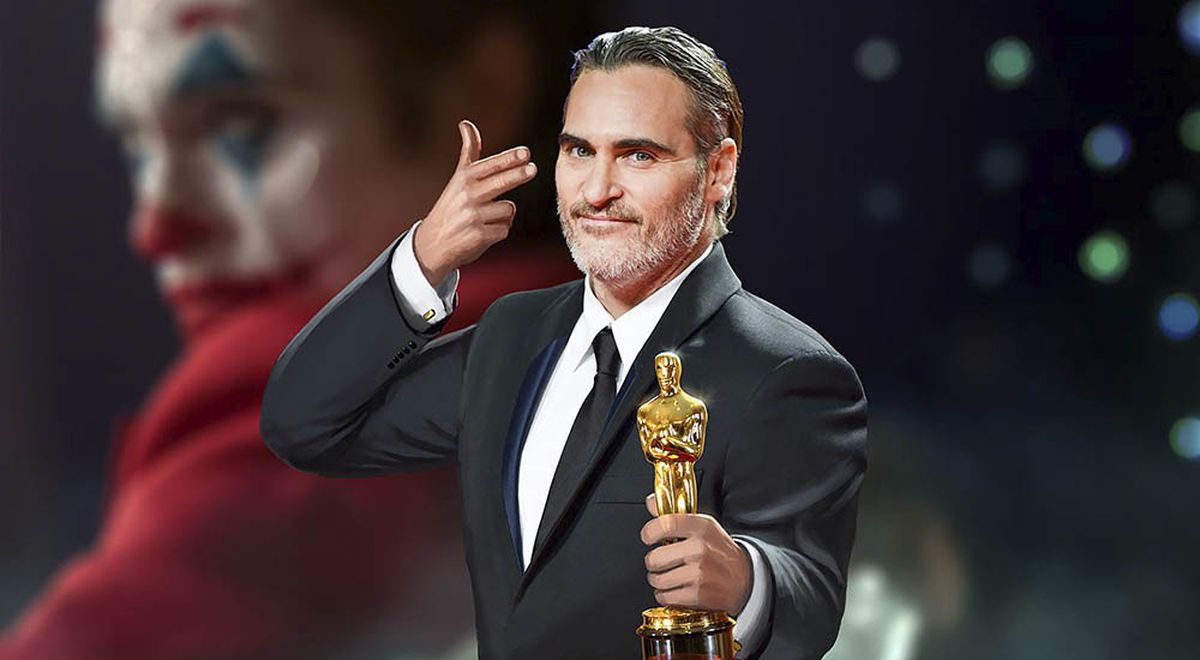
Joaquin Rafael Phoenix was born in San Juan, Puerto Rico, on 28 October 1974. His performance as Arthur Fleck in Joker (2019), directed by Todd Phillips, earned him the Academy Award, BAFTA, Golden Globe and Screen Actors Guild Award for Best Actor. The role became a cultural event, but it also belongs to a career built on difficult characters and close collaboration with major filmmakers.
Phoenix does not play Arthur as a conventional comic-book villain. He constructs a vulnerable, disturbing man whose body, voice, laughter and fantasies reveal a conflict between private suffering and public recognition. The result invites empathy without turning violence into innocence.
An itinerant childhood and a family of performers
Phoenix is the son of John Lee Bottom and Arlyn Dunetz. He spent part of his childhood travelling with his family through Latin America before they settled in the United States and adopted the surname Phoenix. Joaquin and his siblings River, Rain, Liberty and Summer all performed from an early age.
He first worked in television and appeared in films including SpaceCamp and Parenthood. After the death of his brother River in 1993, he withdrew temporarily from acting. His return was gradual and selective, establishing a pattern that would define his adult career: long preparation, emotional risk and little interest in protecting a conventional leading-man image.
A career shaped by demanding directors
Phoenix received his first Academy Award nomination for playing Commodus in Ridley Scott’s Gladiator (2000). He portrayed Johnny Cash in James Mangold’s Walk the Line (2005), learning to sing and play guitar for the role, and received a second nomination.
His work with Paul Thomas Anderson in The Master and Inherent Vice, with Spike Jonze in Her, with James Gray in several films, and with Lynne Ramsay in You Were Never Really Here demonstrated exceptional range. These characters are often isolated, obsessive or emotionally inarticulate. Phoenix makes their contradictions visible without explaining them away.
Arthur Fleck before the Joker
In Phillips’s film, Arthur is an aspiring comedian and party clown living with his mother in a decaying Gotham City. He is socially isolated, economically precarious and affected by a neurological condition expressed through involuntary laughter. Institutions that should support him are themselves collapsing.
Phoenix lost a substantial amount of weight for the role. The transformation was not merely cosmetic. His exposed shoulder blades, curved posture and unpredictable movement make the body a record of vulnerability and tension. Arthur can appear frail in one scene and threatening in the next without becoming physically larger.
Laughter, voice and dance
The laugh is one of the performance’s most difficult elements. Phoenix differentiates laughter caused by distress from moments of genuine amusement or growing power. It often begins as physical pain: breath catches, the throat tightens and the face resists what the body is doing.
Movement offers a second language. Arthur stretches and dances in private before dance becomes part of the Joker’s public persona. The celebrated staircase sequence is therefore not an isolated flourish. It marks a shift from a man constrained by the gaze of others to one who has built a theatrical identity from that gaze.
A film about being seen
Joker borrows from 1970s American cinema, particularly stories of alienation and urban breakdown. Its Gotham is both comic-book setting and social pressure chamber. Television turns humiliation and violence into spectacle, while Arthur repeatedly imagines audiences responding to him.
The film generated intense debate about mental illness, social abandonment and screen violence. A careful reading must avoid equating mental illness with danger. Arthur is a fictional construction shaped by many narrative choices; his crimes are not a clinical diagnosis. Phoenix’s achievement lies in sustaining those contradictions without simplifying them into a lesson.
Video: the trailer that introduced this Joker
Warner Bros.’ English-language final trailer shows how image, sound and movement prepared audiences for a character study rather than a conventional superhero film. Notice how Arthur’s laughter and dance connect scenes that move from vulnerability to deliberate performance.
Video: Phoenix receives the Academy Award
In this English-language recording from the Academy, Phoenix accepts the 2020 Best Actor Oscar. His speech turns away from personal triumph towards injustice, compassion and the possibility of change. It reveals the ethical seriousness he brings to public recognition, even when the film itself remains open to debate.
Awards, achievements and legacy
Phoenix’s awards for Joker included the Academy Award, BAFTA, Golden Globe and SAG Award. He became the second performer to win an Oscar for playing the Joker after Heath Ledger’s posthumous supporting-actor award for The Dark Knight.
His broader legacy cannot be reduced to one character. He has demonstrated that a major screen actor can move between studio productions and formally adventurous films while preserving intensity and unpredictability. His finest performances do not ask viewers to approve of a character. They ask us to watch closely enough to recognise conflict, self-deception and the human need to be seen.