The 33rd ICPNA National Print Salon
The 33rd ICPNA National Print Salon documented a changing Peruvian printmaking scene in which established processes met photography, digital tools, and installation.
- ICPNA
- Peruvian printmaking
- graphic arts
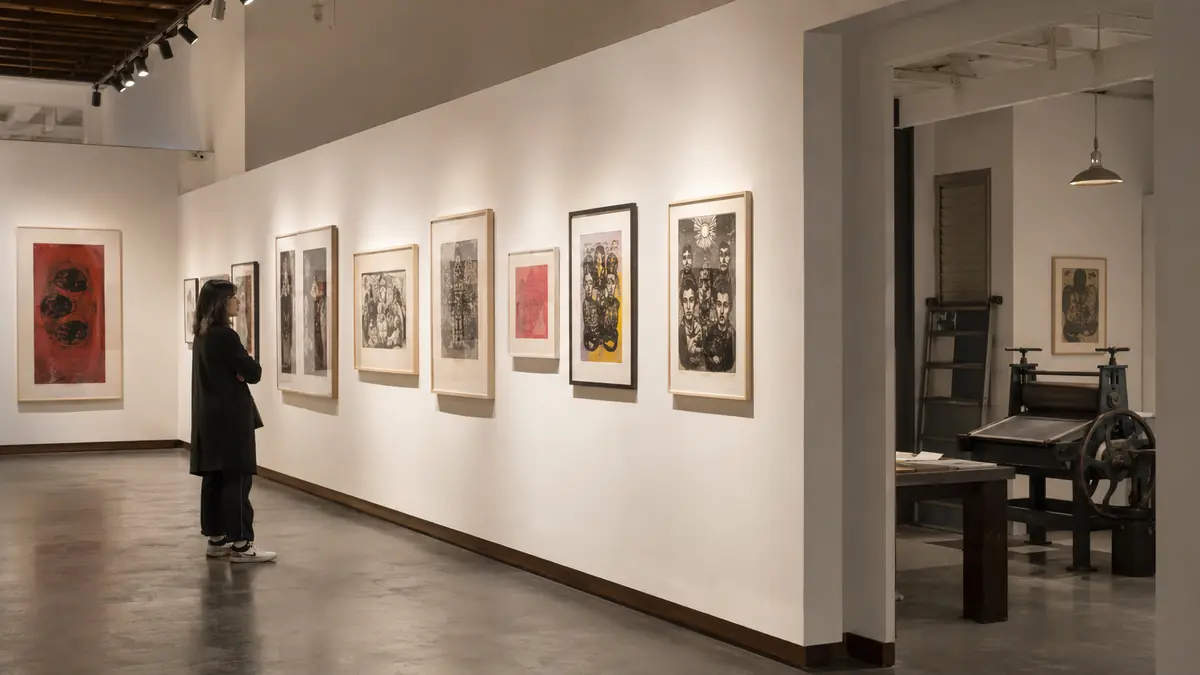
The 33rd ICPNA National Print Salon offered a concentrated view of Peruvian graphic art in 2010. More than a competition, the salon functioned as an archive of changing workshop practices: traditional matrices remained active while photography, digital processes, objects, and installation expanded the definition of a print.
A sustained platform for printmaking
National salons matter because works on paper are often less visible than painting or sculpture in general exhibitions. ICPNA’s continuing commitment created a public meeting point for artists, jurors, students, collectors, and workshops, allowing technical knowledge to circulate across generations.
The awarded artists
José Antonio Núñez Landa received first prize, Ana Sofía Zapata Ingunza second prize, and Zoila Reyes Pineda third prize. Awards should not be read as a complete hierarchy of value; they identify works that persuaded a particular jury while bringing attention to the range of approaches present in the exhibition.
Video: A visual record of the salon
This largely visual record moves through works displayed in the 33rd salon. Details of surface, scale, framing, and installation provide information that a simple list of artists cannot convey.
How a print is made
Relief printing leaves ink on raised surfaces; intaglio techniques hold it within incised lines; lithography depends on the repulsion of grease and water; screenprinting pushes ink through a prepared mesh. Contemporary artists combine these processes with photographic transfer and digital intervention without abandoning the importance of decisions made at the matrix.
How to read an edition
Margins often contain a fraction indicating impression and edition size, a title, signature, date, and technical notes. Artist’s proofs may be marked A/P or P/A. Variations in pressure, wiping, paper, and ink mean that even impressions from one edition reward close comparison.
Video: From salon to international biennial
This Spanish report on a later ICPNA International Print Biennial shows the continuity of the institution’s work. It helps situate the national salon within a broader effort to connect Peruvian printmaking to regional and global experimentation.
The salon’s continuing relevance
Printmaking makes process visible: pressure, reversal, repetition, accident, and revision become part of the finished image. The 33rd salon captured a moment when Peruvian artists were widening that language while retaining its material intelligence. Its record therefore belongs to the history of both individual works and the workshops that made them possible.